What it is about
The new output of EDUS – Educating for Sustainability, our project aimed at strengthening sustainability education in Vocational Education and Training across Europe, is finally online. The EDUS Training Toolkit is a set of three practical tools designed to help VET trainers bring sustainability education into their classrooms, pairing directly with the EDUS Competence Framework released earlier this year, translating its competence map into concrete teaching practice.
Developed by Sineglossa within the partnership with Aalborg University (Denmark), IC Geoss (Slovenia), Cybervolunteers Foundation (Spain) and Einurd (Iceland), and co-funded by the European Union through the Erasmus+ programme, the toolkit covers three phases of an educational process and brings AI into the picture as a practical resource for teachers.
Why Sineglossa is working on AI in education
Among the three tools included in the toolkit, the second one – developed by Sineglossa’s director of training and research, Alessia Tripaldi – is particularly significant, as it connects sustainability education with one of the questions currently shaping Sineglossa’s research agenda: how can generative AI enhance human creativity, critical thinking and decision-making rather than replacing them?
Introducing AI into the EDUS toolkit is a natural extension of our ongoing exploration into how generative AI interacts with and can be implemented in different sectors of our society. From artistic production to public engagement, up to education, we have been mapping the opportunities, ethical challenges, and systemic impacts of these technologies.
Indeed, our research with the University of Turin on LLMs has recently evolved into the AI Compass for Cultural Heritage – a strategic framework designed to help the GLAM sectors build long-term, inclusive visions into their cultural institutions -, while the consultancy and training path on AI we designed and led at Museo Nazionale del Risorgimento Italiano has eventually produced the first ethical Manifesto for AI in Museums. Such theory bases inform our practice day by day, and contribute to transforming academic research into real technological transfer for the sector. In education programs such as Generativa and Rigenerativa, we actively support cultural professionals, artists, and educators in mastering AI tools with a critical and conscious approach; in artistic-focused initiatives like The Next Real and Biennale Tecnologia, we promoted events to discuss on and curated exhibitions which explored multiple practices of co-creation between artists and AI.
It is within this broader reflective framework that this specific EDUS tool finds its meaning: it translates Sineglossa’s critical approach into a strategic guide for VET trainers to use AI responsibly when co-designing educational content on sustainability. Rather than treating AI as a mere shortcut to automate lesson planning, it positions technology as an active, conversational partner to enhance the educator’s creativity. This approach offers a profound shift in perspective: prompt engineering is framed not as a technical skill, but as a critical and cultural process. The teacher’s specific human agency – their context, pedagogical sensitivity, and knowledge – becomes the irreplaceable filter required to challenge and shape the algorithm’s outputs.
The EDUS Training Toolkit
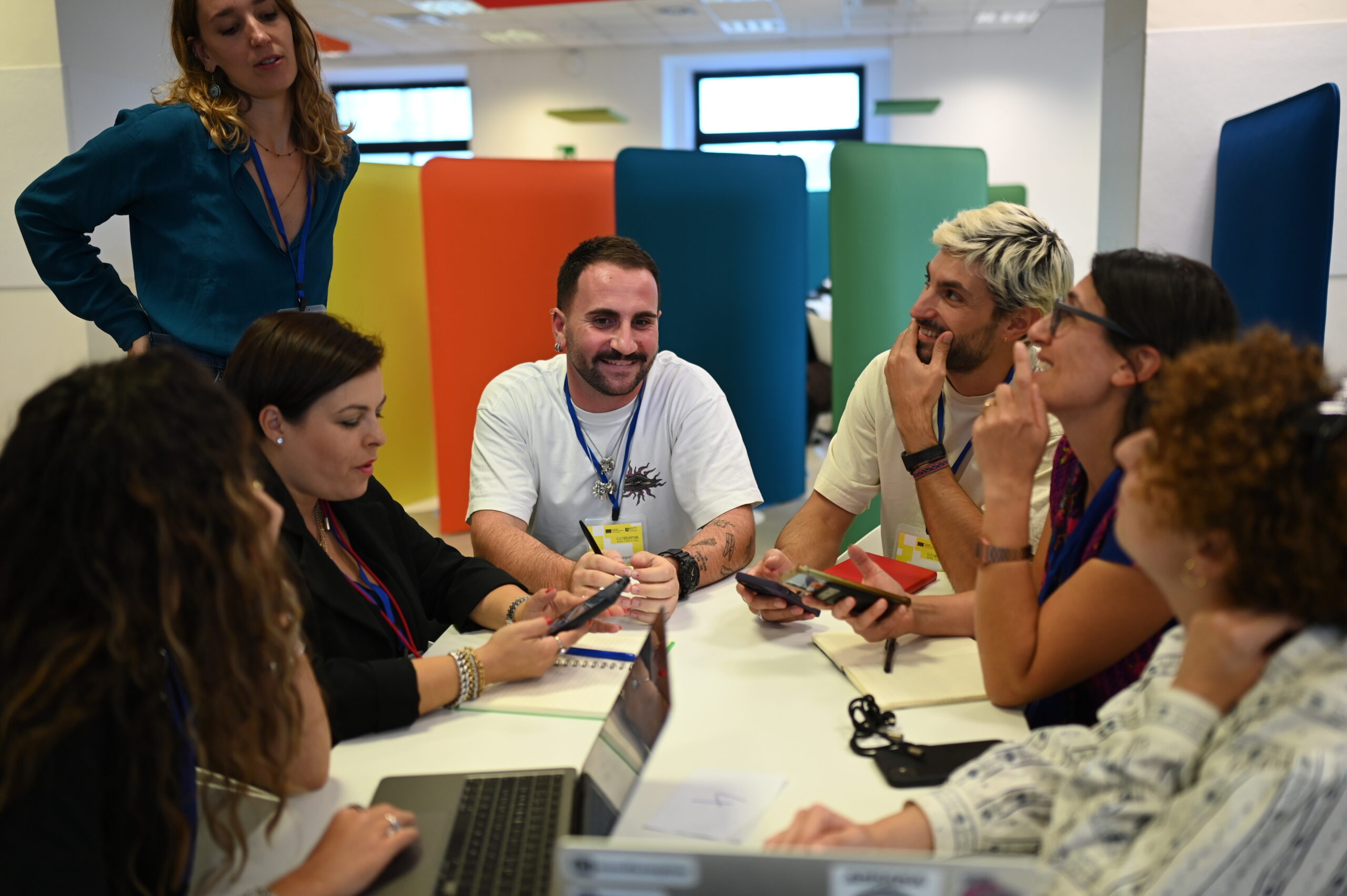
Developed by Sineglossa through focus group research with VET teachers from different fields, the toolkit responds to three recurring training needs that emerged from that process:
around students' prior knowledge and expectations;
adapted to specific curricula;
those activities in a structured, adaptable way
Although the EDUS Training Toolkit is made of three tools which, as a whole, cover the whole educational process, it is designed to be flexible: each tool can be used independently or as part of a broader teaching cycle, and all three are adaptable to the specific needs, resources, and contexts of different VET sectors and institutions.
Tool 1 – Flipping the classroom: co-design as a democratic practice
The first tool guides teachers through a co-creative process for designing learning experiences together with students, shifting the focus from teaching to learning. Rather than positioning the teacher as the sole holder of knowledge, this model promotes shared ownership and horizontal dialogue. The methodology, developed by Tommaso Sorichetti, is structured around three phases – Framing, Developing, and Debriefing and emphasizes learner initiative making it a a universal pedagogical framework, applicable to any training sector, designed to transform the classroom into an active community of practice.
Tool 2 – AI for sustainability education
The tool metaphorically deconstructs prompt construction as a recipe across three operational steps: Define the Ingredients (learning objectives, educational context, sustainability challenges, and formats), Mixing the Ingredients, and Check the Recipe. Through this flow, educators do not merely learn how to query a machine but develop the critical mindset needed to spot AI “hallucinations,” iterate prompts, and enrich synthetic outputs with their own voice. The module concludes with a vital analysis of the environmental footprint of AI itself, ensuring that learning with digital tools remains substantively aligned with systemic sustainability.
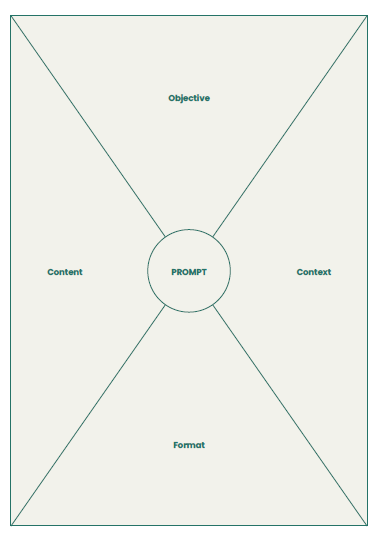

Pages 4 and 8 from Tool 2 of the EDUS Training Toolkit
Tool 3 - Self-Assessment Grids
The last tool provides a structured grid for evaluating sustainability competences across the three dimensions of Planet, People, and Prosperity, at Basic, Intermediate, and Advanced levels. It exists in two versions – one for teachers, one for students -and is designed to be used before and after an educational experience to map baseline knowledge and track progress. Like the other tools, it is adaptable: teachers can modify or remove competences based on their specific course context.
The EDUS Training Toolkit is an output of the EDUS – Educating for Sustainability project, co-funded by the European Union through the Erasmus+ programme (Project code: 2023-1-DK01-KA220-VET-000165508). Partners: Aalborg University (Denmark), IC Geoss (Slovenia), Fundación Cibervoluntarios (Spain), Einurð (Iceland), Sineglossa (Italy). The European Commission support for the production of this publication does not constitute an endorsement of the contents which reflects the views only of the authors, and the Commission cannot be held responsible for any use which may be made of the information contained therein.