What it is about
How can we address the growing spread of fake news, synthetic media, and AI-generated content? And what tools can help citizens, media professionals, and institutions navigate an increasingly complex media ecosystem?
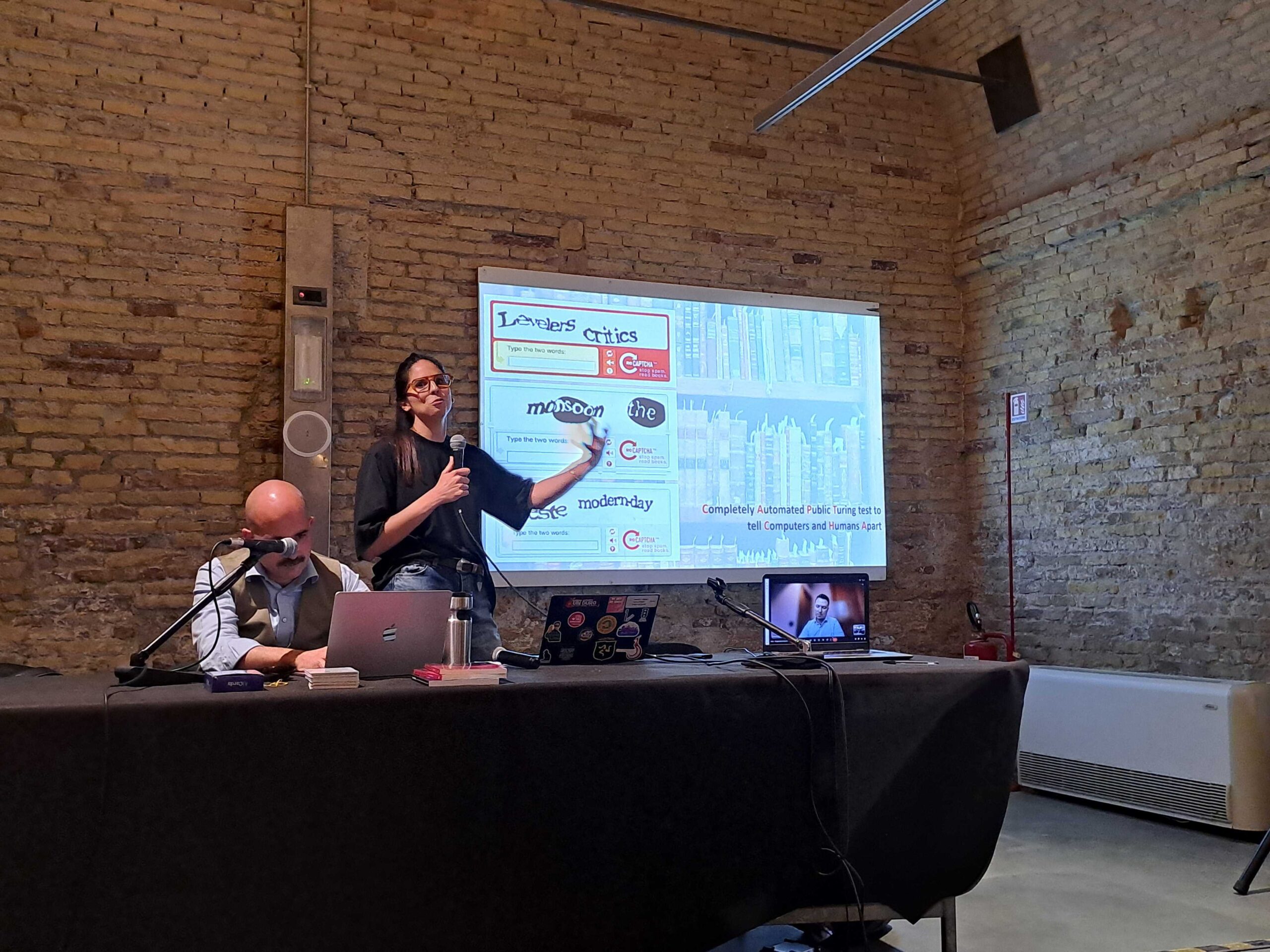
Starting from these questions, on May 7th Sineglossa organised the event “Debunking & GenAI for the Future” in Ancona, as part of the European project Fair Media, bringing together researchers, educators, policy makers, and communication professionals to reflect on the relationship between GenAI, disinformation, and foresight methodologies.
Disinformation, Information Overload, and Agency
The event alternated between theoretical sessions and hands-on workshops, with the aim of exploring the transformations of the contemporary information ecosystem and the possibilities of using AI in a critical, participatory way – oriented towards building more resilient future scenarios.
One of the central themes was the progressive “pollution” of the information ecosystem, caused by the overlap of fake news, synthetic content, and manipulated narratives alongside verified information. This condition produces cultural and psychological effects, such as the difficulty of verifying sources and the sense of disorientation generated by information overload and the growing sophistication of artificially generated content. In this landscape, generative AI can act both as a technology that amplifies disinformation and as a potential support in processes of debunking, monitoring, and interpreting large amounts of data.
The second part of the event, held in a workshop format, focused on the theme of sensemaking: the need to develop tools and practices capable of helping people interpret complexity and build a more aware relationship with digital environments. Divided into working groups, participants discussed cases of misinformation generated through deepfakes and synthetic content; the integration of AI-based debunking tools into editorial workflows; the construction of scenarios for the future of the media ecosystem in 2035; and the identification of political, educational, and technological actions needed to build more pluralistic and resilient information environments.
The workshop also experimented with several methodologies drawn from futures studies, including scenario planning, visioning, backcasting, and causal layered analysis – used to imagine and design alternative futures in the fields of information and technology governance.