
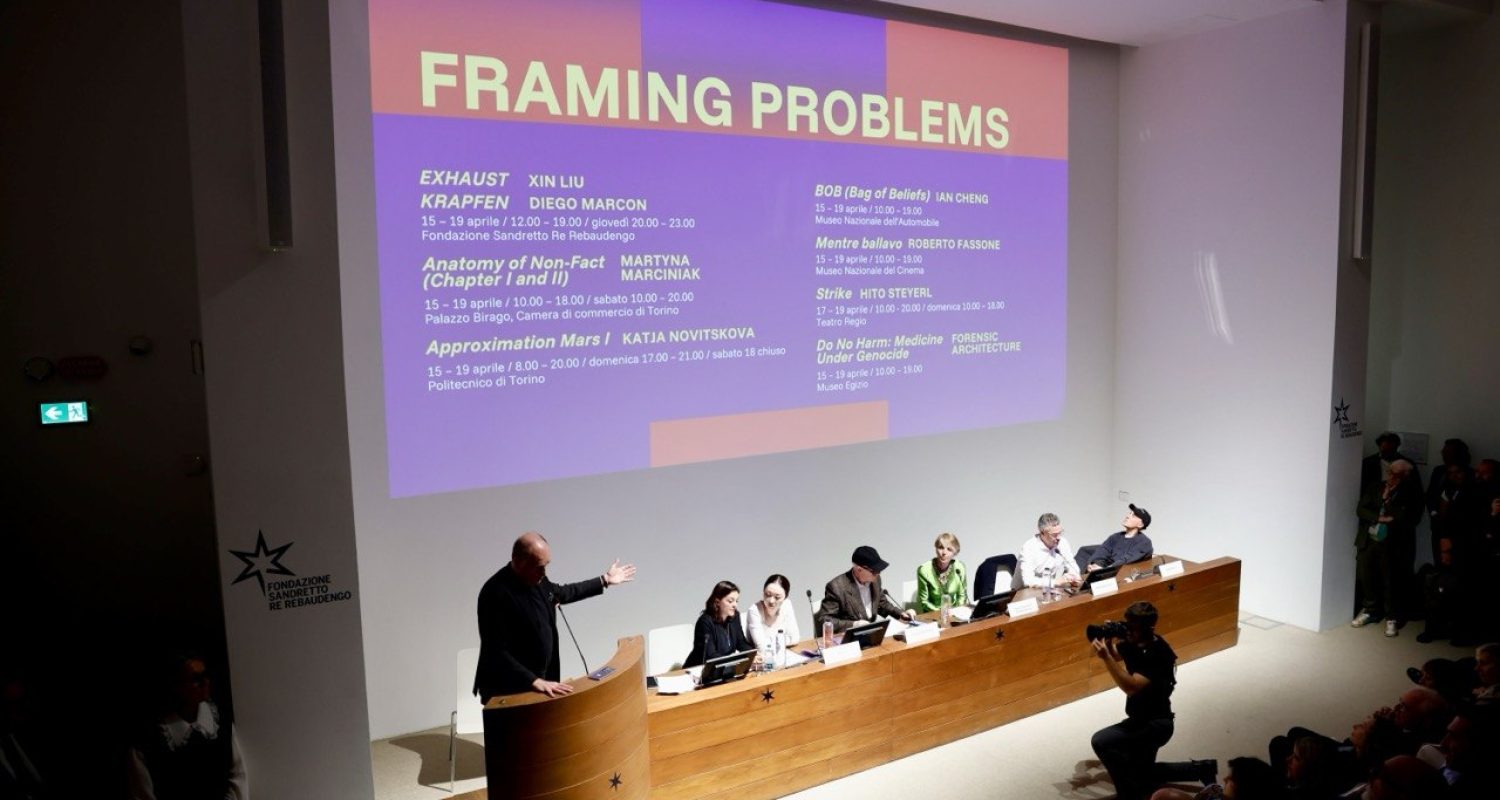
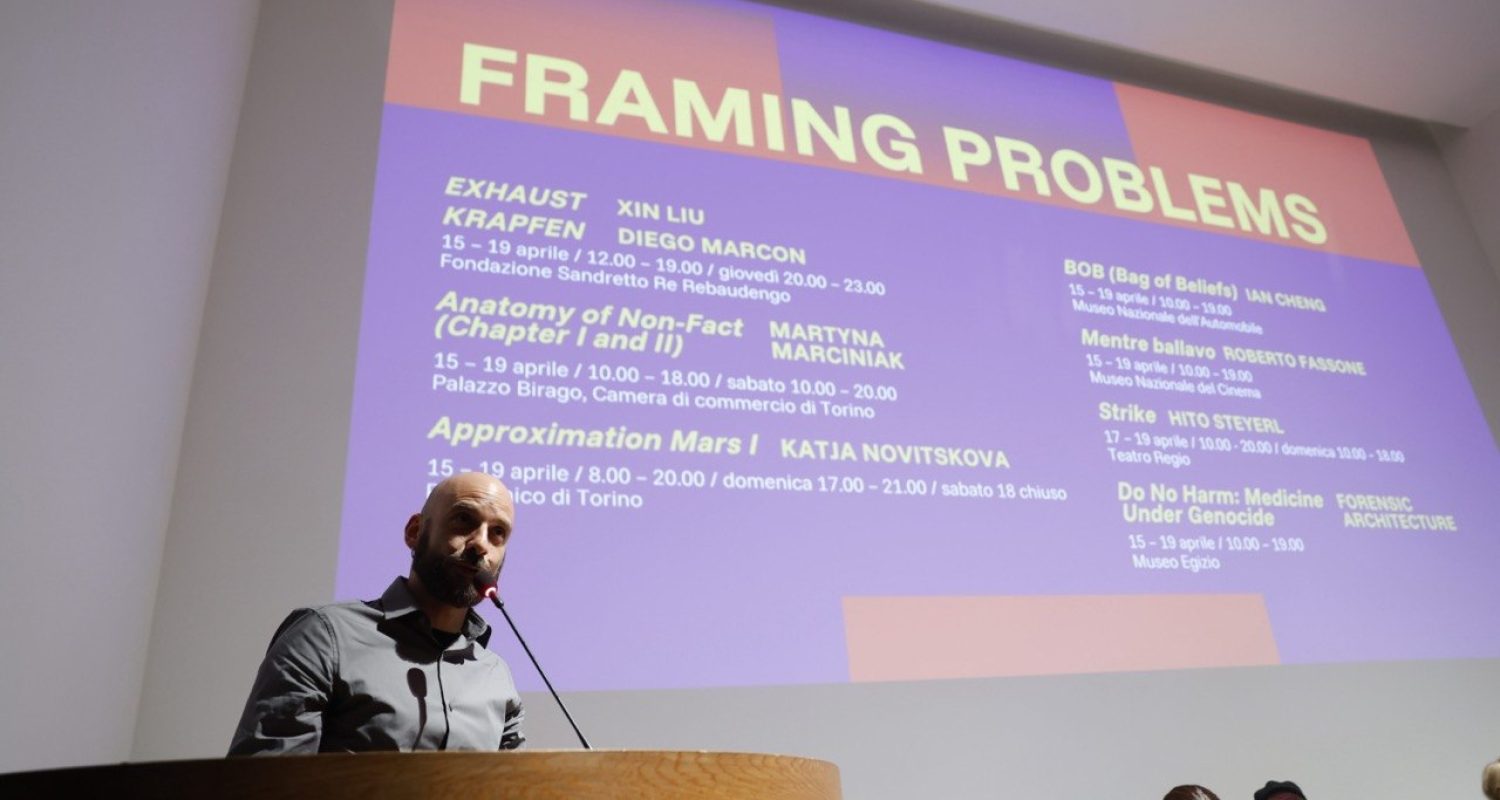
Framing Problems is a widespread exhibition of Biennale Tecnologia 2026 presenting the work of eight international artists across some of Turin’s most significant venues: Teatro Regio, Museo Egizio, Fondazione Sandretto Re Rebaudengo, Museo Nazionale dell’Automobile, Palazzo Birago, Museo Nazionale del Cinema and Politecnico di Torino.
The exhibition begins with the observation that the crises of the present can no longer be addressed as isolated problems. Environmental issues, social transformations, geopolitical conflicts and technological accelerations are intertwined, producing effects that elude linear interpretations. In this scenario, finding solutions does not simply mean applying technical tools, but understanding how a problem is constructed, made visible and therefore addressable.
While the figure of the scientist or engineer is historically associated with problem solving, the artists involved in the exhibition act as problem framers: they do not offer definitive answers, but call into question what appears already defined, test the resilience of existing solutions and bring to light the blind spots they produce.
The artworks
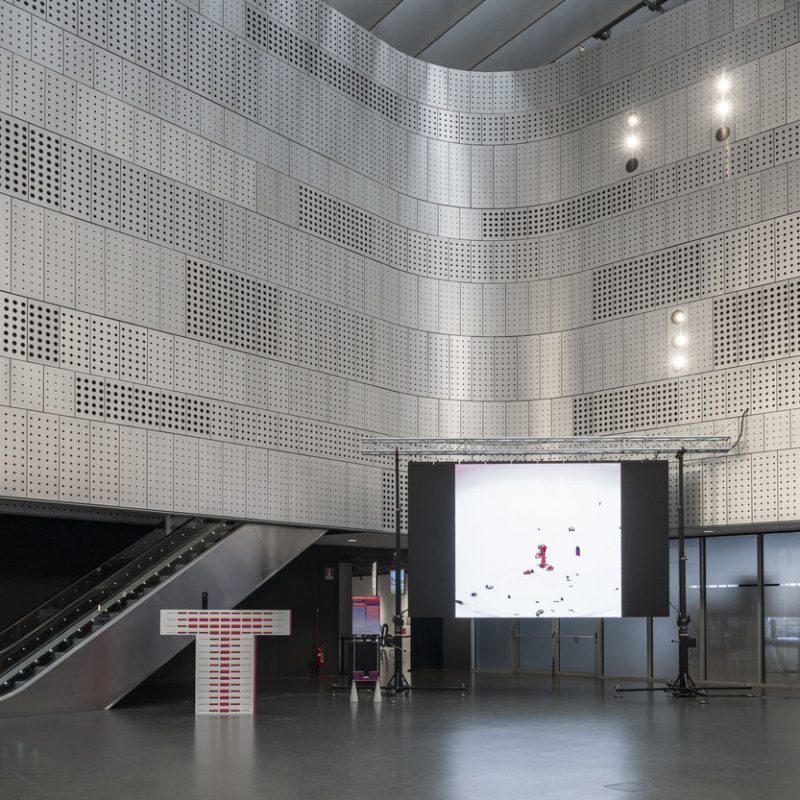
BOB (Bag of Beliefs), Ian Cheng
Drawing on video game graphics and cognitive science studies, Ian Cheng uses computer programming techniques to create environments that have the ability to transform and evolve. As he explains, these are “living virtual ecosystems, which have certain pre-programmed properties, but are free to evolve without the author’s control or an end point. They are a means of deliberately provoking feelings of confusion, anxiety and cognitive dissonance that accompany the experience of uninterrupted change”. BOB (Bag Of Beliefs) is an artificial intelligence that takes the constantly evolving form of a “chimeric branching serpent”. As Cheng explains, it is composed of several “demons”, each of which wants to realise its own micro-story: a devouring demon procures food, a demon of escape evades threats, and an explorer demon seeks new ideas free of preconceptions. They all compete for control of BOB’s body, whose behaviour is determined by interaction with visitors who, using the BOB Shrine app, can intervene with “parental instructions”. In return, BOB offers special rewards to users deemed trustworthy. As BOB’s metamorphoses, movements and personality change throughout the exhibition, Cheng defines this type of work as “art with a nervous system”, generating ever-changing aesthetic experiences.
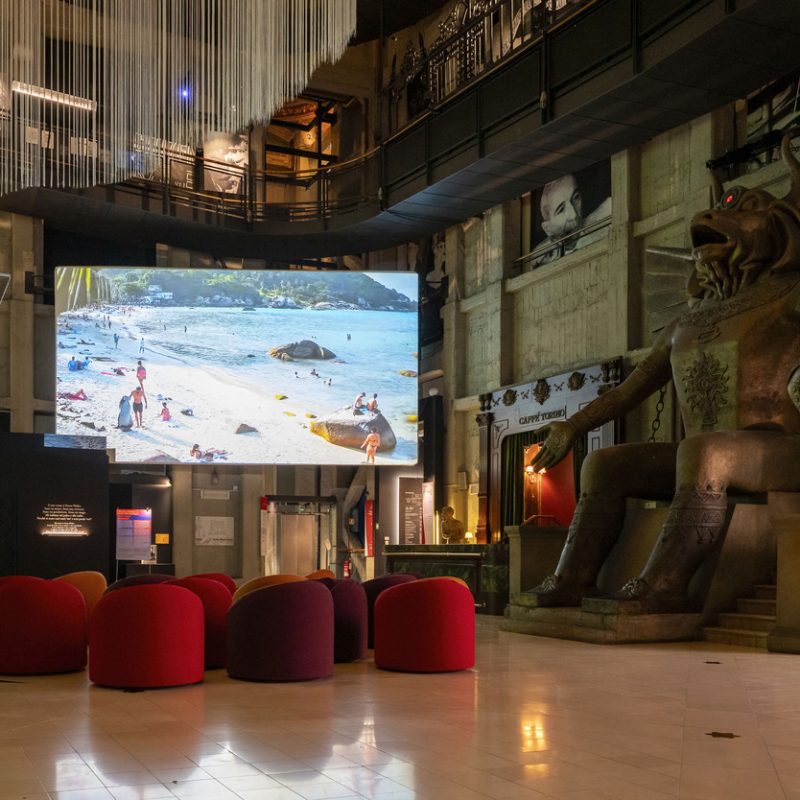
Mentre ballavo, Roberto Fassone
Mentre ballavo (While I Was Dancing) is a two-channel video project conceived by Roberto Fassone for the Aula del Tempio of the Museo Nazionale del Cinema in Turin. The two screens simultaneously present a poetic description and images drawn from various live streams active in distant locations. Although edited in sequence, all excerpts show the exact same twenty-second interval: footage recorded at the same moment in different parts of the world.
The work opens with the artist dancing in his home during the very seconds in which those events unfold elsewhere. The dance thus becomes a minimal, private gesture inscribed within a shared temporality, making perceptible the complexity and simultaneity of contemporary experience.
Drawing inspiration from the early cinematic experiments of the Lumière brothers, the project reflects on the relationship between body, image and shared time. The intermittent appearance of the video during the days of the Biennale reinforces this tension, transforming spectatorship into encounter and making time, not only images, the primary material of the work.
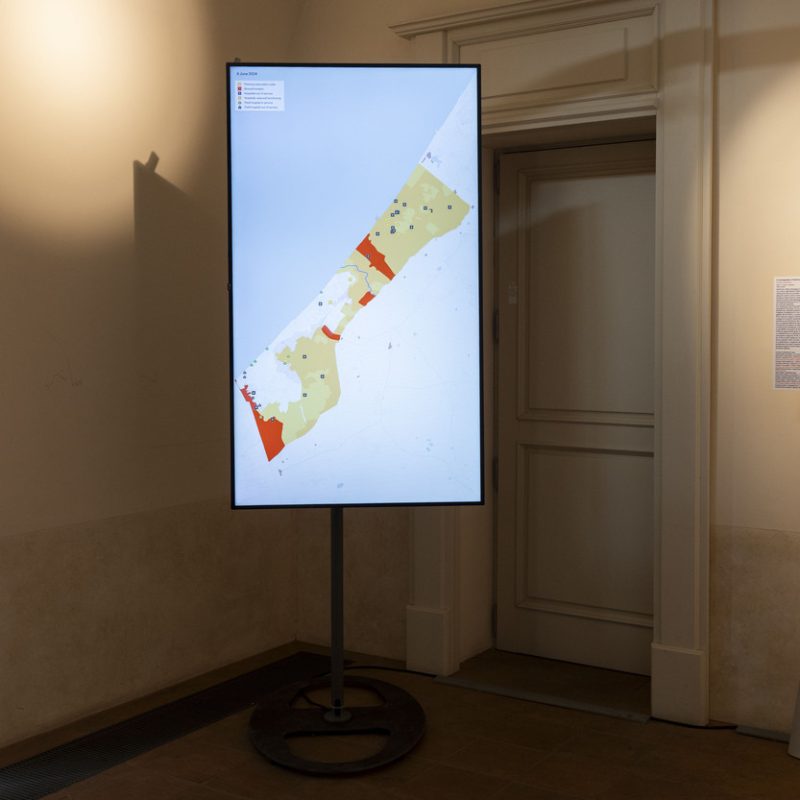
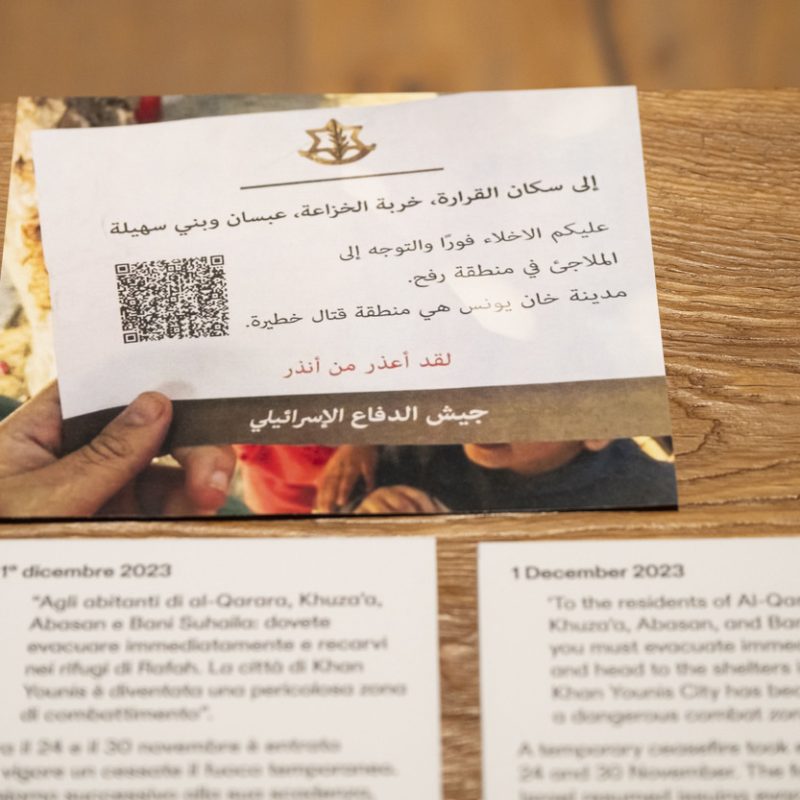
Do No Harm: Medicine Under Genocide, Forensic Architecture
Since October 2023, Forensic Architecture has been documenting the evolving situation in Gaza, investigating individual incidents, challenging disinformation and tracing patterns within the Israeli military’s conduct over time. The exhibited projects focus on the destruction of healthcare infrastructure and the crucial role of medical personnel as witnesses to the ongoing violence.
When it stopped being a war presents the testimony of British-Palestinian surgeon Ghassan Abu-Sittah, who was present at al-Ahli Hospital during the blast that caused hundreds of victims, including displaced families who had taken shelter in what they believed to be a protected site. A Cartography of Genocide, a database and interactive platform developed by Forensic Architecture, gathers thousands of data points to connect individual incidents with systematic Israeli strategies aimed at dismantling the essential conditions of life in Gaza. Through video, maps and testimonies, the works show how the criminalisation of medical personnel and the targeting of healthcare infrastructure have turned access to care into a liability, highlighting the inversion of the medical principle of primum non nocere: “first, do no harm”.
EXHAUST, Xin Liu
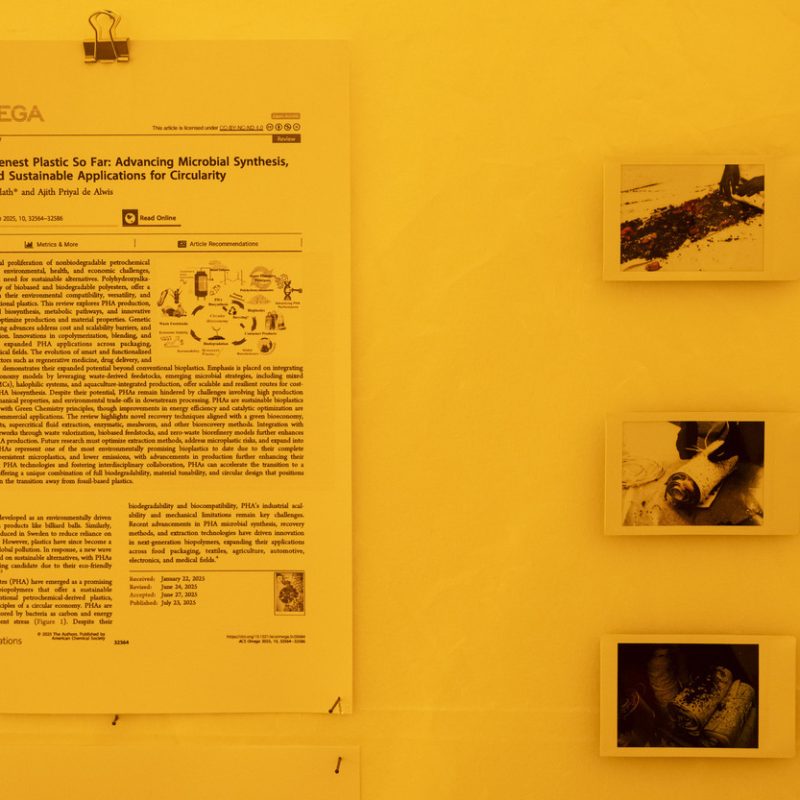
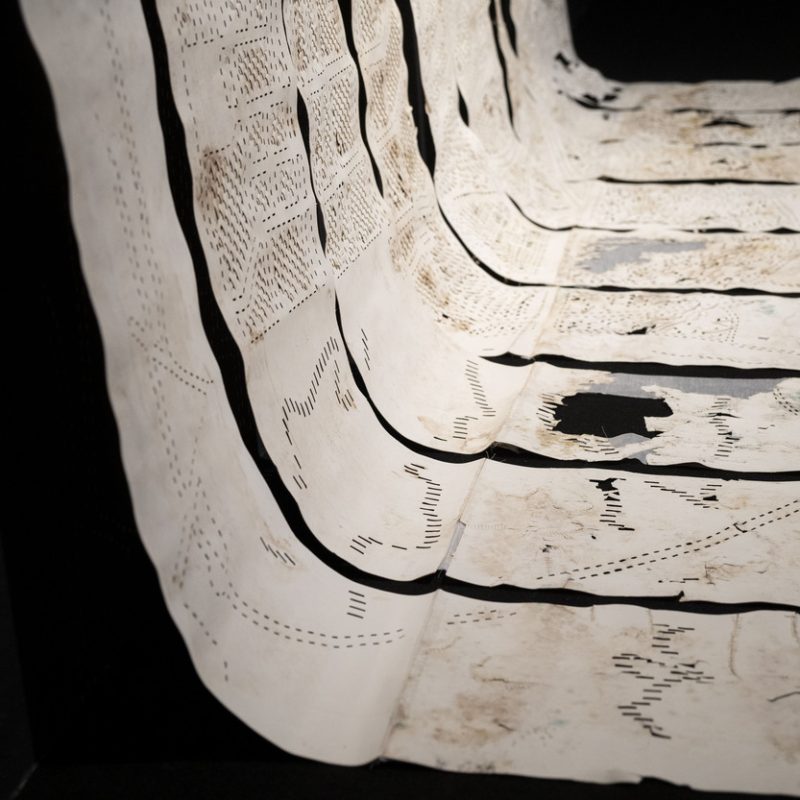
EXHAUST is the first solo exhibition in Italy by Xin Liu, presented by the Fondazione Sandretto Re Rebaudengo in collaboration with K11 Art Hong Kong. Xin Liu’s artistic practice examines the consequences of technological and scientific aspirations, through the debris left behind after their promises of transcendence have failed. Rather than celebrating the heroic gesture of progress, the artist focuses on its residues: rocket fragments, cryogenic containers, genomic codes rendered illegible, biodegradable plastics and obsolete satellites become materials through which to reflect on the relationship between technology, matter and transformation.
The exhibition presents a series of works installed in the Foundation’s project room, investigating the key themes of Xin Liu’s research. The film The White Stone (2021), a story set in the future in which the protagonist embarks on a “hunt” for rocket debris abandoned in remote areas, dialogues with the new works The Map: Karamay (2026) and The Lab (2026). The first is a large, partially degraded tapestry made of a bioplastic produced from waste biomass, which reproduces the map of Xinjiang, the artist’s hometown, whose history is linked to the exploitation of oil resources. The Lab is an environmental installation occupying the technical room of the project room. The work stages a laboratory in which the artist explores the large tapestry from both a conceptual and material perspective.
Krapfen, Diego Marcon
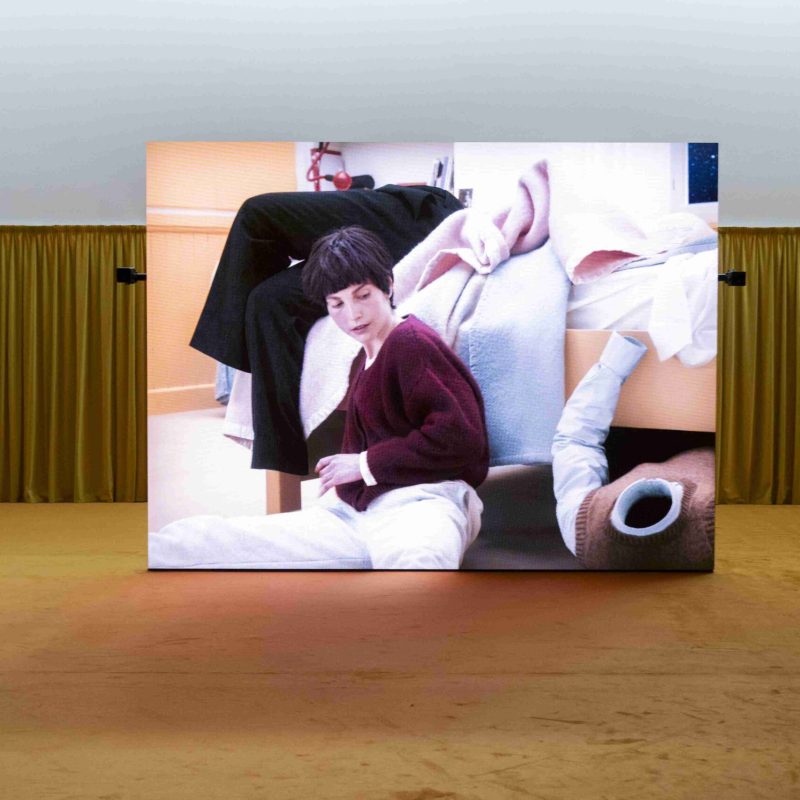
With the opening of Krapfen by Diego Marcon, the Fondazione Sandretto Re Rebaudengo and the New Museum in New York launch the first edition of the New Futures Production Fund. Under the guidance of Massimiliano Gioni, Edlis Neeson Artistic Director of the New Museum, the initiative involves the co-production and presentation of a new work at the two institutions. Through research that reflects on the structure of cinematic language and rethinks the relationship between moving images, space and sound, the works of Diego Marcon draw on classic genres such as horror, musicals, slapstick comedy and melodrama, ranging from structural cinema to mainstream entertainment. Marcon reworks this broad vocabulary by combining different registers, building a disturbing imaginary inhabited by characters who are at once real and synthetic, human and inanimate.
Krapfen features a young child of ambiguous gender, interpreted by Violet Savage, and four garments: a pair of gloves, a foulard, a pair of trousers and a pullover. The work unfolds like a musical and draws inspiration from the golden age of American animation and Italian opera theatre. The musical score, composed by Federico Chiari, a long-time collaborator of the artist, leads the characters through a frenetic choreography in which the four garments urge Violet to eat a krapfen. As is often the case in Marcon’s works, the childlike setting is accompanied by an alarming and disturbing atmosphere, in which a sweet seems to become a device for evoking emotions of terror and annihilation.
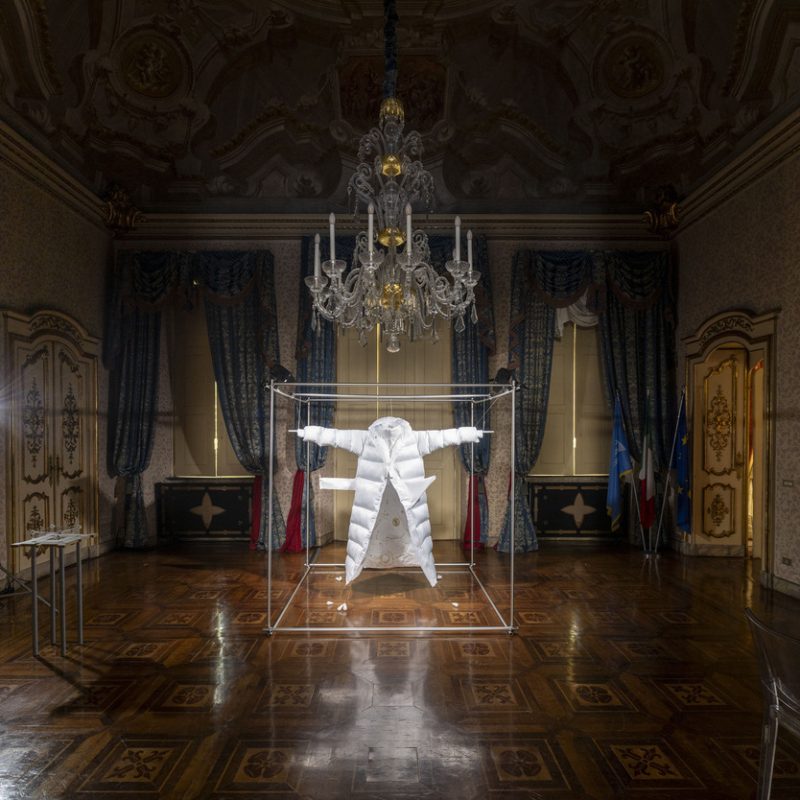
Anatomy of Non-Fact (Chapter I and II), Martyna Marciniak
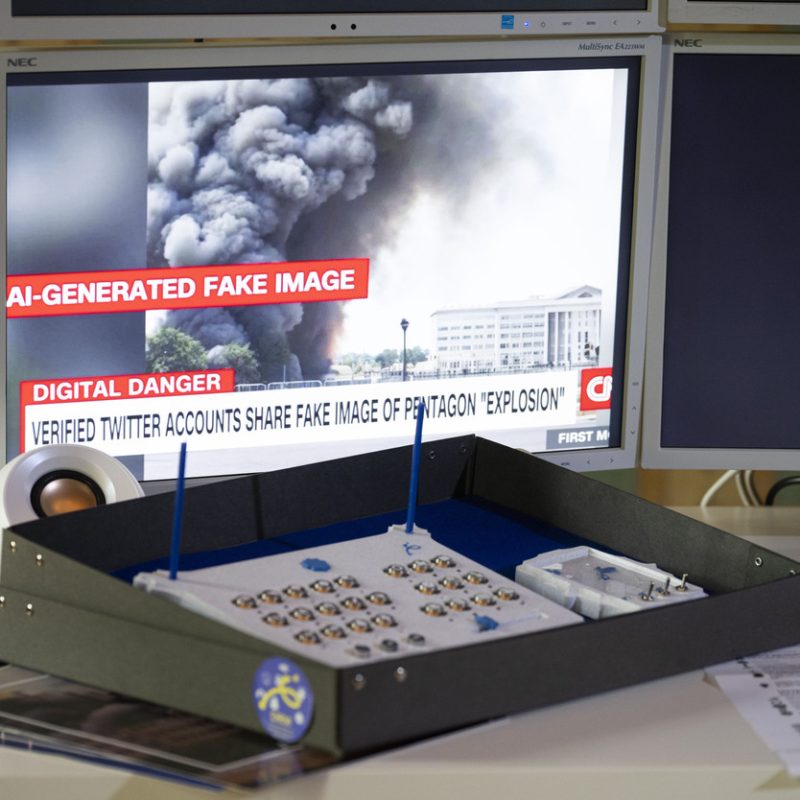
The two works are part of the art-research project Anatomy of Non-Fact, which examines the aesthetics of visual misinformation in the era of synthetic images. AI Hyperrealism focuses on the image of the “Balenciaga Pope”, which went viral during the so-called “AI boom” of 2023, translating it into a physical object that allows for the examination of errors and anomalies generated by the flawed synthetic production process. In the video, the “Balenciaga Pope” addresses the crisis of perceptive faith and calls into question the role of photographic images and the authorities of truth. Deep Reality Markets forms a dialogue with AI Hyperrealism, focusing on the aesthetics of AI corporate misinformation and speculation. Modelled after the marketing strategies of leading AI service providers, the project uses technological speculation as a financial force, concealing the workings of its tools and replacing understanding with belief. Through the “Panic Image trading terminal”, the work reflects on the capacity of synthetic images to generate misinformation and influence the construction of the future.
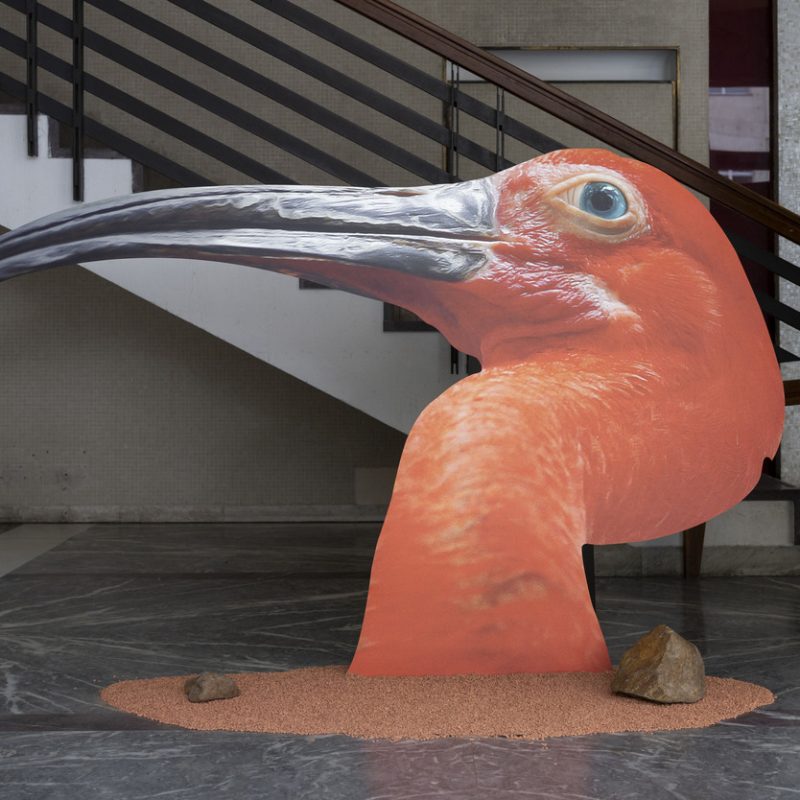
Approximation Mars I, Katja Novitskova
Approximation Mars I is part of the series Approximation, which Katja Novitskova began in 2012. The artist collected images of animals from the Internet, had them printed on shaped aluminium sheets and presented them as cutout displays. With this body of work, Novitskova reflects on how images, as they circulate online, acquire new life and become carriers of new meanings and uses. Just as our perception of space has been altered by rapid technological development, so too, according to the artist, the boundary between the natural world and its digital version is dissolving. Photography had transformed these animals into flat, immaterial images, before the artist appropriated them and restored their three-dimensionality through the work. Everything happens in anticipation of the audience’s selfies, which will return them to their inevitable starting condition. The result is a continuous exchange between the real and the virtual, within an ideally infinite cycle.
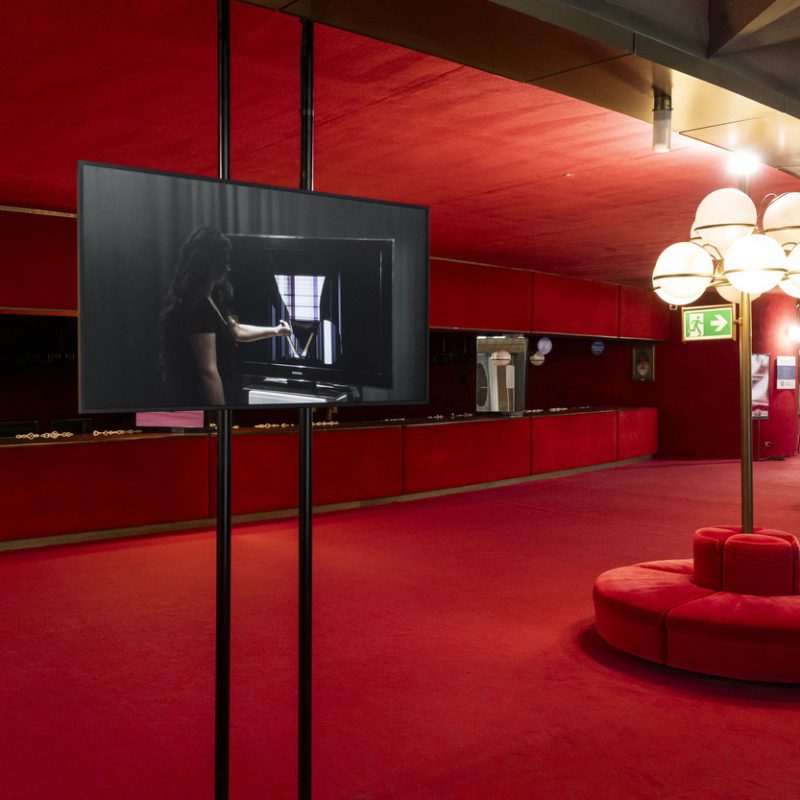
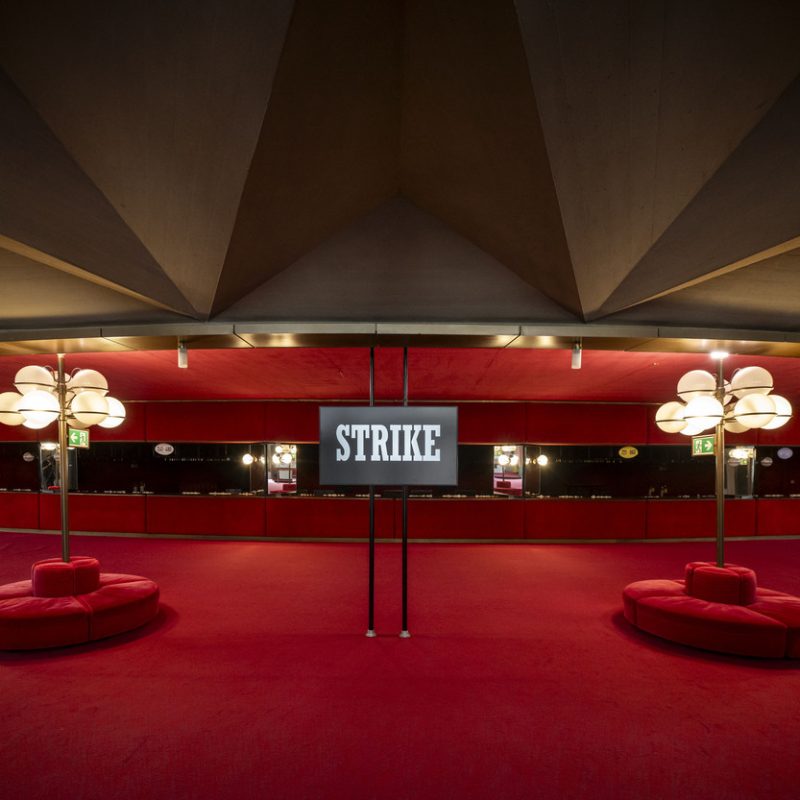
Strike, Hito Steyerl
In her essay “The Terror of Total Dasein”, Hito Steyerl looks back on the International Artists’ Strike of 1979 as a “protest against the ongoing repression of the art system and the alienation of artists from the results of their work”. The short video Strike seems to give filmic expression to her complex reflections on this subject. The word “STRIKE” appears in large white letters filling the entire black screen. In English, “strike” has a double meaning: to hit with force, or to refuse to work in order to get an employer to meet one’s demands. With hammer and chisel in hand, Steyerl approaches a turned-off television and strikes it. Is she declaring a strike by destroying the television – a medium she relies on as a filmmaker? Or is the act of striking the monitor itself part of her artistic production?
Yet the flat screen monitor is not really destroyed. Instead, an abstract image suddenly appears, revealing the matrix of pixels through which every image is generated on a monitor. Regardless of content, the basic structure remains identical for all images. Strike can therefore be understood as a reference to the uniform, predetermined way in which media images are produced and perceived. Through the monitor’s “destruction”, the device loses its function; it becomes the victim of a strike. This highlights its nature as a technological object that, since the 1950s, has evolved into the primary medium for the production and dissemination of media imagery.
The public program
Framing Problems is accompanied by two public events that explore the themes of the exhibition through dialogue with artists, curators and international guests.
Framing Problems Opening
15 April 2026, 7 PM
Fondazione Sandretto Re Rebaudengo
With Patrizia Sandretto Re Rebaudengo, Guido Saracco, Xin Liu, Diego Marcon, Massimiliano Gioni, Hans Ulrich Obrist, Federico Bomba and Bernardo Follini.
Art Within the Fold of the Digital Present
17 April 2026, 4 PM
Foyer del Toro, Teatro Regio
With Hito Steyerl, Roberto Fassone and Martyna Marciniak.
Moderated by Federico Bomba.
Talk in English with simultaneous interpretation in Italian.
Credits
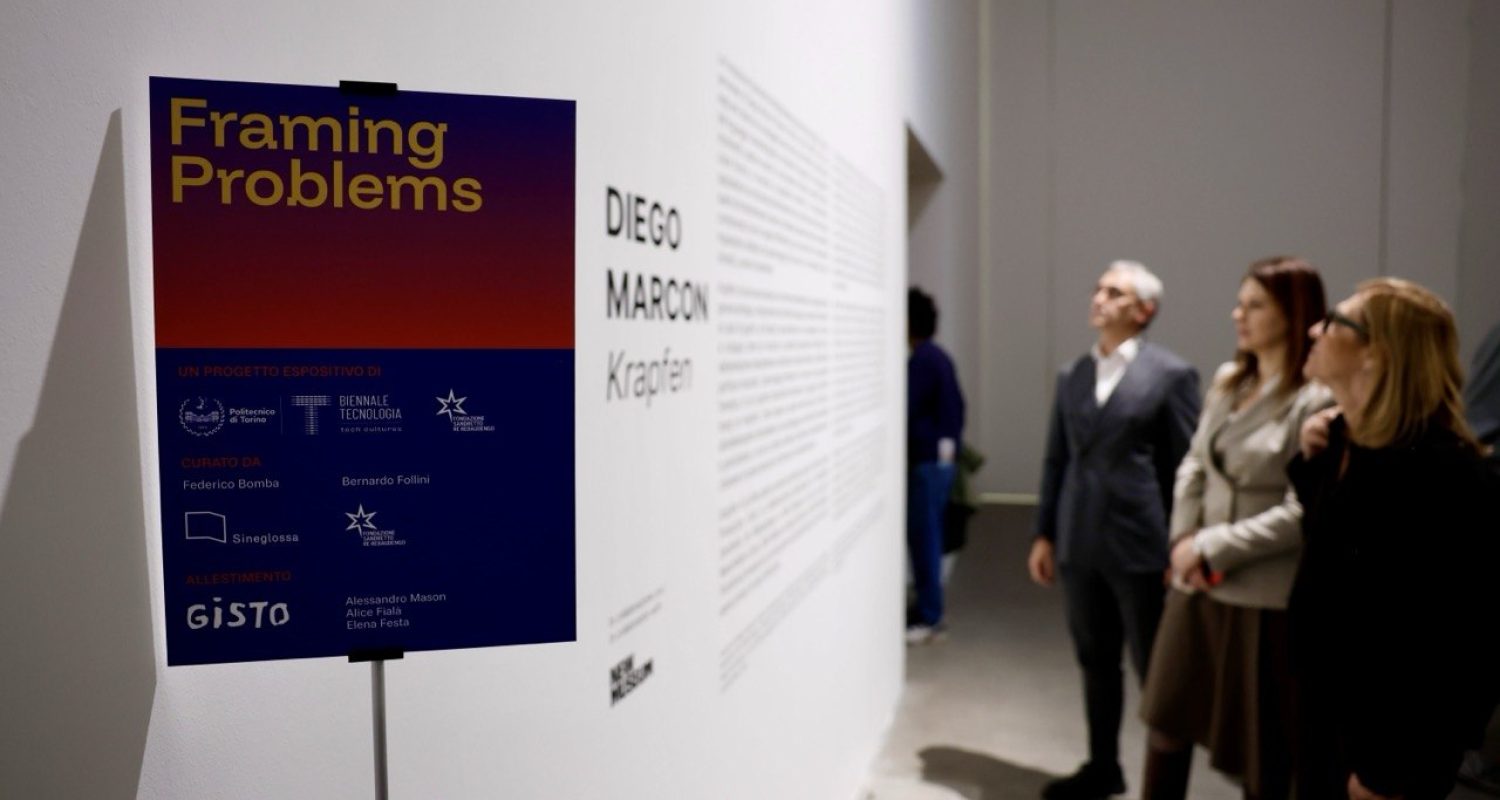
Framing Problems is an exhibition project by Biennale Tecnologia 2026 and Fondazione Sandretto Re Rebaudengo, curated by Federico Bomba (Sineglossa) and Bernardo Follini (Fondazione Sandretto Re Rebaudengo), with exhibition design by Studio GISTO, in collaboration with Museo Nazionale del Cinema, Museo Nazionale dell’Automobile, Teatro Regio Torino and Museo Egizio, with the support of Camera di commercio di Torino.