What is the NuGamers project
The gaming sector involves millions of people across Europe and worldwide, yet it continues to show strong gender imbalances, especially in education and professional pathways.
Mapping the current situation and making it visible and measurable was the first step of NuGamers, the Erasmus+ project co-funded by the European Union, in which Sineglossa is a partner alongside Futuregames (Sweden), All Digital (Belgium), XAMK South-Eastern Finland University of Applied Sciences (Finland), and Algebra University College (Croatia).
The project began by listening directly to female students in secondary schools, participants in vocational education and training (VET) pathways, and young developers at the start of their careers. In the focus groups organised by the partner organisations, participants shared their routes of entry into the gaming world, the stereotypes they encountered, and the hostile behaviours often present in online gaming communities and within the industry.
Their experiences contributed to the creation of a Factsheet on gender bias in game development education, which maps obstacles, motivating factors and risks, while also putting forward key recommendations for schools, vocational training providers and higher education institutions.
While women represent a significant portion of the gaming community (46.7%), they remain heavily underrepresented in game development courses and in the industry: only a minority of people studying or working in the sector are women or gender-diverse individuals (23.7%).
This gap is driven not only by persistent stereotypes, but also by a lack of role models, exclusionary language and imaginaries, environments perceived as hostile, and educational pathways that struggle to translate equity goals into concrete actions.
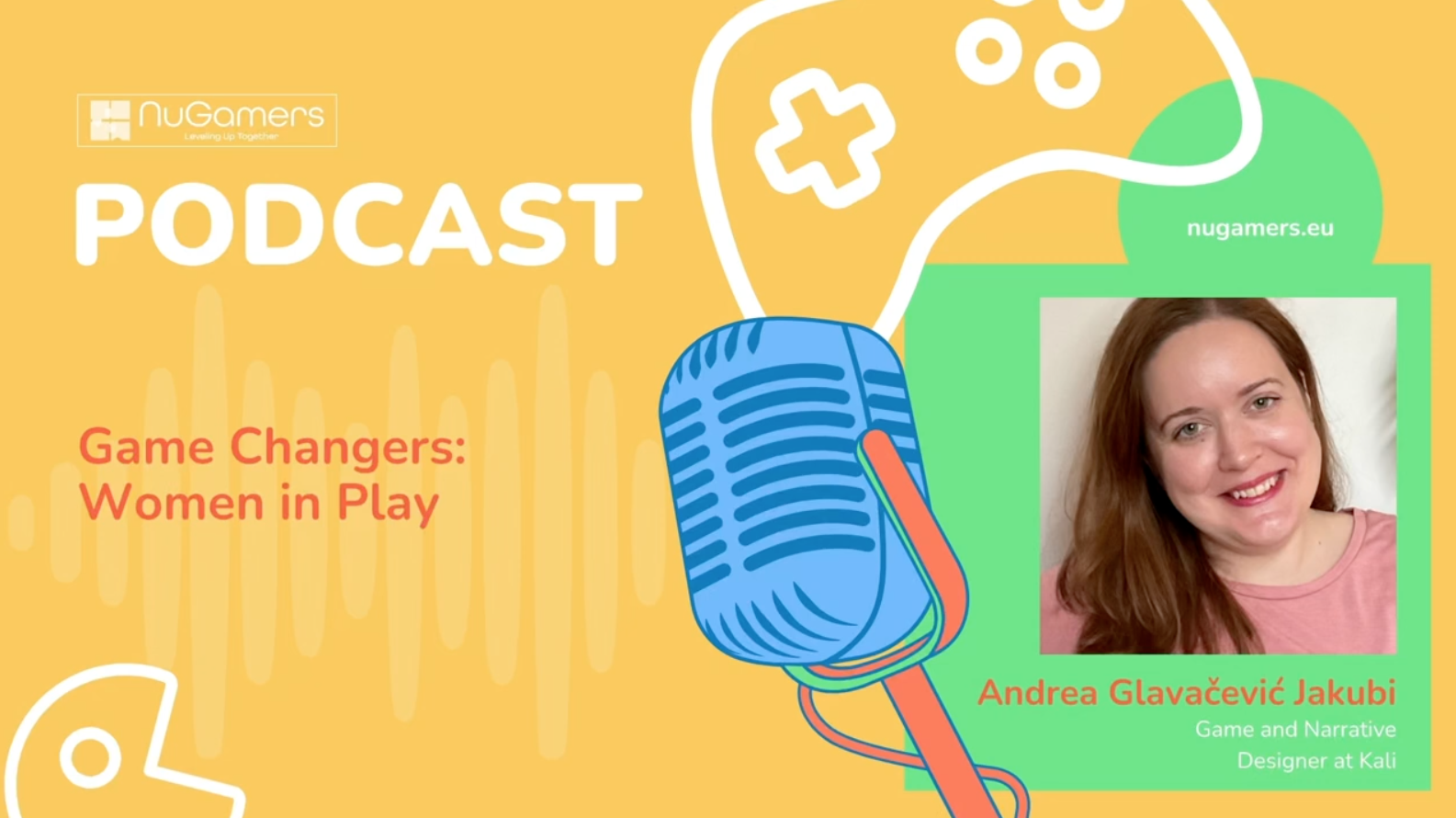
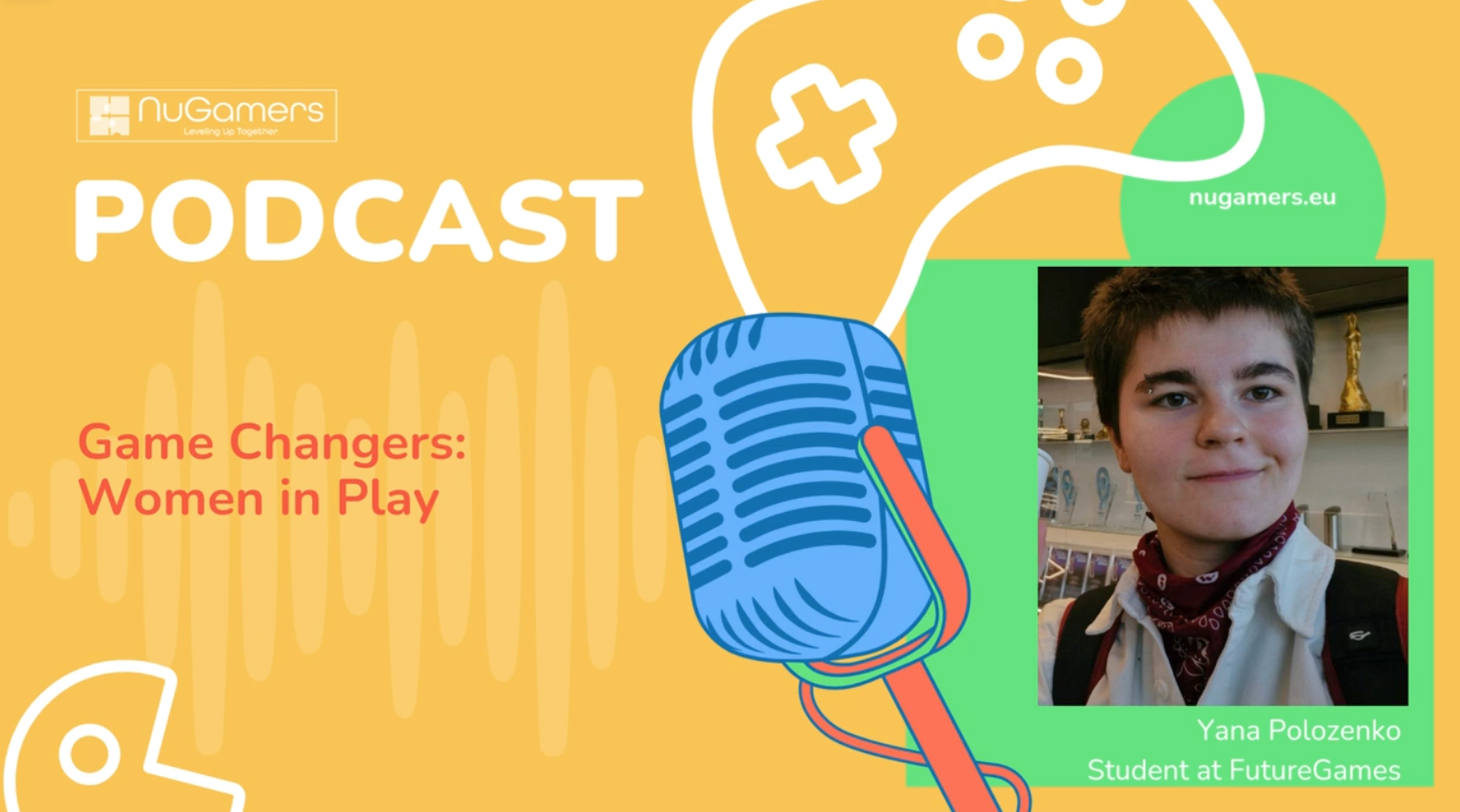
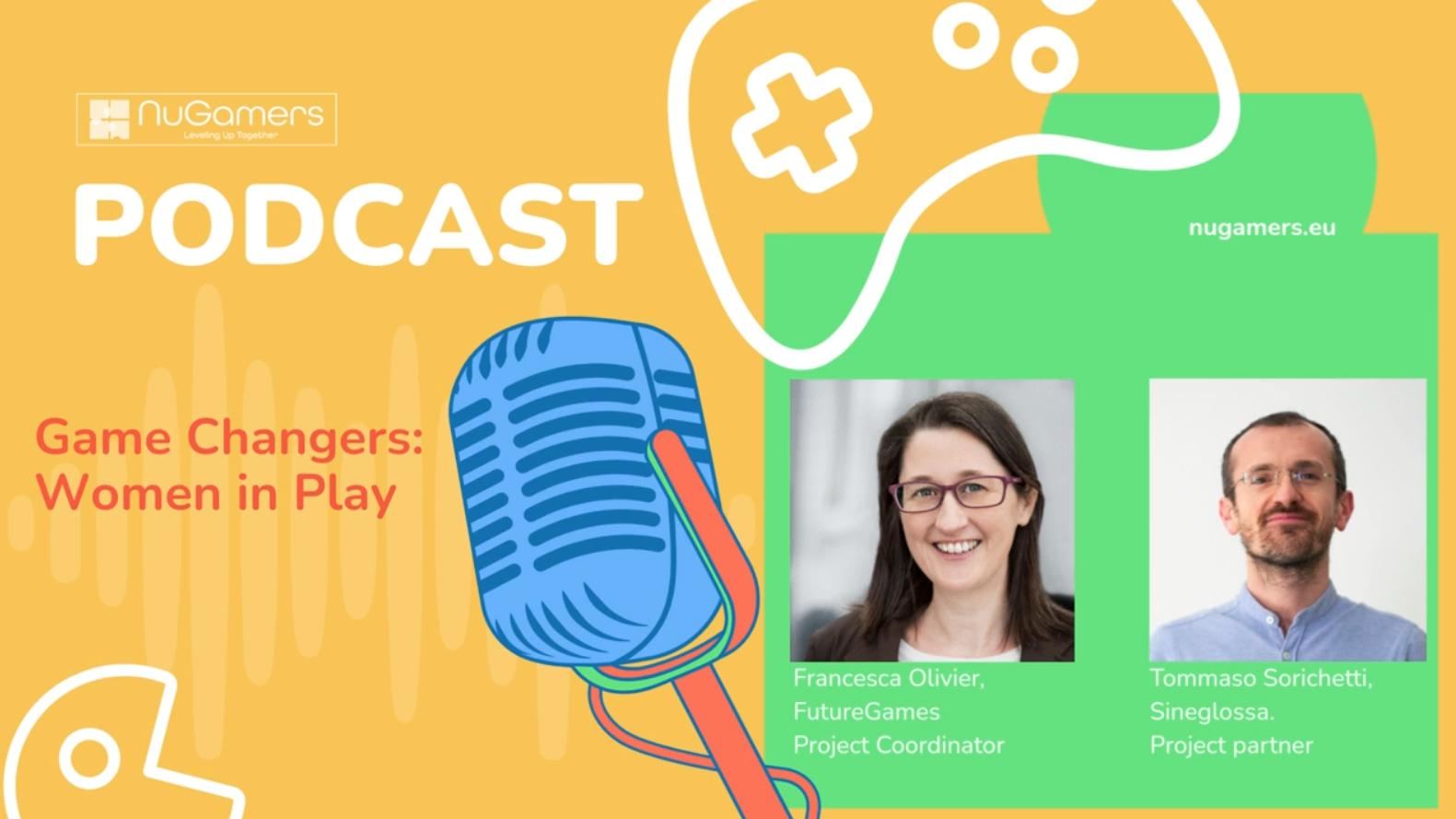
Sticking to the same focus on listening, NuGamers also created a Podcast, which directly gathers the voices of women who study or work in the videogame sector, alongside those of educators and professionals who are rethinking how careers in this field are told and taught.
Practical resources: Handbook e Toolkit
In addition to the Factsheet and the Podcast, the NuGamers project sought concrete solutions to support educators, trainers, and career guidance professionals in making game development education more accessible, welcoming, and inclusive both for women and girls, and for gender-diverse people.
For this reason, over the two years of the project, the five project partners designed and developed practical, open-access resources aimed at helping to recognize gender bias and rethink educational activities, language, and learning contexts:
The NuGamers Handbook is a practical guide aimed at teachers, trainers, career guidance professionals, and education programme coordinators. The handbook:
- explores the main gender biases in gaming education;
- proposes principles, strategies, and practical recommendations for designing more inclusive curricula, guidance activities, and learning environments;
- includes checklists, self-reflection questions, and concrete examples drawn from the experience of the project partners.
It is a useful tool for turning abstract inclusion goals into concrete changes in everyday practices.
The NuGamers Toolkit is a practical tool that translates the principles of the Handbook into concrete activities that are replicable and adaptable to real educational contexts. The toolkit includes:
- role-playing games, cards, and discussion tools focused on bias and stereotypes;
- activities to build safe and collaborative educational spaces;
- exercises on soft skills, awareness, and the transition to the world of work.
The toolkit helps address complex topics in a participatory and non-accusatory way, and it can be easily adapted to STEM contexts beyond gaming.
These resources can be used in synergy to create an educational and professional environment capable of supporting girls, women, and gender-diverse people in the challenges and obstacles they may encounter along their professional paths, while also contributing to the development of greater awareness within the sector around issues of gender inequality and the biases that accompany it.