At school to tell the story of their territory
Through the StoryMakers project, we are engaging 40 students from the Val di Fiastra (Macerata) in the creation of a collective narrative of their territory, made up of podcast and video interviews. The project is part of Sineglossa’s broader work on culture as a driver of territorial regeneration, experimenting with practices that bring together creativity, listening, and grassroots cultural production.
Born with the aim of activating a new way of looking at inhabited places – by centering the experiences, perceptions, and voices of younger generations – StoryMakers has now reached its second phase. With the school workshops completed, the contents created are being finalized and will be presented to the community through public events held in schools and guided walks through the territory.
StoryMakers – Racconti audiovisivi di comunità (Community audiovisual storytelling) is a project curated by Sineglossa, in collaboration with Borgofuturo and the Gentili-Tortoreto School Institute of San Ginesio (MC). The project is funded by the Marche Region – Dipartimento per le Politiche giovanili e il Servizio civile universale (Department for Youth Policies and Universal Civil Service), through the FNPG 2023 fund.
From places to stories: how the workshops took place
Between November and December 2025, students from the Gentili-Tortoreto Institute of San Ginesio and Sarnano took part in a workshop programme co-designed by Sineglossa and Borgofuturo. Tommaso Sorichetti, trainer at Sineglossa, led the initial walkscape and emotional mapping workshops – key activities for building a shared perspective and a common vocabulary among participants. David Giacomelli, from the Borgofuturo association, guided the groups through the videomaking process, while podcaster Andrea Genzone led the podcasting sessions.
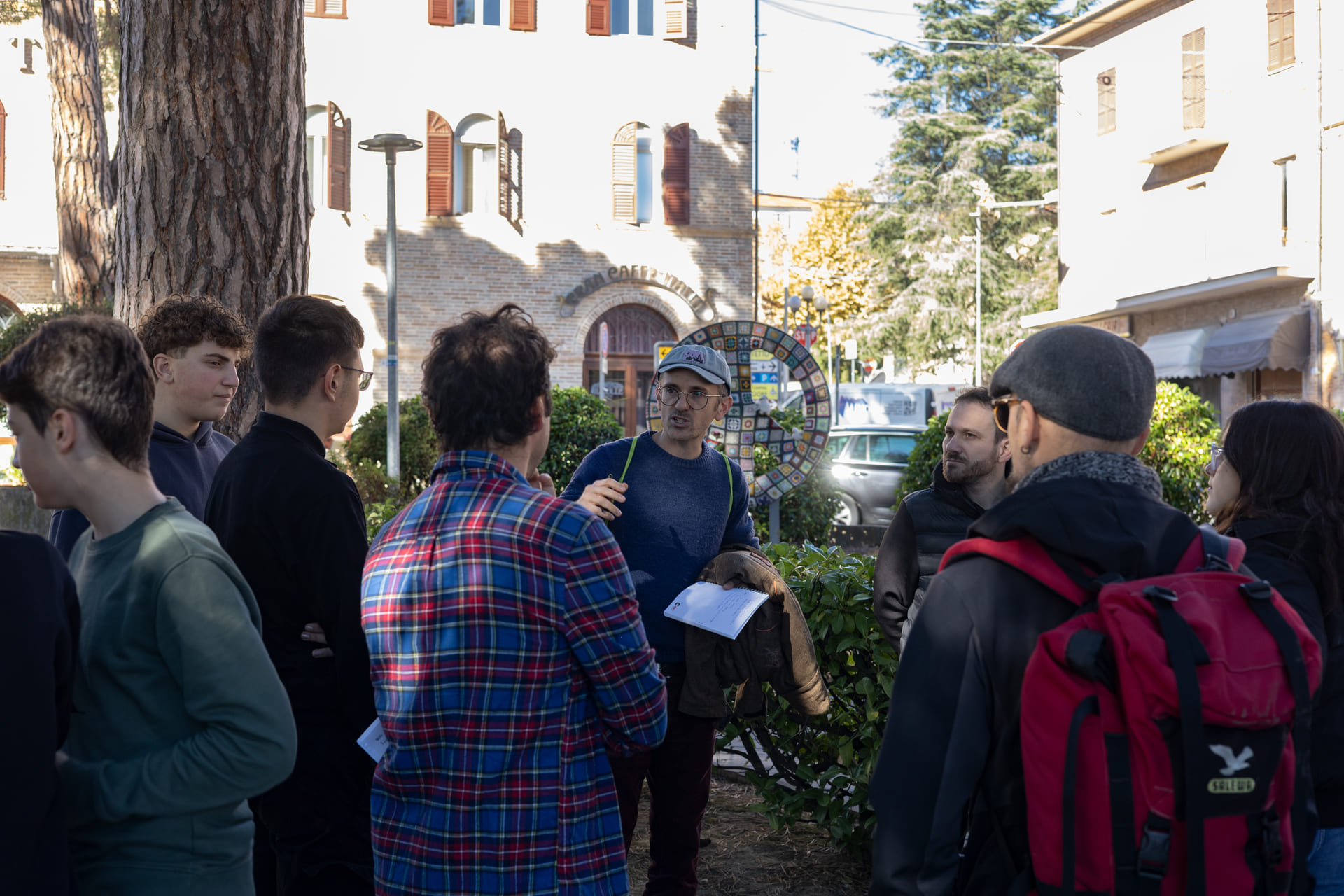
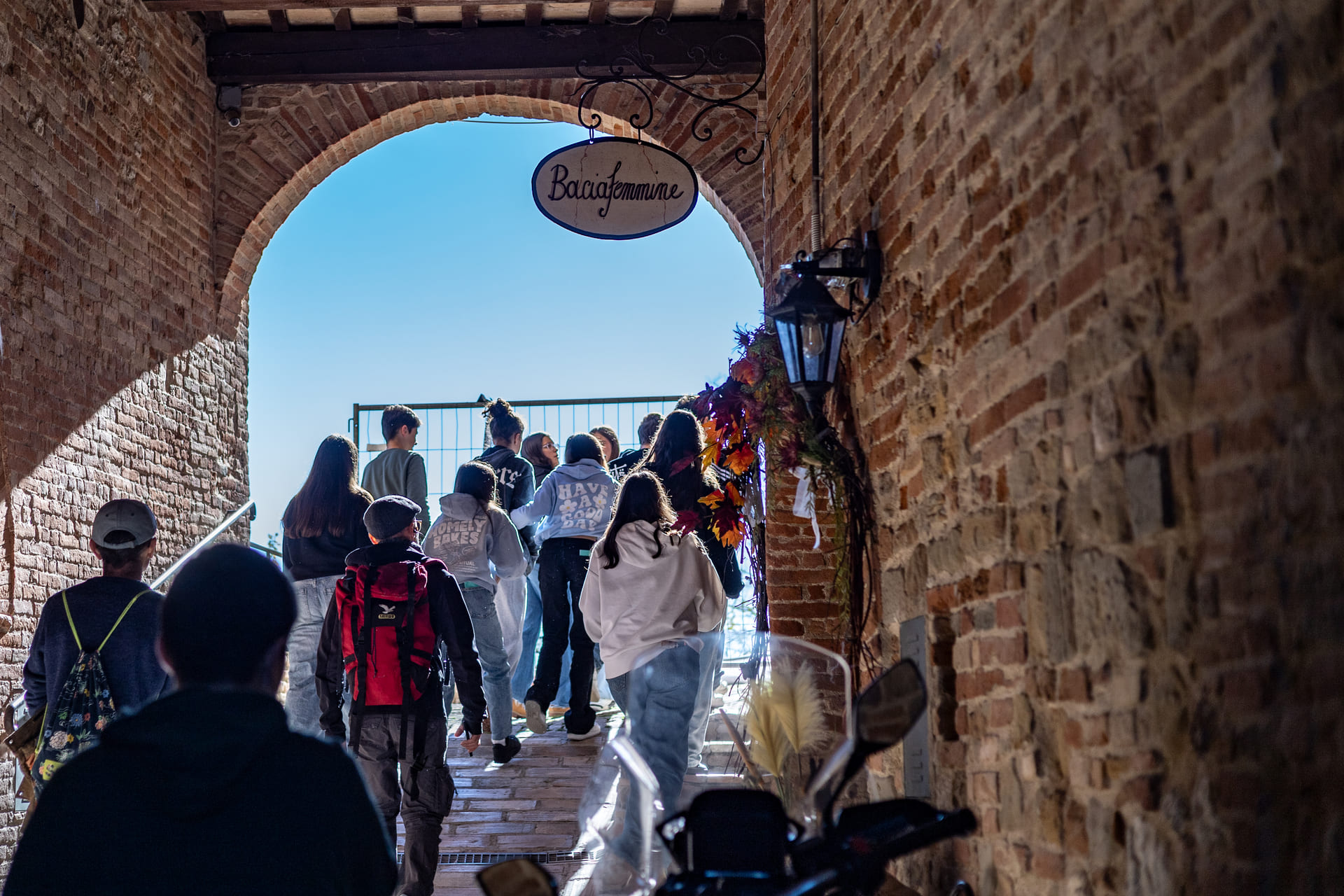
Through the Walkscapes, students walked through villages and everyday spaces, guided by their instinct, sensations, and memories, choosing where to stop, what to observe, and what to listen to. Walking became, in this context, an educational practice: an act of attention and relationship with space.
Students thus had the opportunity to train an emotional gaze on places and, starting from this, to create an emotional mapping. For this activity, the so-called Carte dei Luoghi – an analogue tool designed by Sineglossa as part of the Nontourism for Kids methodology (previously tested in the creation of one of the itineraries in the Nontourism Guide to Arcevia) – were used and enabled to associate emotions, meanings, and lived experiences with concrete spaces in the territory, shaping a shared affective geography. Each group worked on a key word (Happiness, Fear, Memories, Future, Silence…) and built a shared definition, which was then applied to places in the area.
The result is not a “correct” map, but a situated map, made up of personal memories, family stories, contrasting perceptions. The same space can be, for different groups, a place of play or conflict, peace or nostalgia. It is precisely in these differences that stories emerge. The next activity of the project will be the creation and publication of this map in digital form, making it accessible to students and local residents.
Podcasts and videos: learning by doing
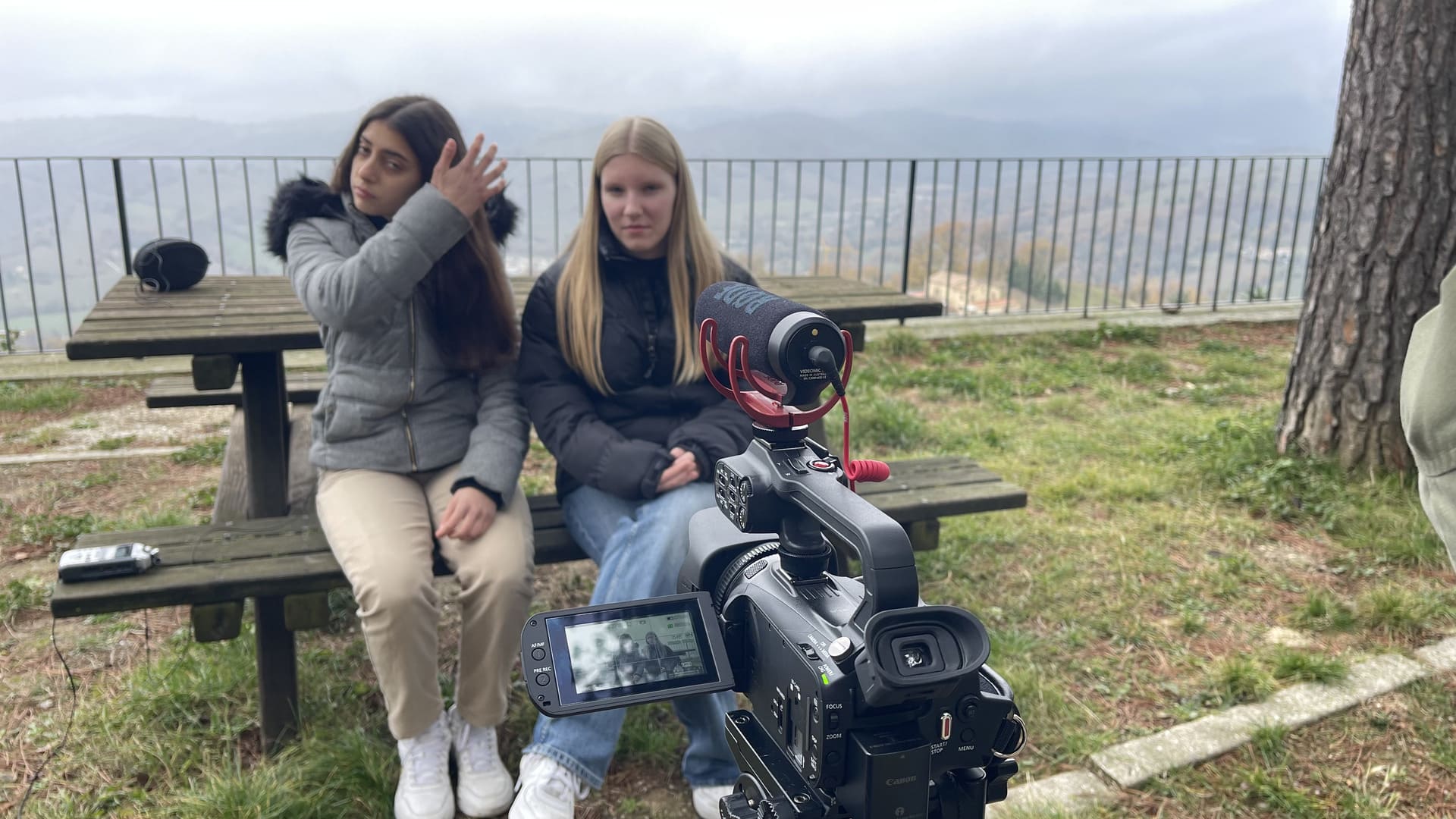
Once the initial phase of exploration and mapping was completed, the project continued with sessions dedicated to collecting stories. Interviews, ambient sounds, images, and testimonies became the basis for writing and producing podcasts and videos, guided by videomaker David Giacomelli from the Borgofuturo association and podcaster Andrea Genzone. The students were not mere users, but authors themselves. They worked in groups, made narrative decisions, and chose what to tell and how to tell it, reflecting together on the meaning of representing their own territory.
In the podcasting and videomaking workshops, students worked in groups on scriptwriting, conducting interviews, recording, and editing.
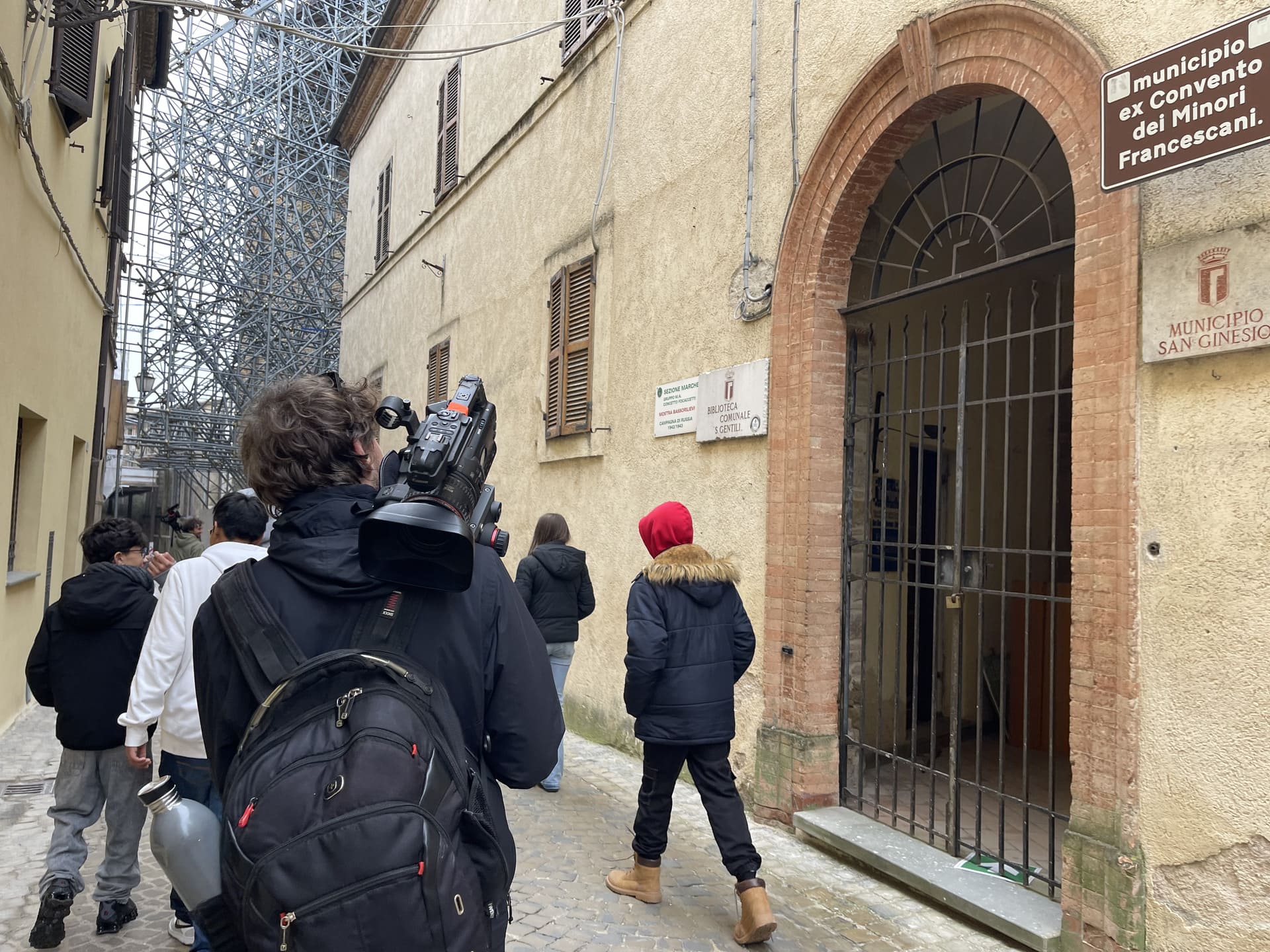
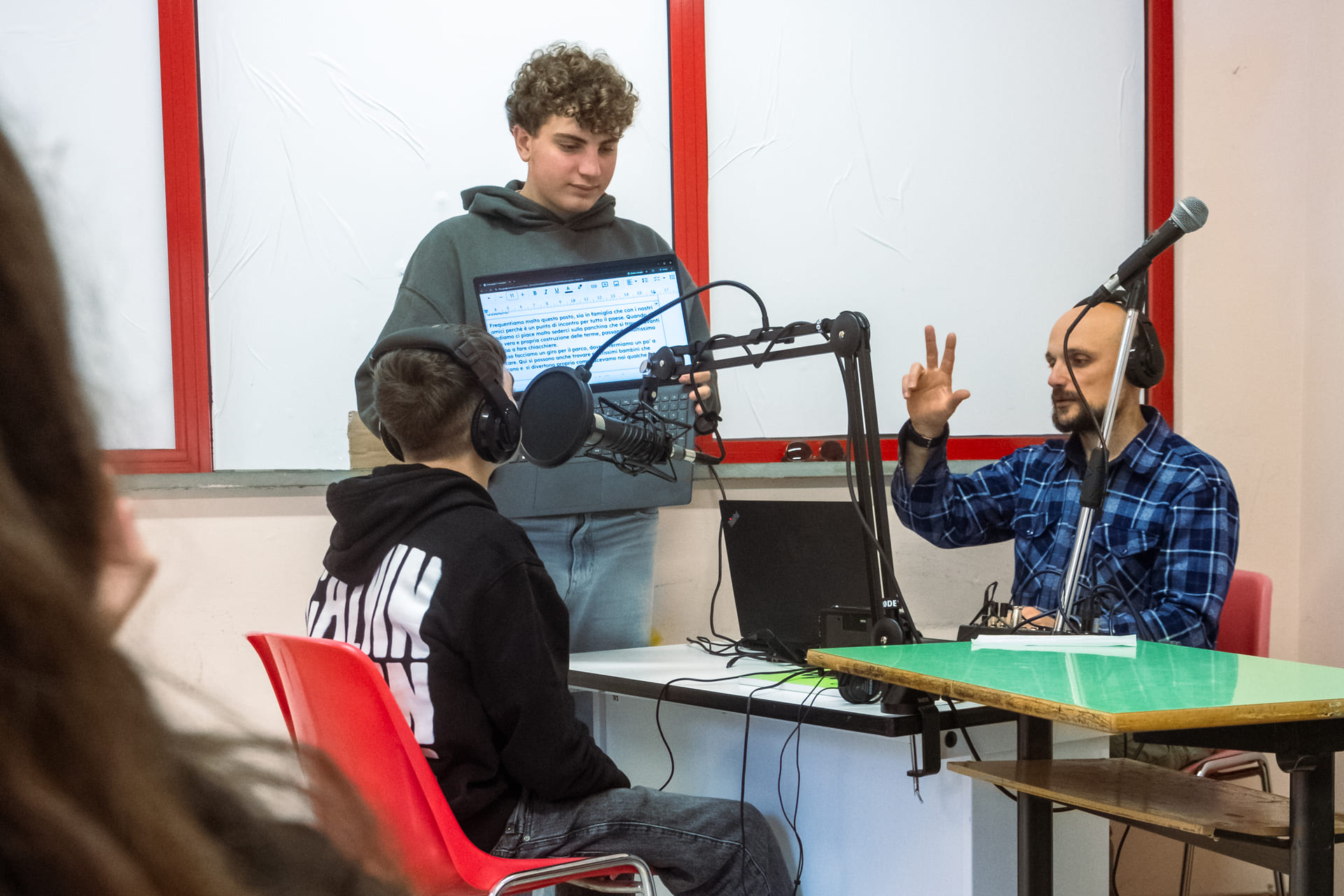
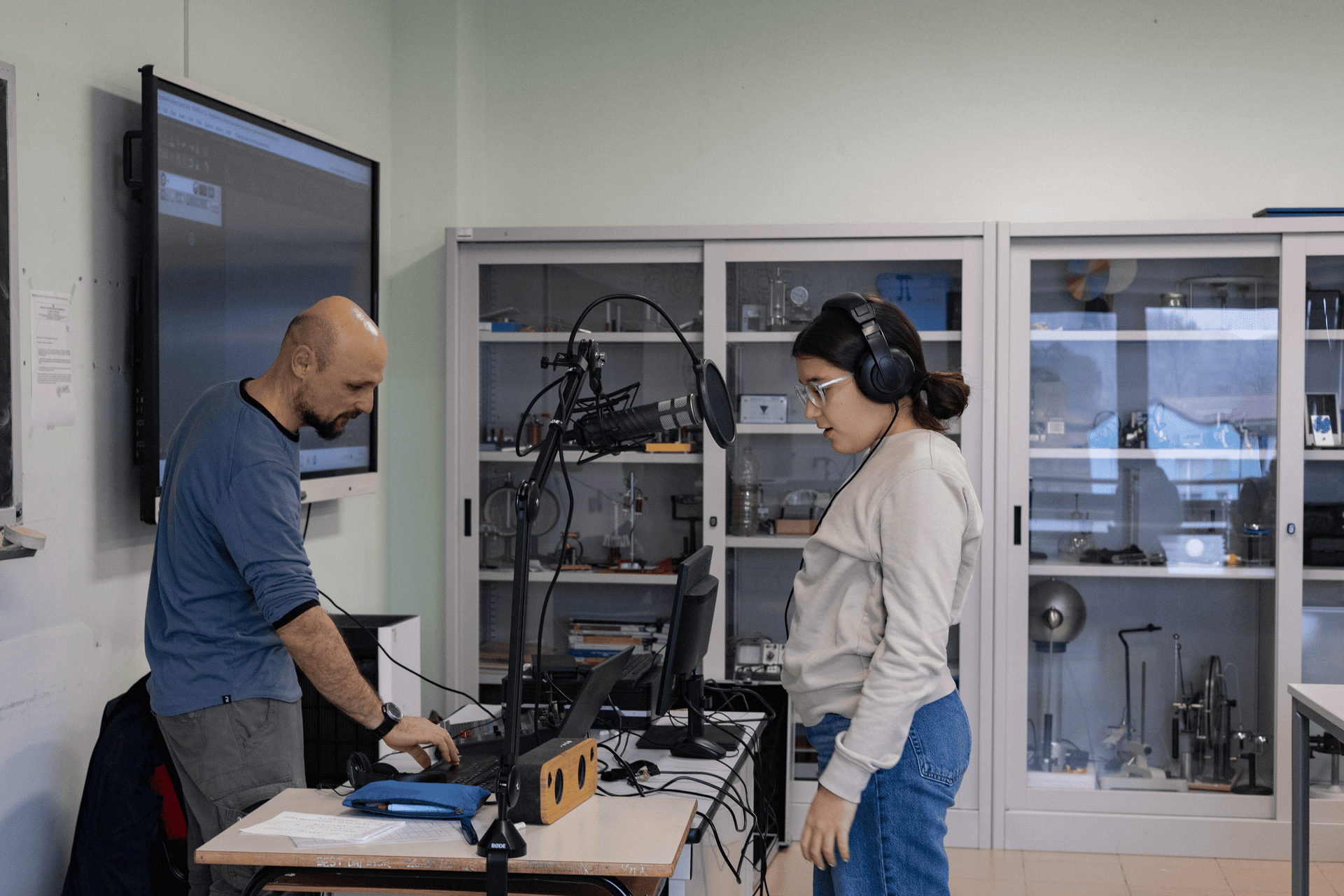
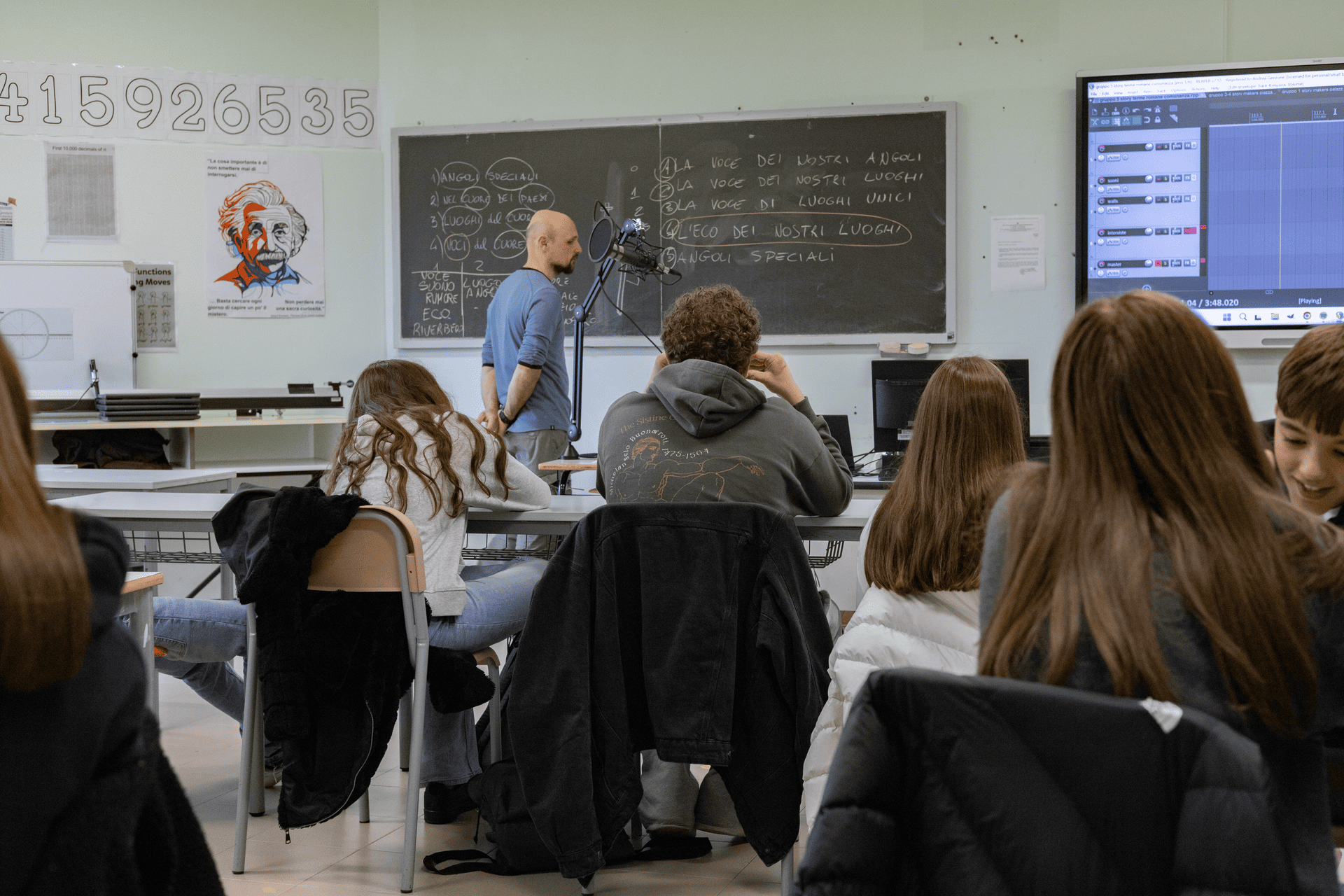
The focus was not only technical, but narrative: understanding what to tell and why, even before how to tell it. Divided into groups, the classes reflected on questions such as:
- Why is this place important to you?
- Looking at the past, do you think San Ginesio has improved or worsened?
- Is the Belvedere a well-known place or not? Should it remain the way it is, or would you like it to be more popular?
- What has changed over time?
- Do you have good memories linked to San Ginesio?
- Who truly lives this place?
- What does this place sound like?
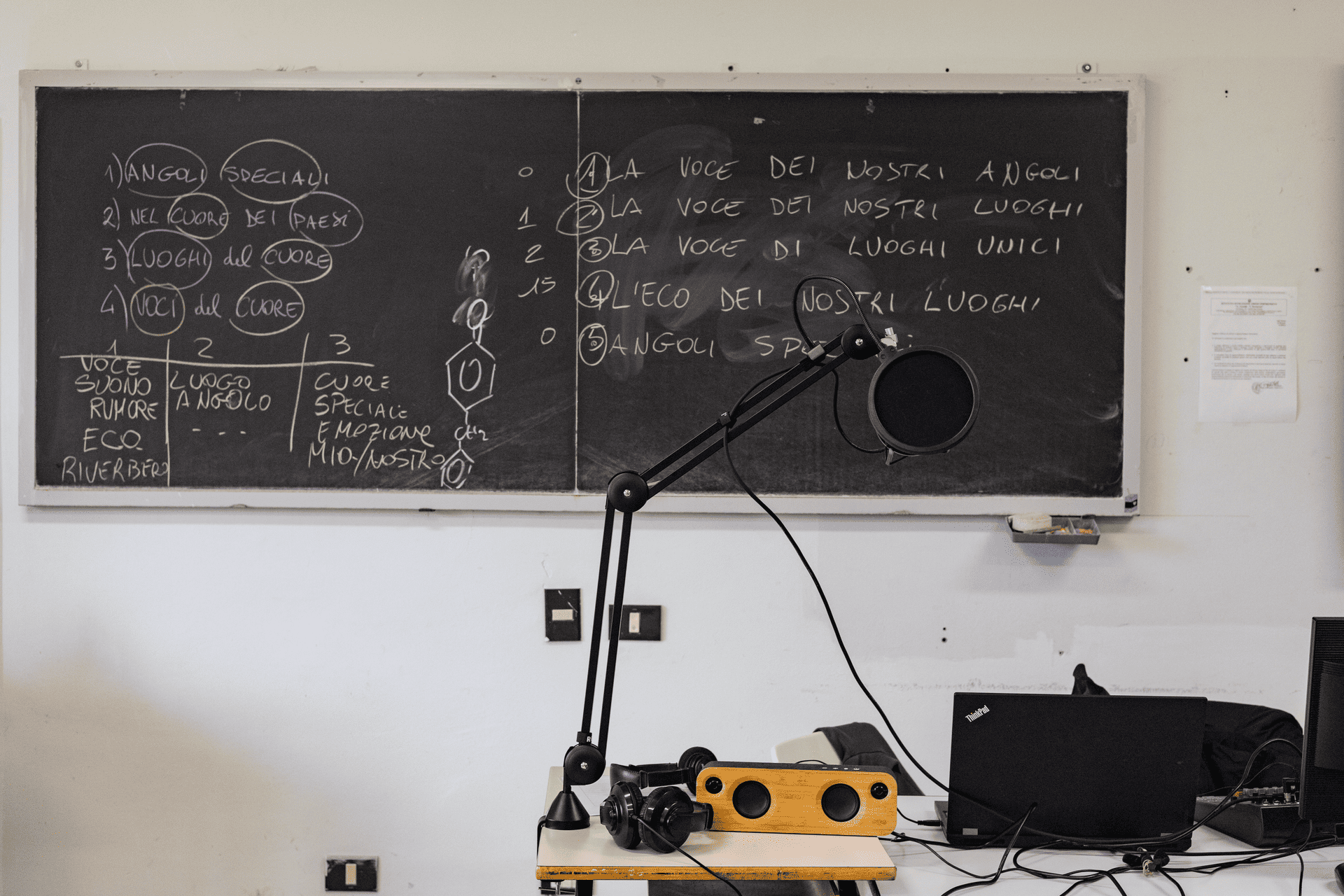
Worksheets and blackboards give back the traces of this process: provisional titles, key words, recurring questions. The voice of our places, the echo of places, special corners are some of the expressions that emerged during collective discussion and helped to guide narrative choices.
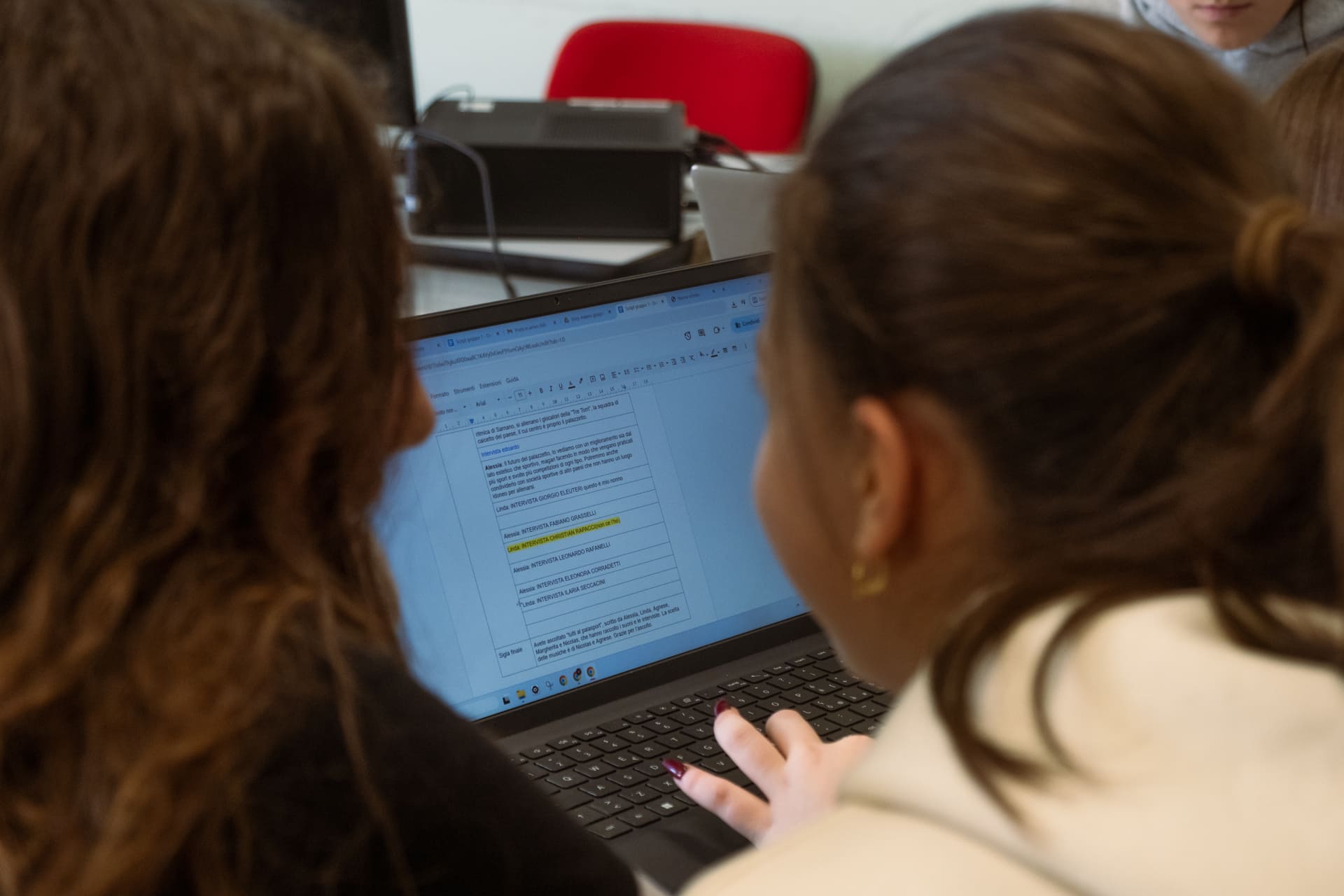
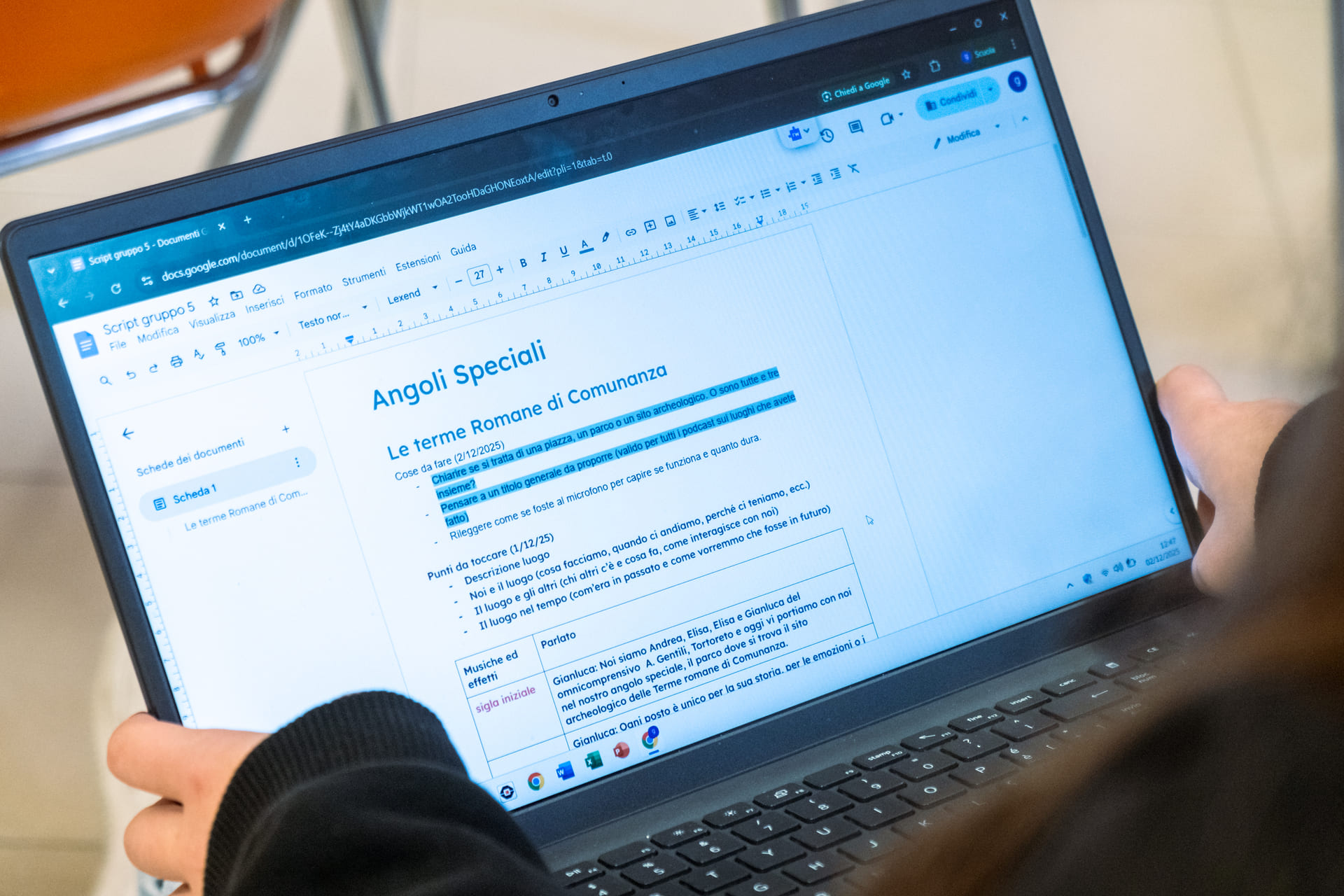
After the lectures focused on audiovisual language and narrative structure, the students conducted interviews with the inhabitants of the valley, collecting memories, perceptions, and visions on the past, present, and future of the Val di Fiastra, interviewing them in their everyday living spaces, and contributing to the creation of a collective narrative of the valley.
What students think
From questionnaires and feedback, it emerges that students particularly appreciated:
- group work and the exchange of different points of view;
- the opportunity to talk about familiar places in an unconventional way;
- the alternation between outdoor activities and classroom work
- the use of creative tools to reflect upon their own territory.
Many students report having changed the way they look at everyday places and feeling more entitled to speak about them. They note that the project encouraged them to have a more attentive gaze toward the territory and a greater awareness of the value of local stories. In several cases, students expressed surprise at how many narratives can emerge from places considered “ordinary.”
What happens next
StoryMakers now enters the restitution phase: public events, moments for listening, and narrative walks in which the stories produced will return to the places and communities that generated them. In addition, podcasts and videos will be included in a digital community map, making the produced materials accessible to the wider community.