
The need for an AI Compass in Cultural Heritage
Museums, archives, and libraries are entering a new phase of digital transformation. After years focused on the digitisation of collections and the development of tools for online fruition, the emergence of generative artificial intelligence is opening up new possibilities for accessing heritage, conducting research, and engaging with audiences.
At the same time, the adoption of AI raises crucial questions:
– How can cultural institutions maintain their authority and credibility?
– How can technology avoid becoming mere spectacle?
– What skills are needed to design useful and sustainable tools?
With the purpose of answering these questions, University of Turin and Sineglossa carried out a new research project AI Compass for Cultural Heritage. Reflections for the Conscious Adoption of Generative AI.
The adoption of artificial intelligence in the cultural sector is not merely a technological issue, but a cultural process that requires strategic vision, interdisciplinary skills, and ethical responsibility. AI Compass provides institutions with a framework to reflect on:
- the role of AI in the digital transformation of culture
- how to design technological interventions aligned with cultural goals
- how to develop a conscious governance of innovation
The research by Sineglossa and the University of Turin
The research combines interviews with cultural sector professionals and the analysis of AI-based case studies that use artificial intelligence to enhance cultural heritage.
It was conducted by Alessia Tripaldi, Simone Natale, Associate Professor of Media Theory and History at the Department of Philosophy and Education Sciences, University of Turin, and Luca Befera, Research Fellow at the University of Turin, in collaboration with AVICOM ICOM International Committee for Audiovisual, New Technologies and Social Media, and infoclio.ch, Switzerland.
Key results
The research outlines an evolving landscape in which artificial intelligence is perceived by cultural institutions as an ambivalent technology: on one hand complex and still difficult to govern, on the other capable of opening up new possibilities for access, mediation, and audience engagement. The findings highlight critical issues related to the reliability of generated content, the risks of bias in training systems, and the challenge of integrating these solutions into long-term sustainable strategies. At the same time, the research shows how these technologies can help make content more understandable without oversimplifying it, enhance less accessible heritage, and activate new forms of engagement – especially among younger audiences.
Recommendations for cultural institutions
- Developing Widespread Skills (AI Literacy)
Investing in AI literacy is essential not only as technical training, but as a widespread ability to understand the implications, limits, and potential of artificial intelligence within cultural institutions. Building this awareness is a necessary condition for informed decision-making and effective innovation governance. - Rethinking Processes and Design Models
Tools such as chatbots and conversational interfaces are effective when designed around content and cultural objectives, avoiding standardised solutions. The most successful experiences emerge from co-design processes that combine technological and cultural expertise, strengthening quality and long-term sustainability. - Defining Sustainable Strategies
Clear objectives make it possible to select appropriate tools and evaluate their effectiveness over time. At the same time, sustainability must be planned from the outset, including maintenance, monitoring, and the possibility of future development. - Ensuring Ethics and Reliability
To maintain authority and trust, institutions must ensure the quality and provenance of data, prevent bias and hallucinations, and be transparent about their use of AI.
Research presentation events
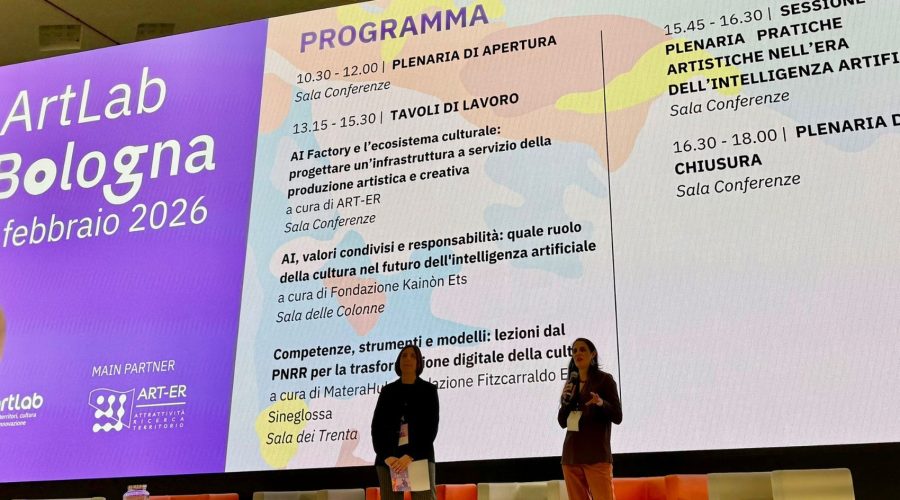
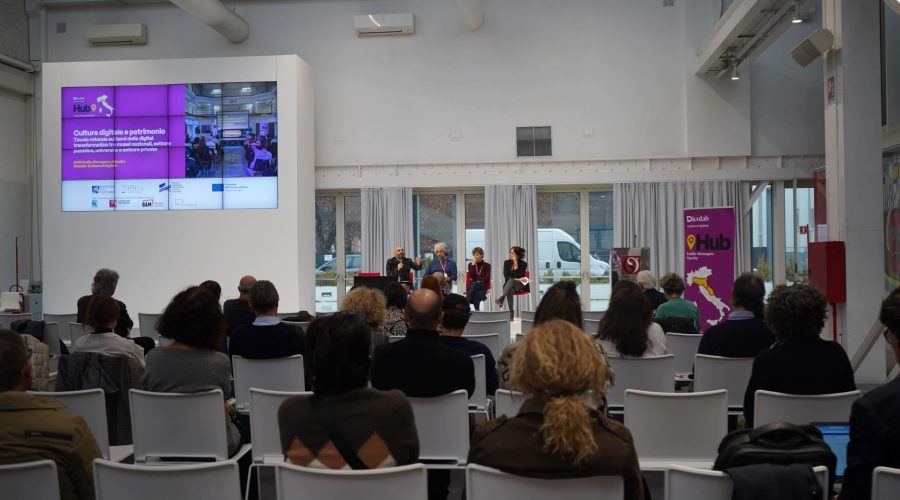
Starting in April, Sineglossa and the University of Turin are organising a series of online and in-person events to present the research findings and foster dialogue with the cultural sector.
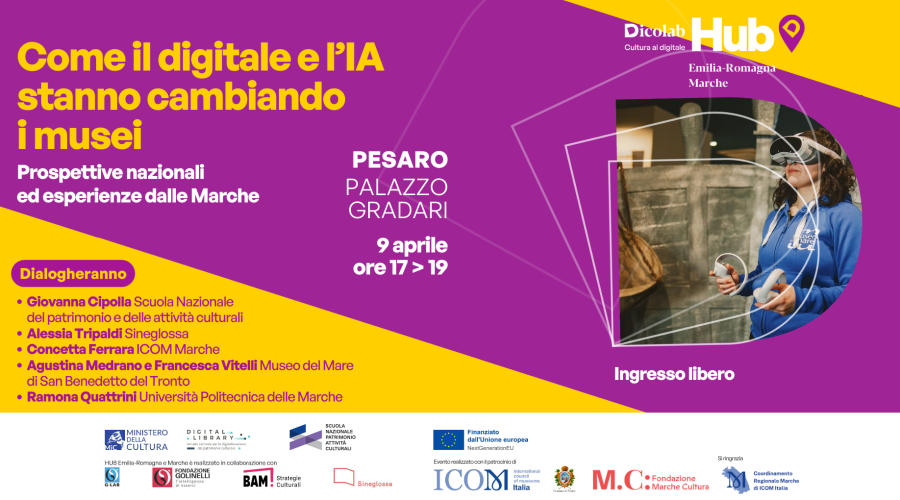
📍 April 9, 2026 – Pesaro
The research will be presented as part of the public event “How Digital and AI Are Changing Museums. National Perspectives and Experiences from the Marche Region”, organised by the Emilia-Romagna and Marche HUB of Dicolab – Cultura al digitale.
During the event, which will take place at 5:00 PM at Palazzo Gradari (Via Gioacchino Rossini 26, Pesaro), Alessia Tripaldi (Sineglossa) will present the AI Compass for Cultural Heritage research, alongside contributions and case studies from the Scuola Nazionale del Patrimonio e delle Attività Culturali, the Museo del Mare of San Benedetto del Tronto, the Mindful Artificial Intelligence Innovation for Digital Heritage Laboratory (DICEA, Marche Polytechnic University), and the results of research conducted by Sineglossa and ICOM Marche on digital engagement solutions adopted by museums in the Marche region.
👉 Free admission with mandatory registration.
💻 Webinar online (may – june)
A series of online webinars will also take place in May and June, focusing on the presentation of the research and in-depth exploration of AI use cases in the cultural sector.
👉 Subscribe to the Sineglossa newsletter to receive updates on dates, speakers, and participation details.