What it is about
Discovery Journey is now online – the new methodology developed by Sineglossa to guide organisations, associations, artists and communities in building collective territorial narratives based on the New European Bauhaus principles of Beauty, Sustainability and Inclusivity. The methodology invites both visitors and long-time inhabitants to discover and rediscover places, by involving communities in writing processes and in the creation of artistic outputs.
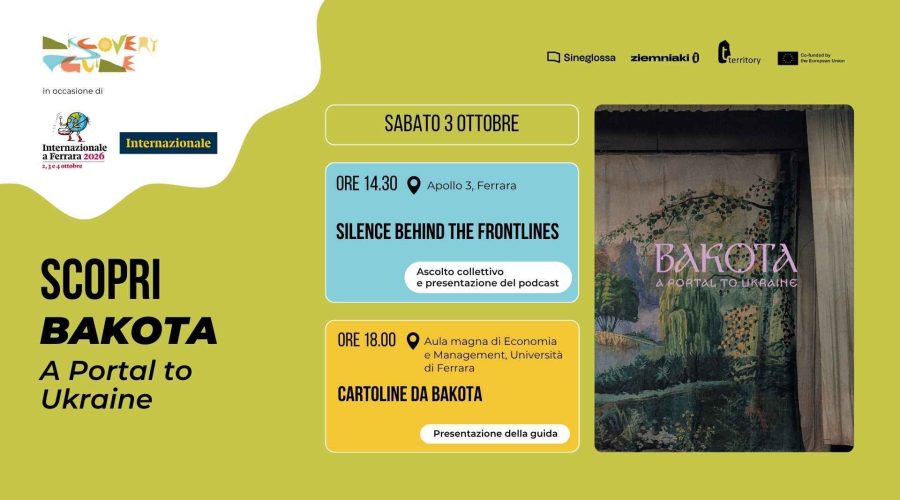
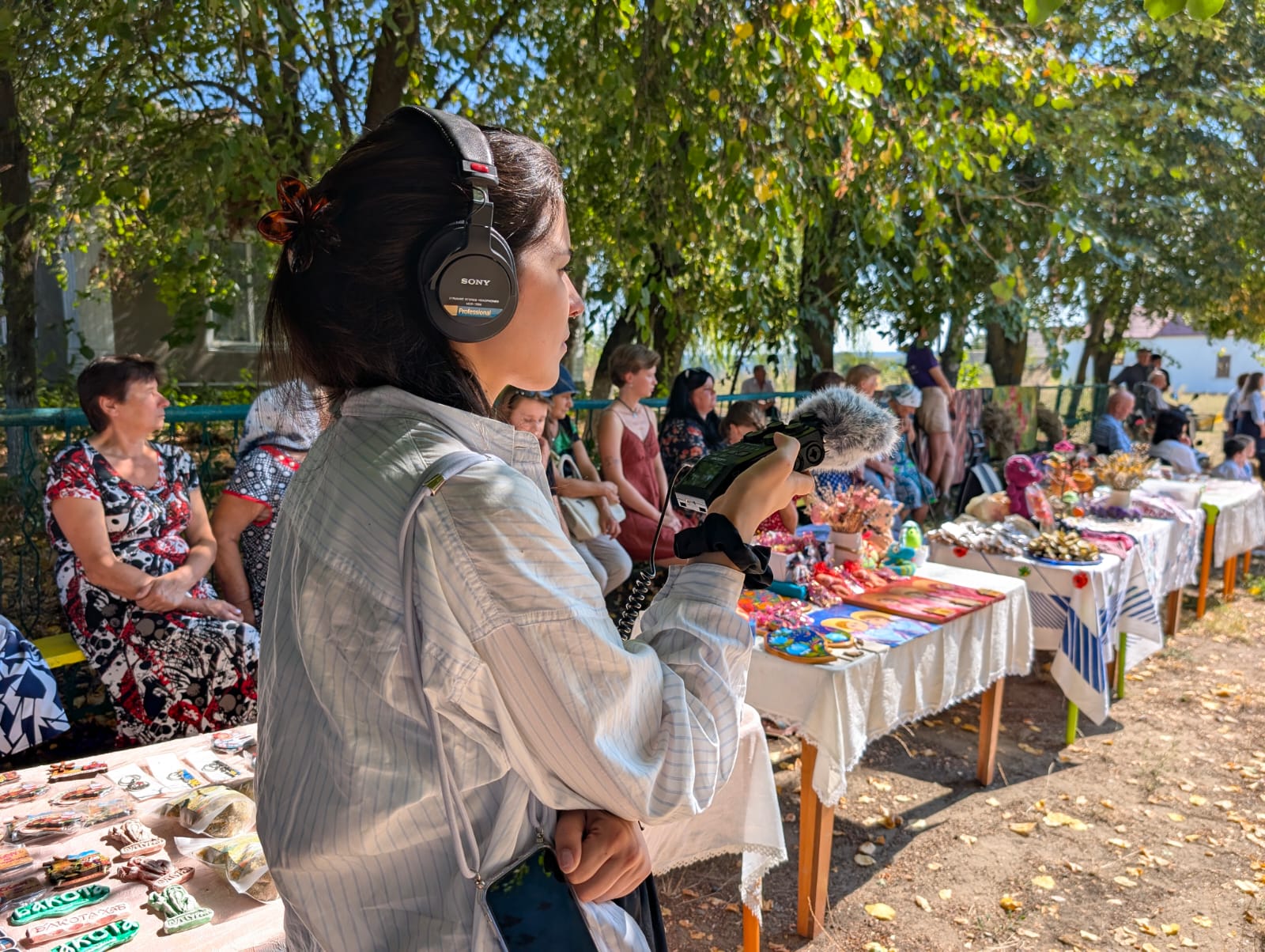
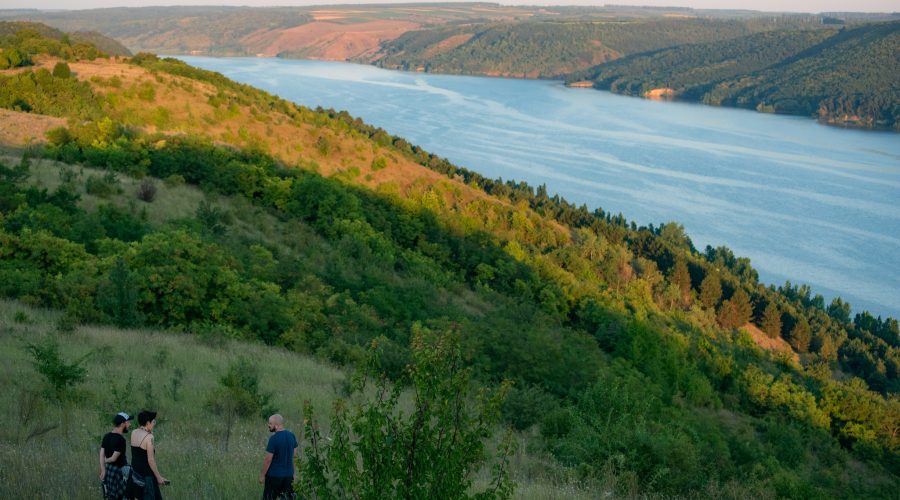
The methodology was designed and tested for the capacity-building workshop – aimed at strengthening skills, abilities, structures and resources – led by Sineglossa as part of the Discovery Guide project, in collaboration with Terytoriia / NGO Territory and Fundacja Ziemniakii, co-funded by the Creative Europe programme of the European Union. In this project, we involved six local and international artists in a collective writing process with the inhabitants of Bakota, a district in southwestern Ukraine, with the aim of protecting and telling the story of Ukrainian culture in a fragile and delicate context.
The application of the Discovery Journey methodology and the artistic residency that followed in September 2025 gave the occasion to rise to an alternative travel guide – inspired by the Nontourism series – dedicated to the Bakota region. The guide, to be published next autumn, will contain the itineraries produced by the artists who worked with local communities, along with content designed for those who want to visit the region through the eyes and voices of the people who live there.
Read also
- Insights, Insights, News, News

- Methodologies and research, Methodologies and research
Key principles of the methodology
Discovery Journey is a methodology that combines artistic practices, community participation and sustainability to generate new territorial narratives and foster a relationship between places, inhabitants and visitors.
On a theoretical level, it is rooted in the philosophy of Nontourism – a project and book series that encourages a more responsible relationship between travellers and the places they visit – and in the principles of the New European Bauhaus – Beauty, Sustainability, Inclusivity – which the guides in the Nontourism series embody.
Nontourism [...] is beautiful, because it uses the language of arts to build deep connections with local communities - and to amplify their voices beyond their borders, transforming their stories into texts, images, and photographs. It is sustainable, because it promotes a more mindful, responsible form of tourism - one that stands in contrast to the fast-paced, consumerist "hit-and-run" model, and instead honours and protects the resources of a place. It is inclusive, because it places the local community at the heart of the process, with the aim of involving all citizens and giving space to every voice.
From the Discovery Journey methodology
How the methodology is structured
The Discovery Journey methodology explains how to trigger a participatory and ecosystemic process (that is, sustainable for the environment and capable of involving and connecting various agents of the territory, both human and non-human, at different levels) between local communities, organisations and various professional figures, in order to shape a new narrative of the territory.
After a theoretical introduction, the second part of the methodology maps out the path to follow to build the process of discovering and rediscovering a territory, through four phases:
- activation of the local ecosystem of people and non-human agents;
- engagement of inhabitants through meetings and gathering moments;
- transformation of stories into artistic narratives;
- evaluation of the impact of the whole process on communities.
After the activation of the community in plenary meetings, the methodology identifies the Community Editorial Boards – collective writing workshops in which inhabitants share stories, places and points of view – as the true heart of the process. The dynamics that emerge within the Community Editorial Boards allow local identities and imaginaries to surface, which, combined with creative contributions and cross-cutting skills, actively build the collective narrative of the territory. It is thanks to the Community Editorial Boards that the process translates into narrative and artistic outputs capable of guiding responsible and sustainable experiences, always keeping the focus on relationships, listening and territorial impact.
One example is the editions of the Nontourism project produced by Sineglossa, in which the application of the Discovery Journey methodology gave rise to the guides in the eponymous series published by Ediciclo.
If you are looking for a tool to explore a place through the voices of those who live there, build meaningful relationships with communities and generate new narratives based on shared experiences, Discovery Journey offers you a practical, adaptable framework to begin your journey.
Download the methodology or get in touch to find out how we can develop a project together.