What it’s about
The journey of Discovery Guide continues, our project that takes the approach to place-based storytelling developed through Nonturismo beyond Italy’s borders.
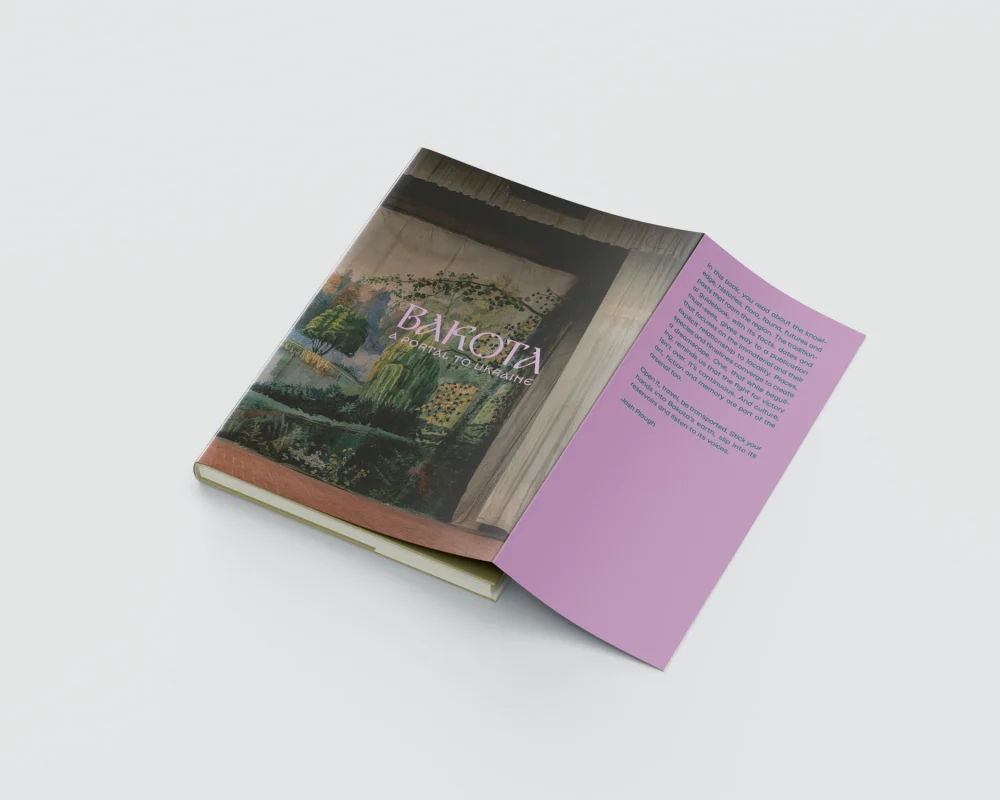
Following the international call through which, last year, we selected six artists for a residency in Ukraine, the outcome of that work is now available: Bakota: A Portal to Ukraine, a travel guide dedicated to the Bakota region in south-western Ukraine, published in English and Ukrainian in a limited edition.
Six itineraries created by three Ukrainian and three international artists, together with the podcast Silence Behind the Frontlines, guide readers through the discovery of a territory shaped by history and, today, by the consequences of war.
At Sineglossa, we were responsible for the coordination, concept development and artistic direction, working alongside Territory NGO, a Ukrainian cultural organisation that managed the residency programme and community engagement, and Fundacja Ziemniaki i, a Warsaw-based cultural foundation working to improve access, visibility and working conditions in the creative arts sector, which was responsible for the editorial project and publication.
The guide was produced as part of A Discovery Guide for Recovery, co-funded by the European Union’s Creative Europe programme.
What is Bakota?
Bakota is the name of a medieval town in western Ukraine and the surrounding villages that were submerged in the 1980s following the construction of the Novodnistrovska Hydroelectric Power Plant. Today, the area stretches along the Dniester River reservoir, encompassing new settlements that emerged on the shores of the artificial lake, such as Horaivka and Stara Ushytsia.
Although far from the front line, it is a place deeply affected by the consequences of war. Exploring a landscape of such complexity means applying the practice of excavation and listening that has long guided our investigation of territories, mapping the absences, memories and boundaries that continue to redefine them.
To translate this perspective into action on the ground, the research took shape around Bakota Hub. Established in 2021 in a former abandoned school near the Moldovan border, and converted for over a year into a shelter for internally displaced people after the outbreak of the conflict, the Hub is now a vibrant cultural centre.
In a territory that is continuously renegotiating its identity, it provides a physical space where long-time residents, veterans and new communities can meet and recognise one another. It became the operational base for the residency coordinated by the Territory NGO team, where six artists from Ukraine, France, the Netherlands and Poland, selected from more than 250 applications, lived and worked. Through daily conversations with local residents, teachers, geologists and institutions, as well as through the exploration of archives, the artists gathered the testimonies and materials that now form the guide’s six itineraries.
In the spirit of Nonturismo and following in the footsteps of the Sarajevo Survival Guide, the guide subverts conventional tourist narratives to convey, from within, the lived experience of contemporary Ukraine.
Inside the guide
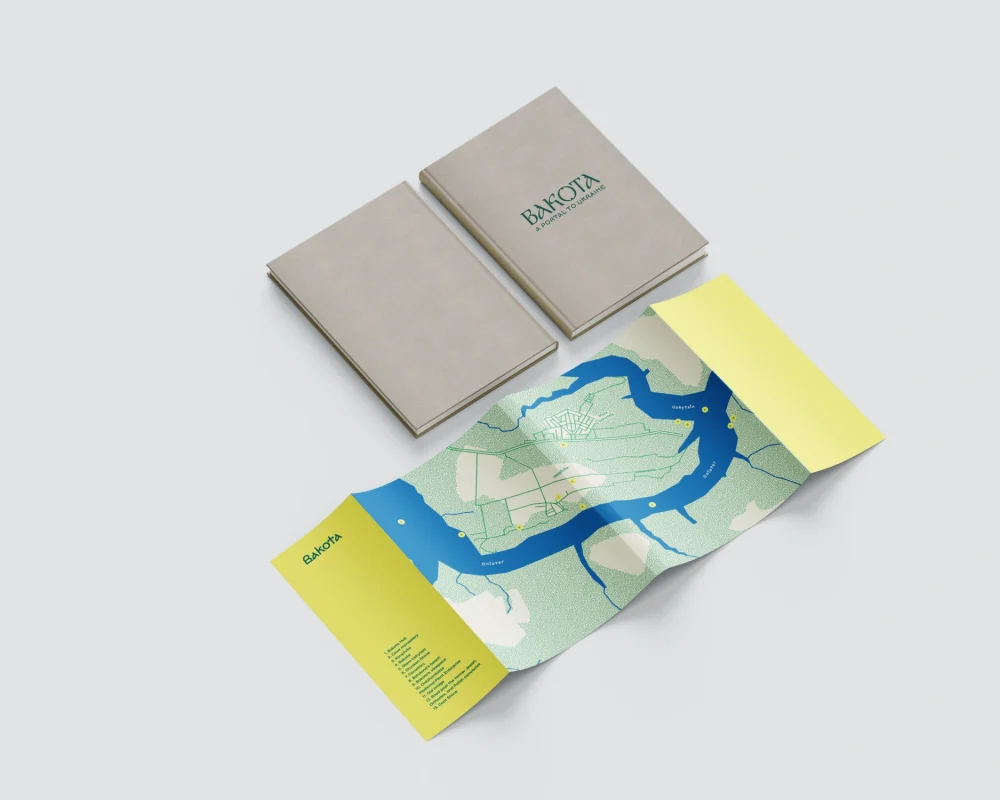
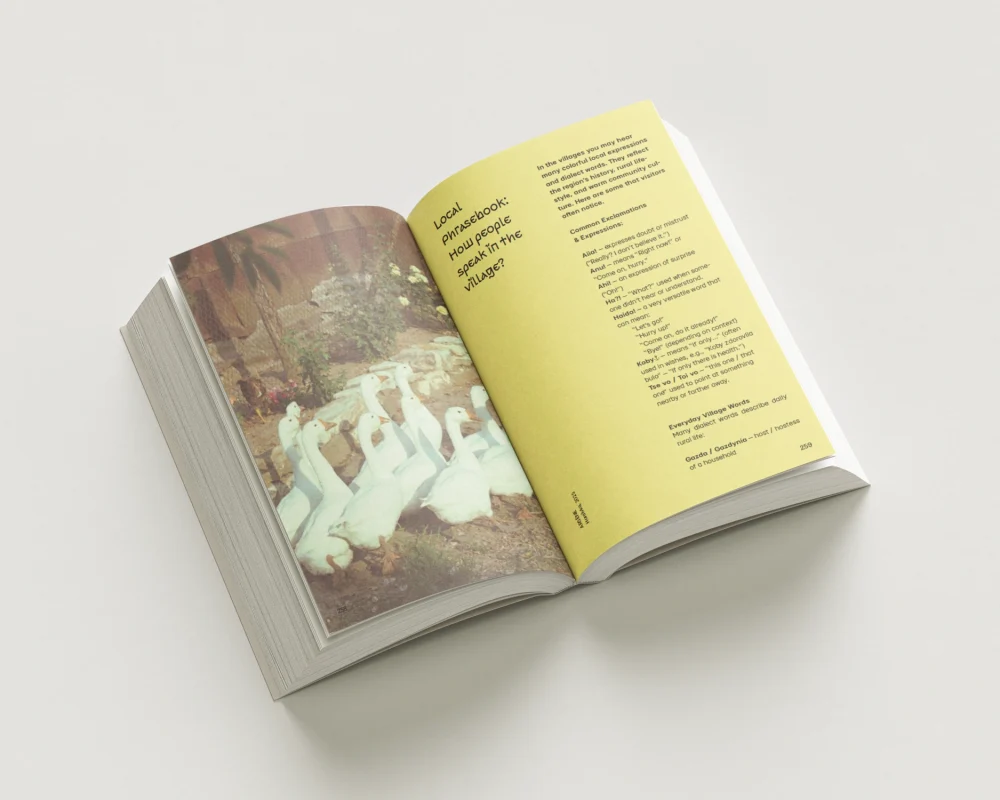
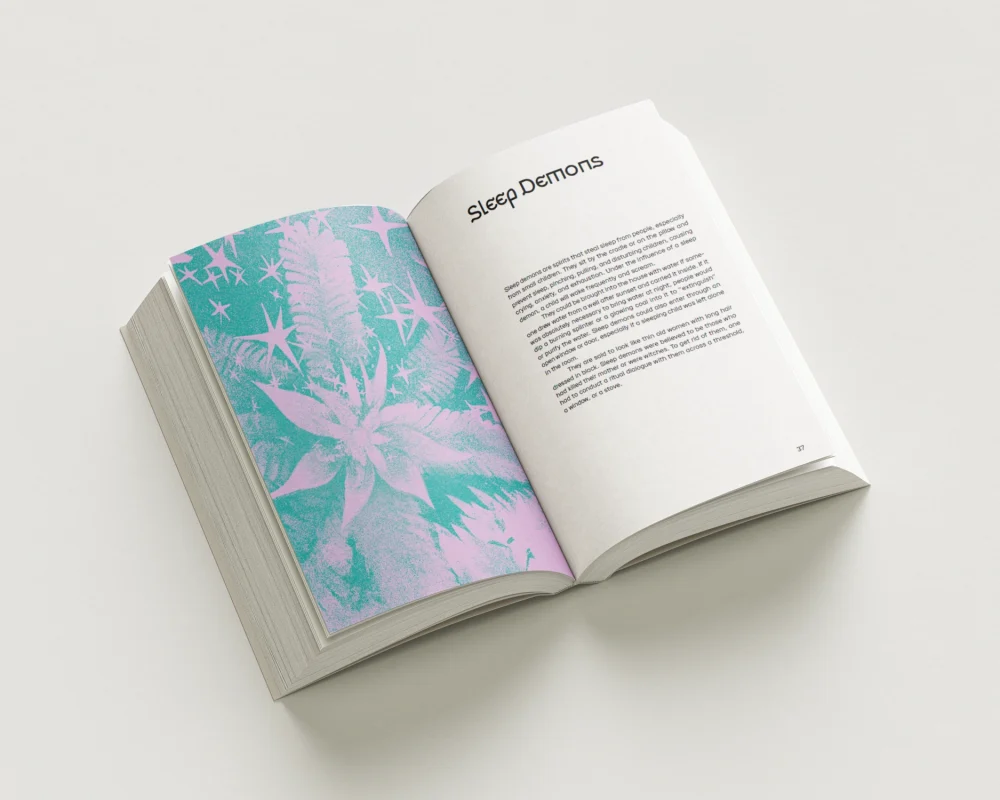
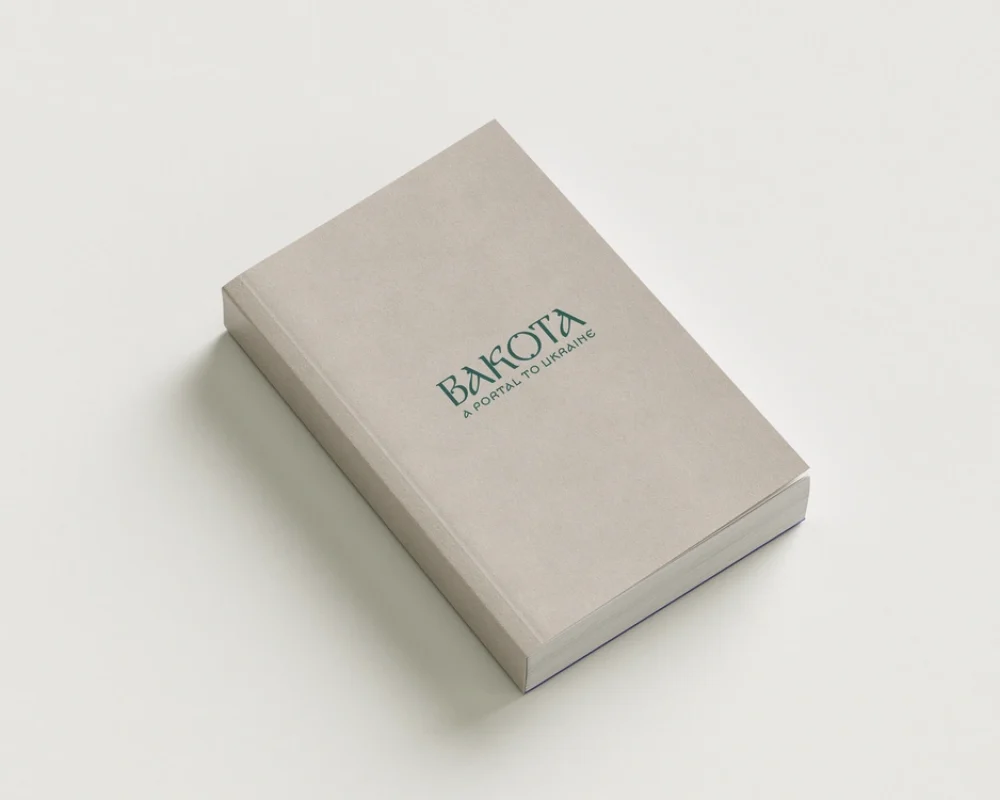
Published as a bilingual English-Ukrainian edition in a limited run of 600 copies, Bakota: A Portal to Ukraine goes beyond the traditional format of a guidebook to become a book-object in its own right.
Inside, the reading experience becomes tangible and sensory: artist Camille Bleu-Valentin created an insert made of organic, biodegradable bioplastic containing dried local medicinal herbs, while the three letters written by Bohdana Korohod — addressed to water, earth and air — trace an intimate dialogue with the landscape and the people who continue to inhabit it.
Alongside these explorations and the contributions of the other artists, the book retains some of the traditional tools of travel storytelling:
- practical information on how to reach Bakota;
- a map highlighting points of interest;
- a local phrasebook built from words and expressions collected during the residency.
The artists and their contributions
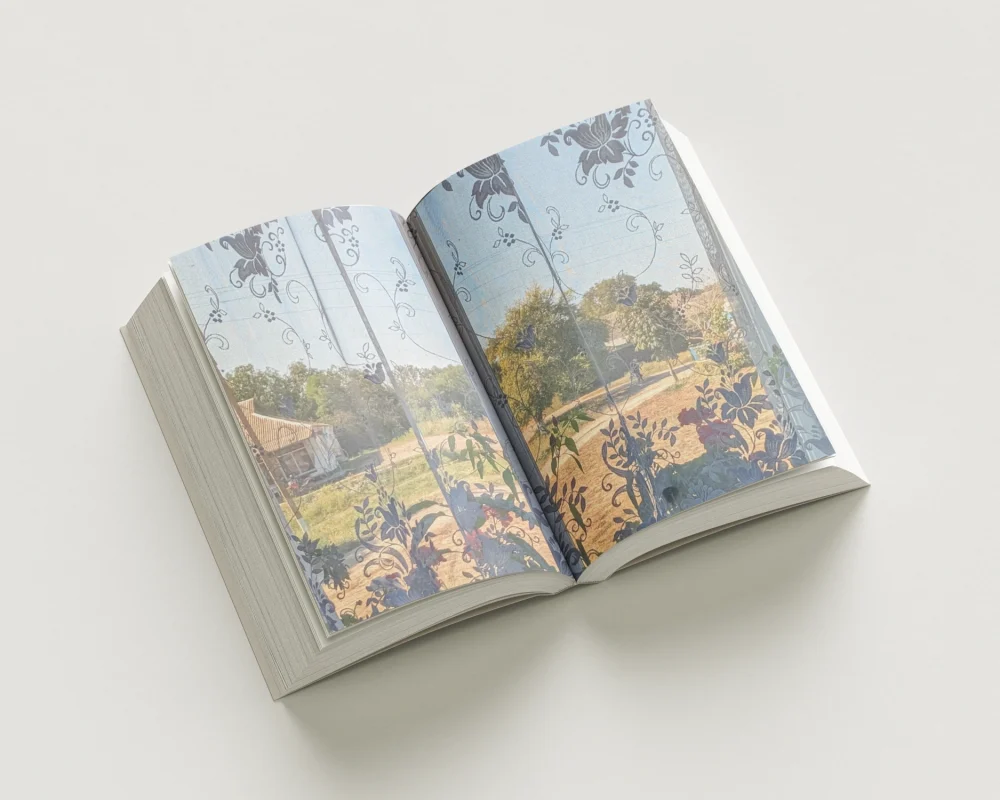
Bakota: A Portal to Ukraine brings together six artistic research projects combining reportage, storytelling, photography, painting, letters, maps and family archives, developed by the six artists during their residency at Bakota Hub.
Anna Romandash, a Ukrainian journalist and writer, entrusts three characters — the notary Luka, the raven Muninn and the young Nestor — with three stories set at different moments in Bakota’s history. Through literary fiction, the chapter follows the territory across centuries of wars, political change, submersion and return, all the way to contemporary life and the consequences of the Russian invasion.
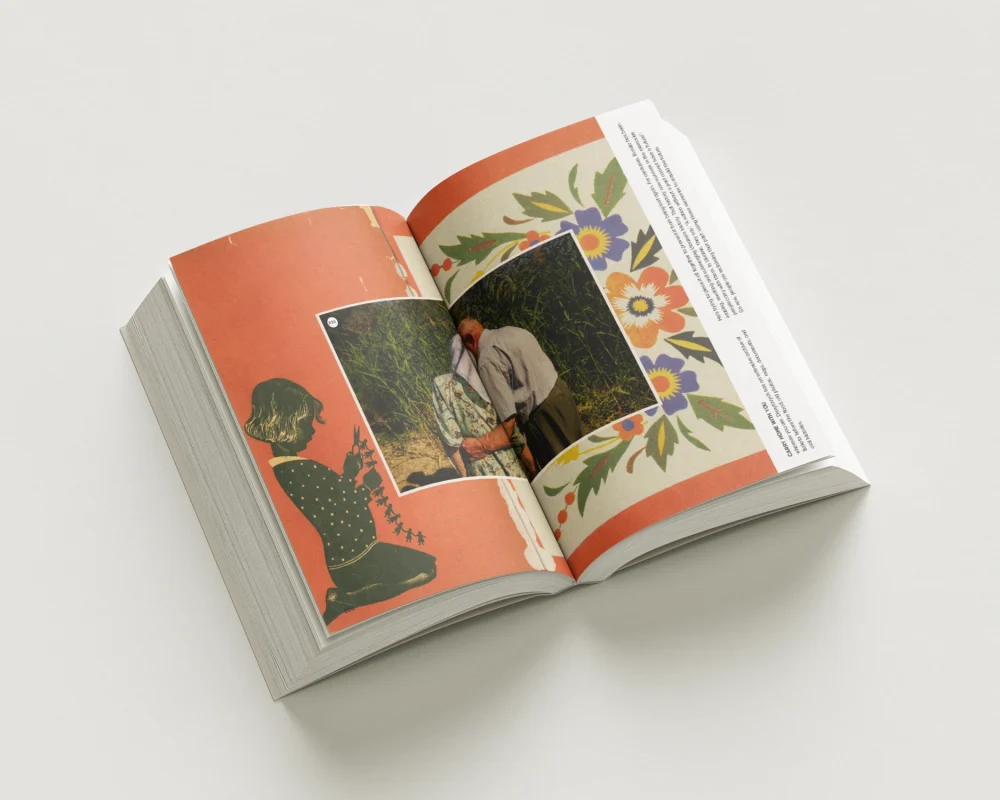
Robin Alysha Clemens, a visual artist and photographer, presents How To Carry A Home, a contribution that begins with a question: what does “home” mean for someone who no longer has a physical, cultural or emotional home capable of providing safety and stability? Photographs taken by the artist in Bakota in 2025 are juxtaposed with images from residents’ personal archives, photographs of the villages before they were submerged, Soviet-era materials and paper models for children.
Olena Kayinska, a Ukrainian visual artist, explores trauma, post-traumatic healing and the psychological dimension. “In Bakota, people talk about those who practise magic while caught between two beliefs: ‘you shouldn’t, it’s a sin’ and ‘it helped me’.” Through paintings, encounters and a story developed during the residency, the artist follows the local traces, still alive among residents, of rituals, healers and folk beliefs, looking at the territory as a map made not of roads, but of people.
ARSÈNE, a multidisciplinary artist, researcher and humanitarian activist, investigated which places make us feel safe and which, instead, hold sadness. Through encounters with residents, personal maps, photographs and field research, his pages reveal Bakota’s geography of relationships and memory, questioning natural and political boundaries in a territory shaped by war.
Camille Bleu-Valentin, an interdisciplinary French artist based in Nantes, begins with another question: what happens when a pharmacy disappears, but knowledge of healing continues to live within the territory? During the residency, she collected medicinal plants, met the keeper of the region’s last botanical pharmacy and developed an itinerary dedicated to the healing knowledge rooted in Bakota. The chapter includes an insert containing dried herbs that readers can use to prepare an infusion, turning reading into an experience that can be touched and smelled.
Bohdana Korohod tells the story of the territory through three letters — Dear Bakota — one addressed to water, one to earth and the last to air. Through intimate writing interwoven with stories gathered from residents, she explores the consequences of the villages’ submersion, the loss of homes and the meaning of material memory: a fragment of a ferry turned into a gutter, a towel passed down through generations, the foundations of a house that re-emerge when the water level drops.
The podcast recorded in Bakota
The guide Bakota: A Portal to Ukraine is not only a book-object to browse through, but an exploration that moves beyond the visual dimension to become a sonic experience.
Complementing the volume and the artists’ itineraries is Silence Behind the Frontlines, a five-episode podcast that expands beyond the physical boundaries of the printed page.
Written and narrated by Italian journalist and author Beatrice Petrella — with story editing, sound design, original music and executive production by Jonathan Zenti — the podcast was recorded entirely on location during the residency at Bakota Hub.
In keeping with the practice of listening that characterises our investigations of territories, the microphone became a tool for mapping the landscape: the episodes weave together the voices of the six international artists at work, first-hand testimonies from local residents and sounds captured while travelling through the territory.
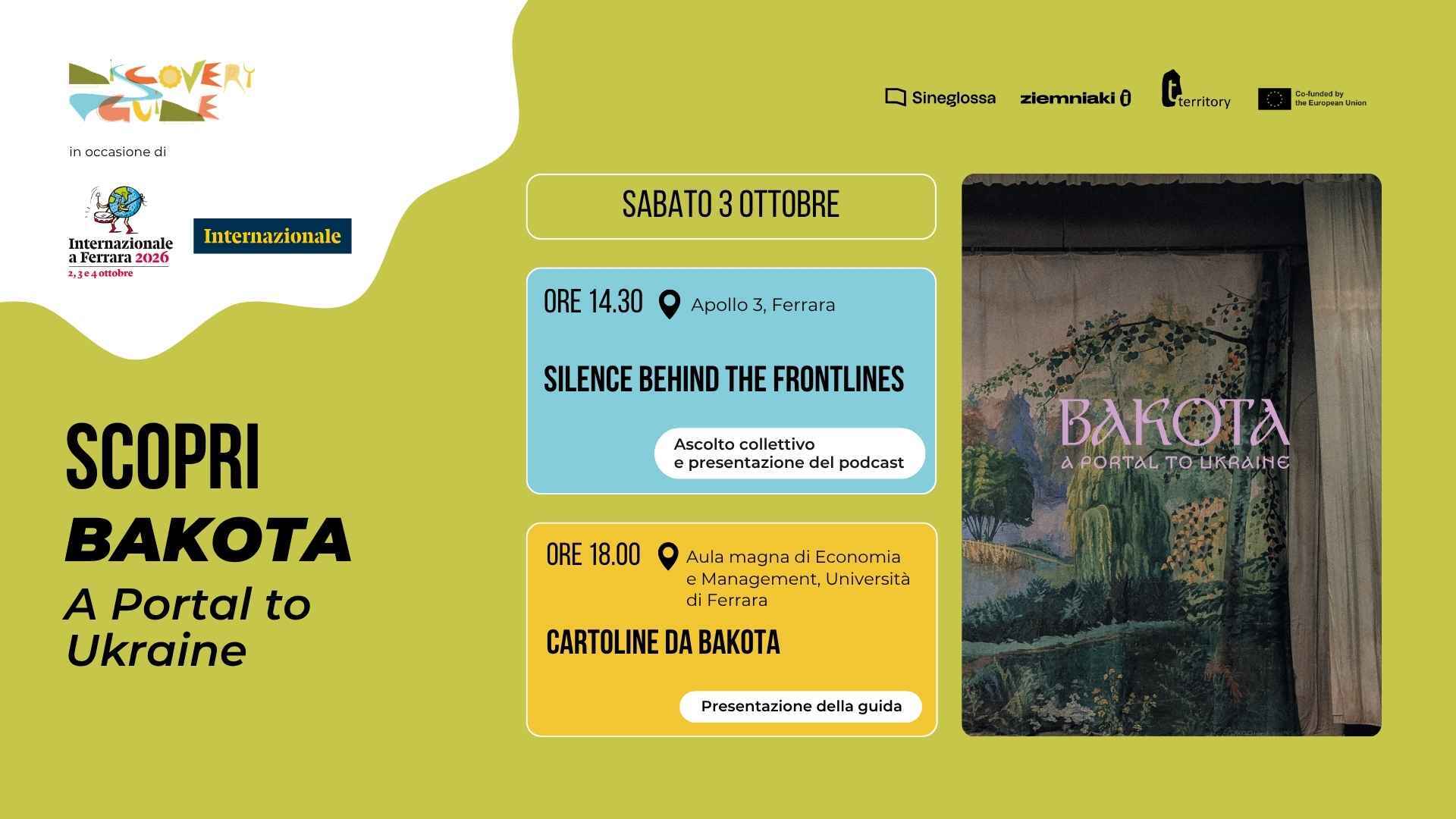
The podcast will be at the heart of the guide’s first Italian presentation, taking place on 3 October 2026 at the Internazionale Festival in Ferrara. On this occasion, the public event dedicated to the publication will be accompanied by a collective listening session of Silence Behind the Frontlines.
Event programme
Collective podcast listening session
📆 Saturday, 3 October
📍 Apollo 3, Via del Carbone 35 – Festival Internazionale di Ferrara
🕡 Ore 14:30
🎟️ Free admission with ticket
Federico Bomba and Beatrice Petrella present the podcast Silence Behind the Frontlines, with Jonathan Zenti.
Cartoline a Bakota: presentazione della guida
📆 Saturday, 3 October
📍Aula Magna, Department of Economics and Management — University of Ferrara, Via Voltapaletto 11 – On the occasion of Festival Internazionale di Ferrara
🕡 6:00 pm
👥 Speakers:
- Federico Bomba — President of Sineglossa
- Robin Alysha Clemens — Dutch photographer
- Anna Romandash — Ukrainian writer and journalist
- Wu Ming 2 — writer
Introduced and moderated by Andrea Pipino, journalist at Internazionale.