
Why AI Has Entered the Vocabulary of Museums
In recent years, people who run museums, archives, libraries, and cultural enterprises have found themselves managing an unprecedented combination of challenges: the digitization of collections, demands for transparency and impact assessment, increasing public expectations for accessibility and participation, and a shortage of financial and technological resources.
In this context, artificial intelligence – and generative AI in particular – is often presented as a strategic lever to:
- develop new forms of access to cultural heritage;
- experiment with conversational guides and assistants that accompany visitors;
- activate data-driven storytelling about archives and collections;
- improve the accessibility of complex contents for different audiences;
- gather useful data for audience engagement, governance, and cultural programming.
Alongside these opportunities, they emerge others equally central issues: how can we avoid “hallucinations” and oversimplifications with regards to collections? How can tools based on LLMs be integrated into the daily work of curators, librarians, archivists? What ethical and legal constraints need to be considered? Which technical and soft skills are necessary to build real AI literacy within organizations?
Starting from these very questions, Sineglossa has begun working on generative AI in relation to cultural heritage, bringing together artistic approach, scientific experimentation, and co-design with communities of professionals. AI is understood as a cognitive environment in which new knowledge is built, access to heritage is expanded, and new narratives are created.
Academic research and technological transfer
A subsistent part of Sineglossa’s work is placed in between applied research and technological transfer.
In collaboration with the University of Turin and with communities of cultural professionals, we are contributing to a research project dedicated to the use of generative AI in the museum sector, with particular attention to LLM-based chatbots trained on curatorial datasets and digitized heritage. We are gathering information on how these systems are designed, fed, and maintained within national cultural institutions; what image of the museum, archive, or library they give back; how they redistribute roles and responsibilities among curatorial, mediation, and IT teams and governance; what ethical, legal, and organizational risks they pose for institutions; and how they might foster inclusion and diversification of audiences.
Part of these reflections is presented in an article by Simone Natale, Bruno Surace, Enrico Mensa, and Luca Befera (University of Turin), recently published in New Media & Society. The article, which focuses on the case of the chatbot “Parla con Einaudi,” developed to impersonate Luigi Einaudi, the first President of the Italian Republic, examines the actual effectiveness of generative AI in this context, the risk of AI hallucinations and the need for rigorous sources and historical materials that cultural institutions require, and to what extent the adoption of AI in cultural heritage may represent yet another form of techno-solutionism rather than a genuine tool for access and inclusion of new audiences.
overview audio generated using NotebookLM
The results of the research we are conducting will be published in a report which cultural institutions will be able to use to reflect on the actual need of a chatbot, how to define the boundaries of the system – what it is allowed to say and to do -, which conditions are needed to avoid techno-solutionism and poorly sustainable solutions.
How Sineglossa works with cultural institutions on heritage and AI
Alongside its research activities, Sineglossa develops co-design processes with museums and archives to explore generative AI as an instrument for the valorisation of digitized heritage. At the core of these processes is the development of chatbots and conversational assistants based on LLMs trained on selected curatorial and documentary datasets, with the aim to:
- improve audience engagement in an inclusive and personalized way,
- create new pathways for accessing archives and collections,
- integrate technological experimentation within a framework consistent with the institution’s identity, language, and mission.
The development of the chatbot is not the starting point, but the outcome of a shared process structured around several recurring phases.
- Clarifying context, audiences, and strategic objectives
- Putting the collections back at the center
Working with a generative system means going back to the sources: scholarly documentation, archives, catalogues, existing narratives. This often triggers an internal movement of re-listening and re-narration: which voices are dominant, which ones marginal or absent? Which parts of the heritage are currently under-used? - Co-designing role, tone of voice, and user experience
Curators, librarians, archivists, and educators become co-authors of the system, co-designing the chatbot’s tone of voice, the scope of its content, its modes of interaction with the public, and its integration with the institution’s physical and digital touchpoints. - Developing, testing, and transferring skills
We build a functioning prototype tailored to the institution’s constraints; we test it with audiences to gather both qualitative and quantitative feedback; we train the staff so they can use, monitor, and update the tool independently.
Alongside its research activities, Sineglossa develops co-design processes with museums and archives to explore generative AI as an instrument for the valorisation of digitized heritage. At the core of these processes is the development of chatbots and conversational assistants based on LLMs trained on selected curatorial and documentary datasets, with the aim to:
- improve audience engagement in an inclusive and personalized way,
- create new pathways for accessing archives and collections,
- integrate technological experimentation within a framework consistent with the institution’s identity, language, and mission.
Building teams: academy and dedicated programs
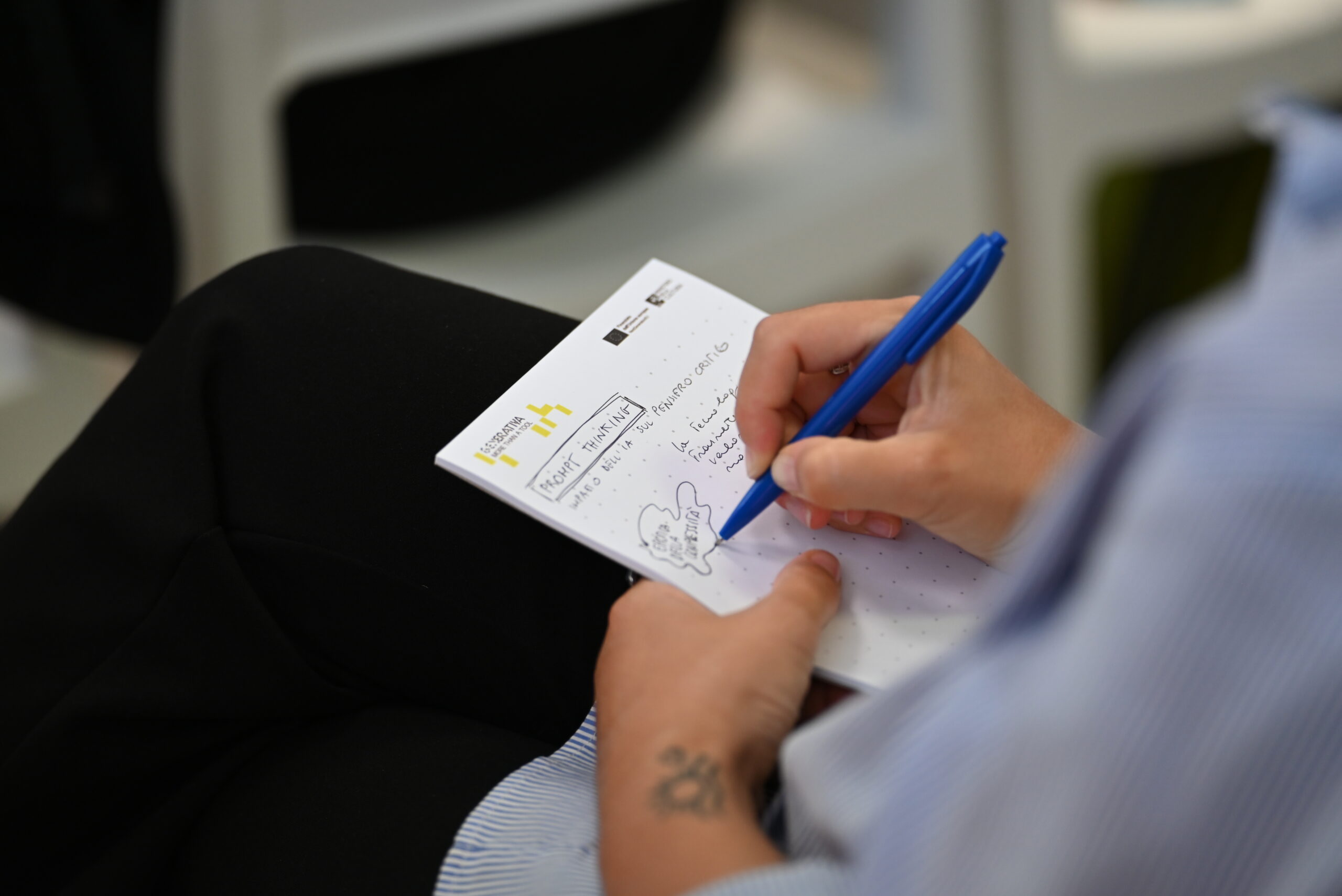
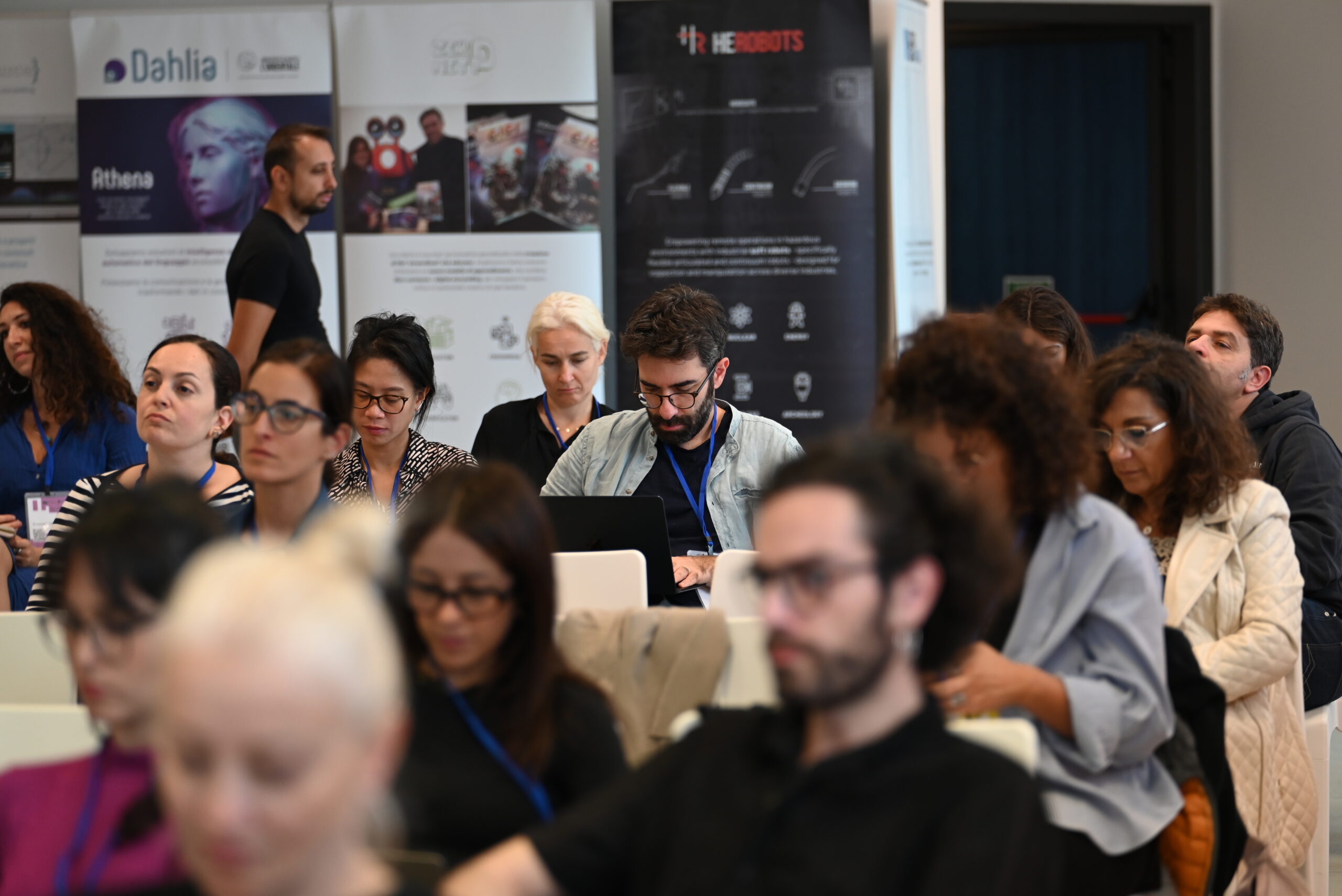
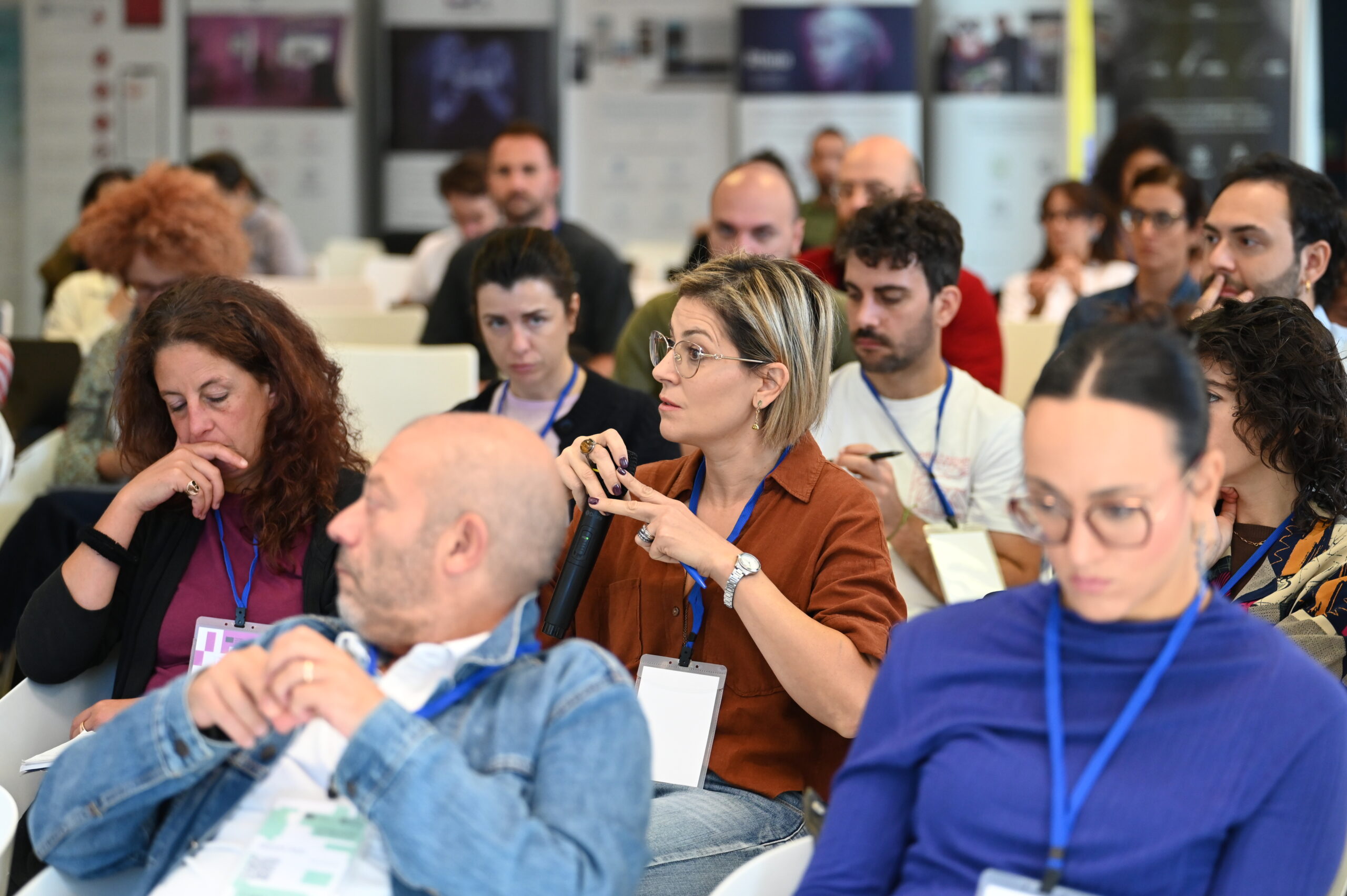
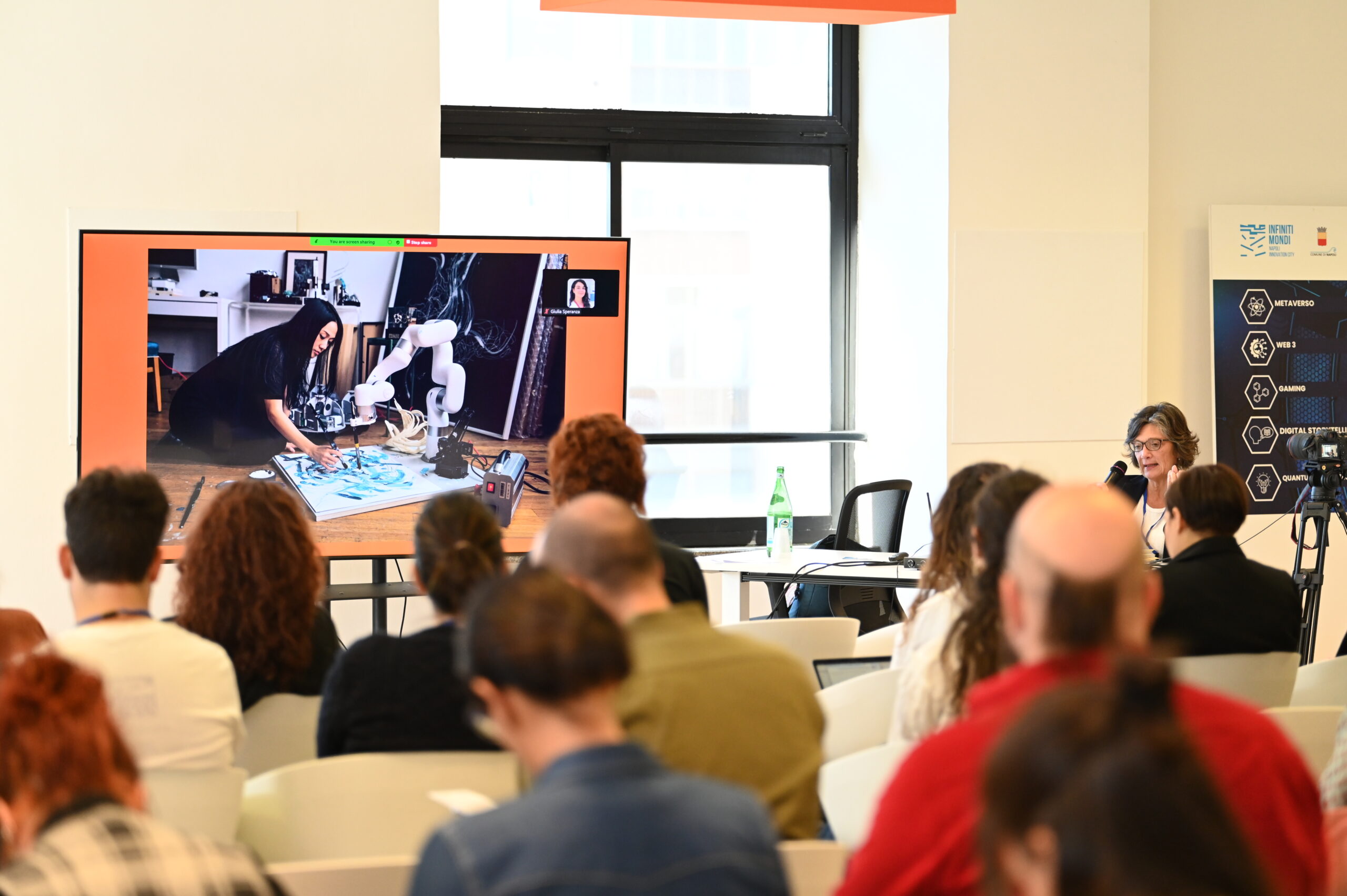
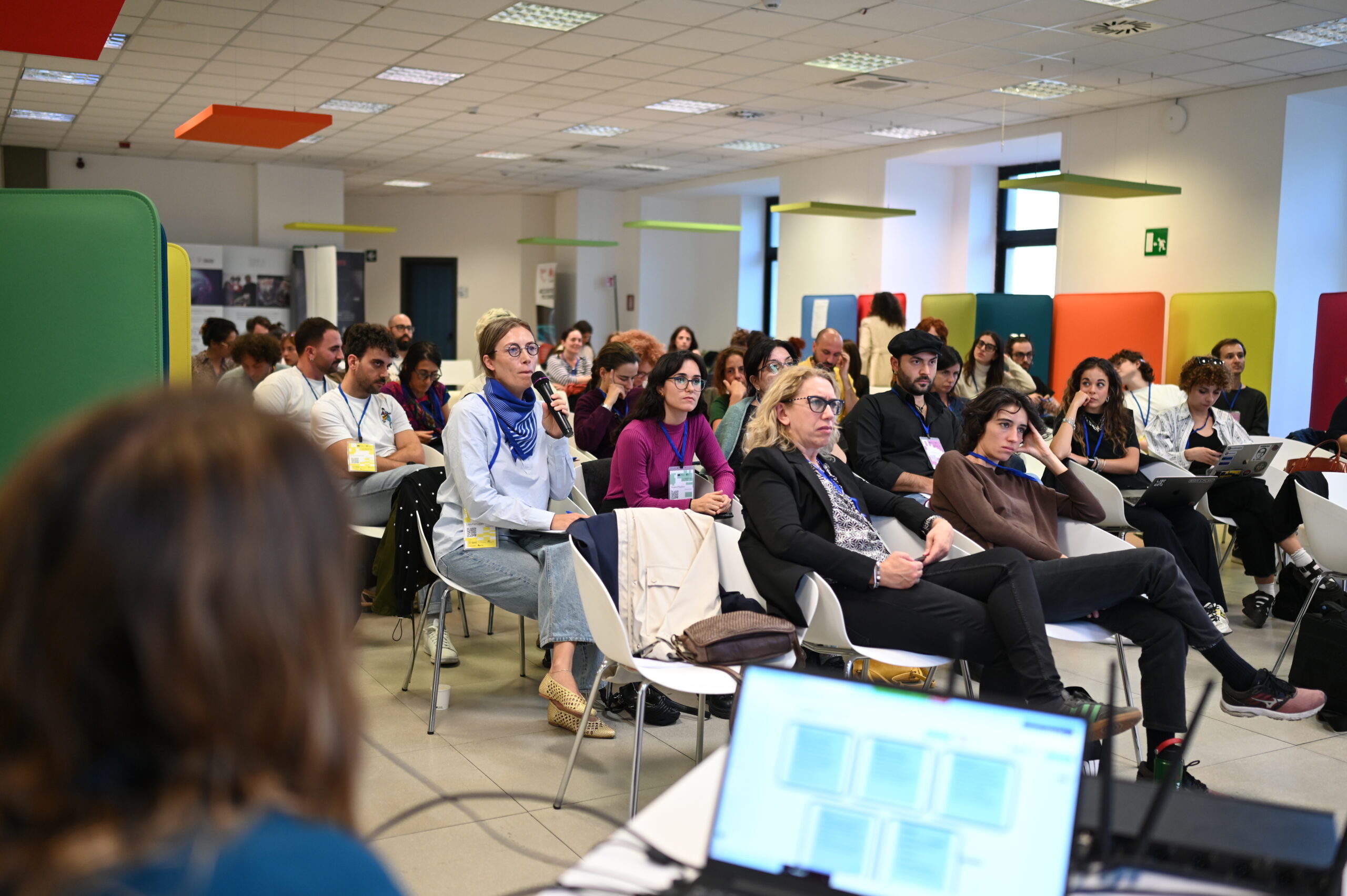
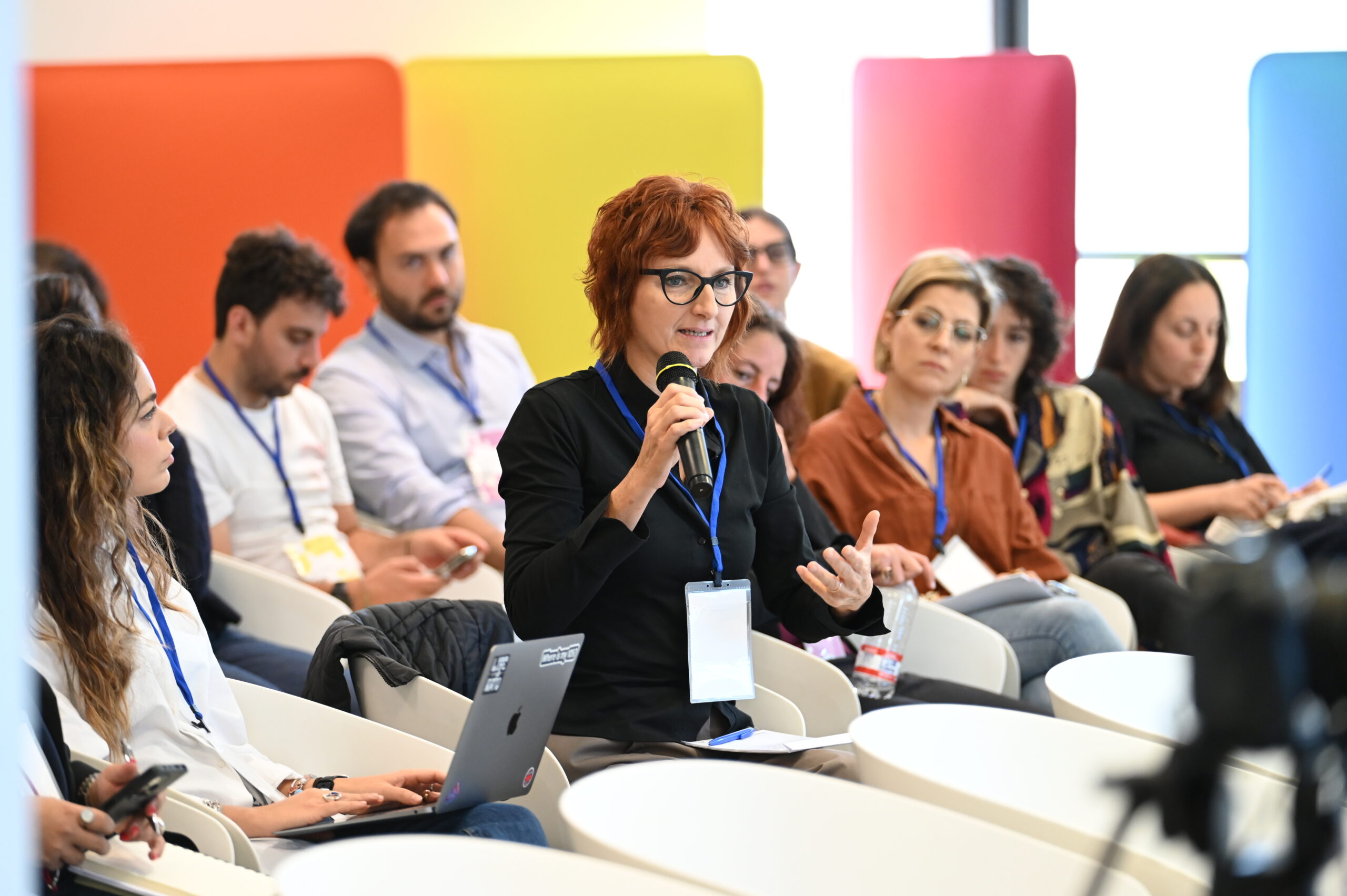
A well-designed prototype is not enough for these IA solutions to be sustainable over time: informed, critical and curious teams are needed. For this reason Sineglossa also designs training programmes dedicated to those working in museums, archives, libraries, and cultural organizations. In recent years, we have developed several initiatives, including:
An online programme developed with Lo Stato dei Luoghi to support cultural centers and organizations engaged in urban and social regeneration as they explore applications of generative AI, with a particular focus on territorial regeneration processes.
As a project partner, we curate training modules on generative AI for cultural professionals, as well as modules on digital skills for the valorisation of cultural heritage. Drawing on our expertise in informal education and soft skills, we also curate a dedicated module on transversal competencies for AI.
A free academy for artists, cultural and creative professionals, and staff from GLAM and ICC institutions. It offers tailored pathways depending on participants’ backgrounds and multidisciplinary prototyping workshops aimed at developing a critical and informed understanding of generative AI.
A training programme for artists and curators on generative AI tools for historical heritage, delivered with Fondazione Fitzcarraldo and in collaboration with the Museo Nazionale del Risorgimento Italiano for the project work phase.
What we can do for your institution
If you work in a museum, archive, library or cultural institution and you are trying to understand how to approach the theme of AI, we can support you in several ways. Do you want to assess whether a chatbot or another generative AI tool makes sense for your institution? Do you need ethical frameworks to responsibly enhance your collections through AI? Do you want to train your staff to use these tools in an informed and critical way? Are you looking for a partner for a European or national project involving AI in cultural heritage?