What it is about
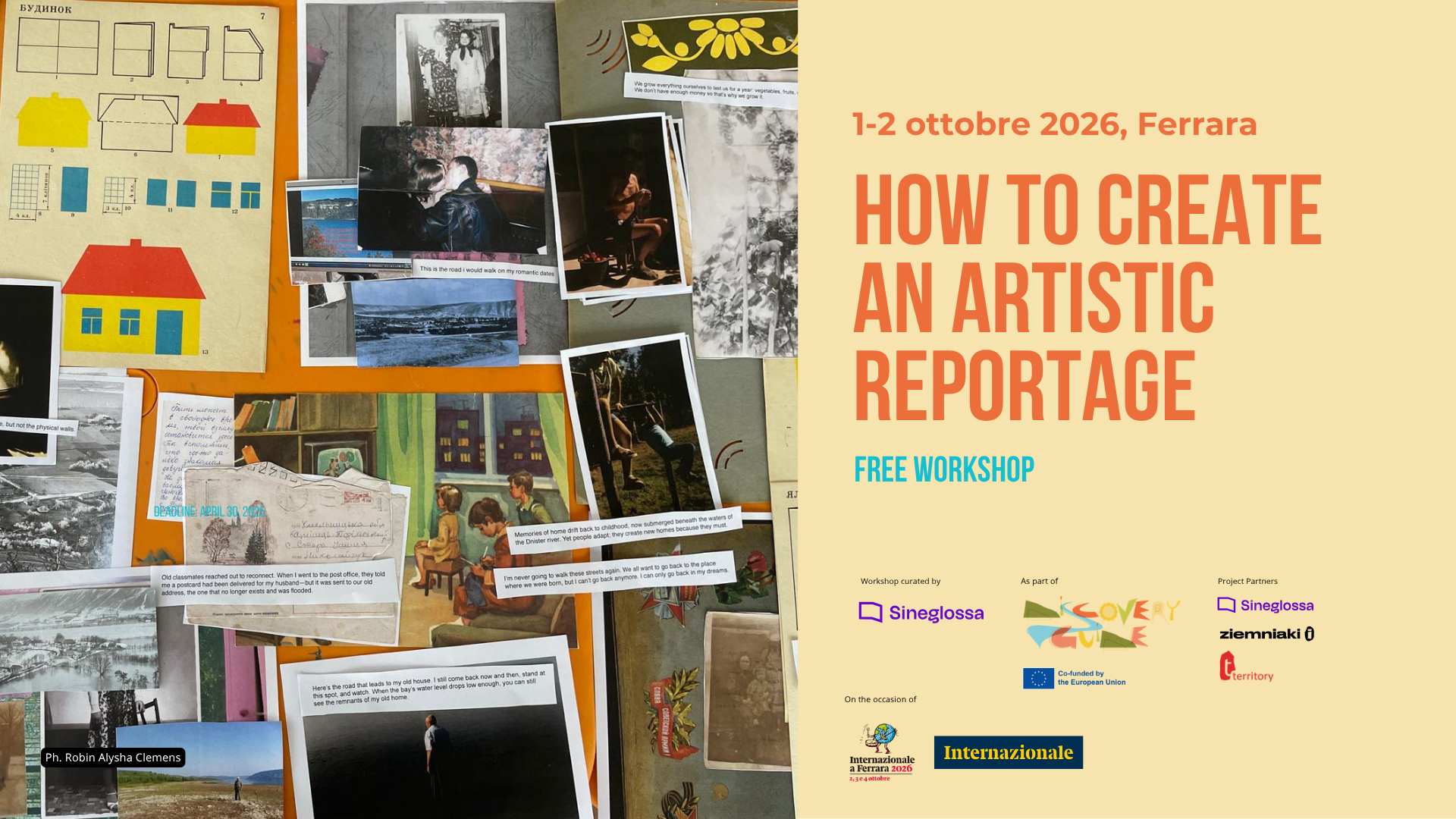
On October 1-2, on the occasion of the Internazionale Festival, Sineglossa is organising How to Create an Artistic Reportage in Ferrara, a two-day intensive workshop (held entirely in English) to learn how to explore and tell stories of conflict through artistic reportage.
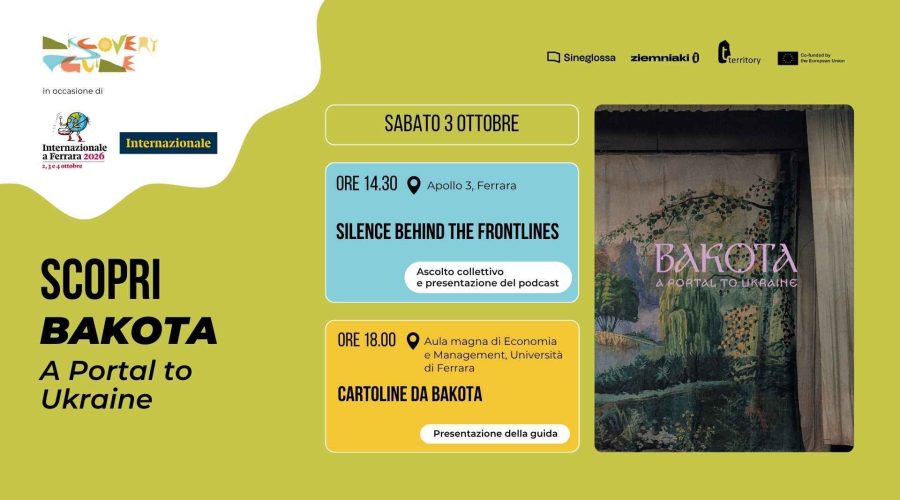
The workshop will be led by Anna Romandash, Ukrainian writer and journalist, and Robin Alysha Clemens, Dutch artist, two of the six artists who took part in Discovery Guide, the project for the promotion of Ukrainian cultural heritage curated by Sineglossa together with Fundacja Ziemniaki i and Territory NGO, co-funded by Creative Europe. Within the same project, an alternative touristic guide dedicated to the Ukrainian region of Bakota and inspired by our Nontourism methodology is due for release in September.
Building on the experience shared during the artistic residency in Bakota, Romandash and Clemens will bring participants the ethical and narrative tools honed in the field, teaching them how to approach sensitive topics, build meaningful dialogue with interviewees, ask effective questions and collect testimonies, and transform real stories into artistic reportage.
Programme of the event
📅 October 1-2, 2026
🕜 11 AM – 6 PM
📍 Ferrara (specific venue will be announced later)
Who is it for: University students interested in journalism, digital media, communication, writing, visual arts, storytelling and conflicts narration. The workshop is ideal for anyone interested in experimenting with reportage that combines investigation, testimony and artistic practice.
The workshop will be entirely held in English.
LIMITED SPOTS. Registration required via Eventbrite by September 15th.
The workshop unfolds over two days and offers a hands-on path where participants will learn to build a reportage that weaves together writing, image, and listening to the territory, following the tools tested by Romandash and Clemens during the Ukrainian experience.
- Day 1 – Transforming Testimonies into Literary Narratives
The first day develops an observational perspective grounded in listening. Conflict doesn’t always announce itself. It lives in hesitations, in what goes unsaid, in the friction between individual memory and collective narrative. Anna introduces participants to interview practices in complex contexts, with particular attention to gathering testimonies in situations of tension. The goal is to recognise the narrative value of collected stories and transform them into vivid, layered material for artistic reportage.
Workshop contents:
- Introduction to interview techniques in urban and social contexts
- Writing workshop: how to conduct an interview and shape it into a narrative
- Focus on long-form literary reportage techniques
- Day 2 – Journalism as art: Finding the Right Medium for Your Story
Building on the work developed on day one, the second day explores how medium, materiality, and form can expand the impact of a story in ways that words alone sometimes cannot. Participants examine real examples where the line between journalism and artistic practice blurs, and explore whether a work can be both journalism and art and how contextualising it can change the audience’s perception. The emphasis is ethical: the goal is not to aestheticise conflict but to choose a form that does justice to the story. We’ll work collectively on storytelling ideas beyond traditional reporting formats: What is the right medium for the story you want to tell? Who is the intended audience and what impact do you want to achieve?
Workshop contents:
- Analysis of examples across formats, impact, and their ethical implications
- Practical guidance on matching story goals to an appropriate medium
- Collective work on artistic reportage projects