
Services
For over fifteen years, we have been experimenting with cultural processes to address social, technological, and environmental challenges. Over time, many of the prototypes developed alongside artists, researchers, cultural institutions, businesses, and local communities have evolved into replicable activities, tools, and training programs. Today, we bring this experience to museums, archives, and libraries (GLAMs), organizations, and local areas through consulting, training, and co-design services.
IA for GLAM institutions
Museums, archives, and libraries safeguard knowledge, data, and collections that can contribute to a more trustworthy and public-interest-oriented AI ecosystem. We help GLAM institutions develop the skills, strategies, and tools needed to adopt AI responsibly, enhancing cultural heritage while expanding opportunities for access, interpretation, and participation.
Team training
Innovation is not just about knowing how to use AI, but also learning to collaborate in new ways. Through workshops, serious games, and participatory methodologies, we support teams and organizations in developing both technical skills and critical, collective thinking
Nontourism
Through the Nonturism methodology, we guide local residents, authorities, schools, and associations in building new local narratives. Our programs engage communities, artists, and institutions to strengthen the sense of belonging, offering travelers alternative ways to experience and discover cities, inland areas, rivers, valleys, and mountains – grounded in meaningful encounters rather than the consumption of places.
AI for GLAM institutions
Since 2018, we have been experimenting with artificial intelligence as a cultural tool.
We have used it, for instance, to turn the aspirations of local residents into newspaper articles; to question the present around the themes of the city, technology, and labor, drawing on the knowledge base of the Olivetti historical archives and Mangrovia magazine; to narrate the Nazi-Fascist massacres of Marzabotto, or to explore anecdotes about the National Museum of Cinema in Turin.
We know that artificial intelligence, like any technology, is not neutral: it influences what is made visible, which voices are heard, and how people access knowledge.
This is why we guide museums, archives, and libraries in building conscious approaches to AI, integrating technological, curatorial, and participatory skills.
Training, Consulting, and Co-design Program
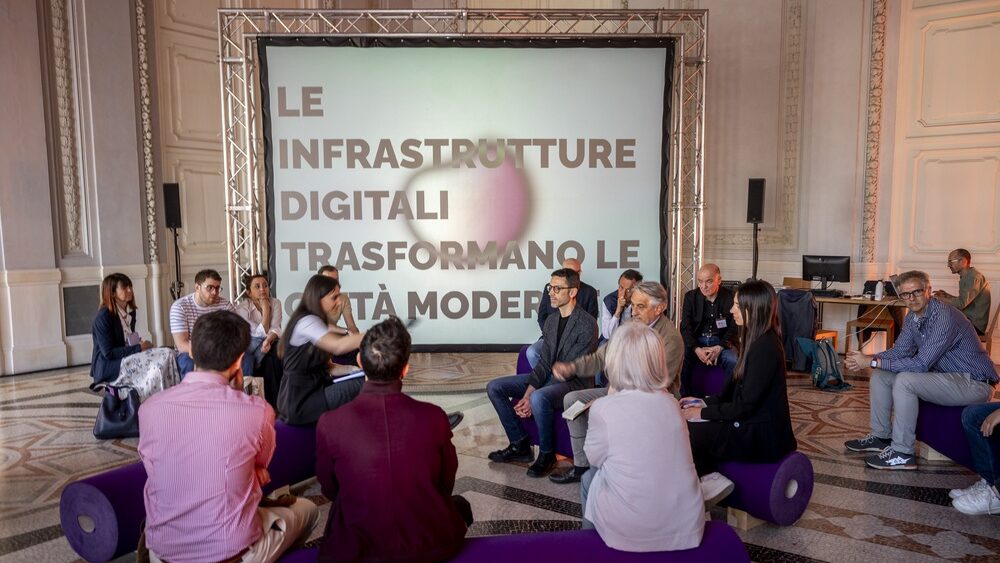
Designing Chatbots for Culture
To design a chatbot that makes collections and archives accessible through a conversational experience aligned with your institution’s values and identity.
How are cultural institutions adopting generative artificial intelligence? What are the risks and opportunities?
FORMAT
In-person program
DURATION
xxx
PARTICIPANTS
Directors, curatorial, educational, archival, and digital staff
WHAT YOU GET
- Feasibility analysis
- Curatorial dataset
- Working chatbot prototype
THE PROGRAM INCLUDES
- Objectives, context and target audiences
Definition of the role of the chatbot and the needs it will respond to. - Sources and knowledge
Comprehensive analysis of catalogs, archives, panels, audioguides, scientific and editorial materials to be used as dataset for the system. - Voice and identity
Co-design of the role, tone of voice, personality, communication style, narrative principles level of authority, and uncertainty management strategies. - Prototyping and testing
Design of the interaction, tests with staff and target audiences - Skill Transfer
Training staff to use, monitor, and update the system over time
How are cultural institutions adopting generative artificial intelligence? What are the risks and opportunities?
Training and Consulting Program
Building an AI Governance
To define principles, responsibilities, and criteria for integrating AI into the cultural institution’s processes.
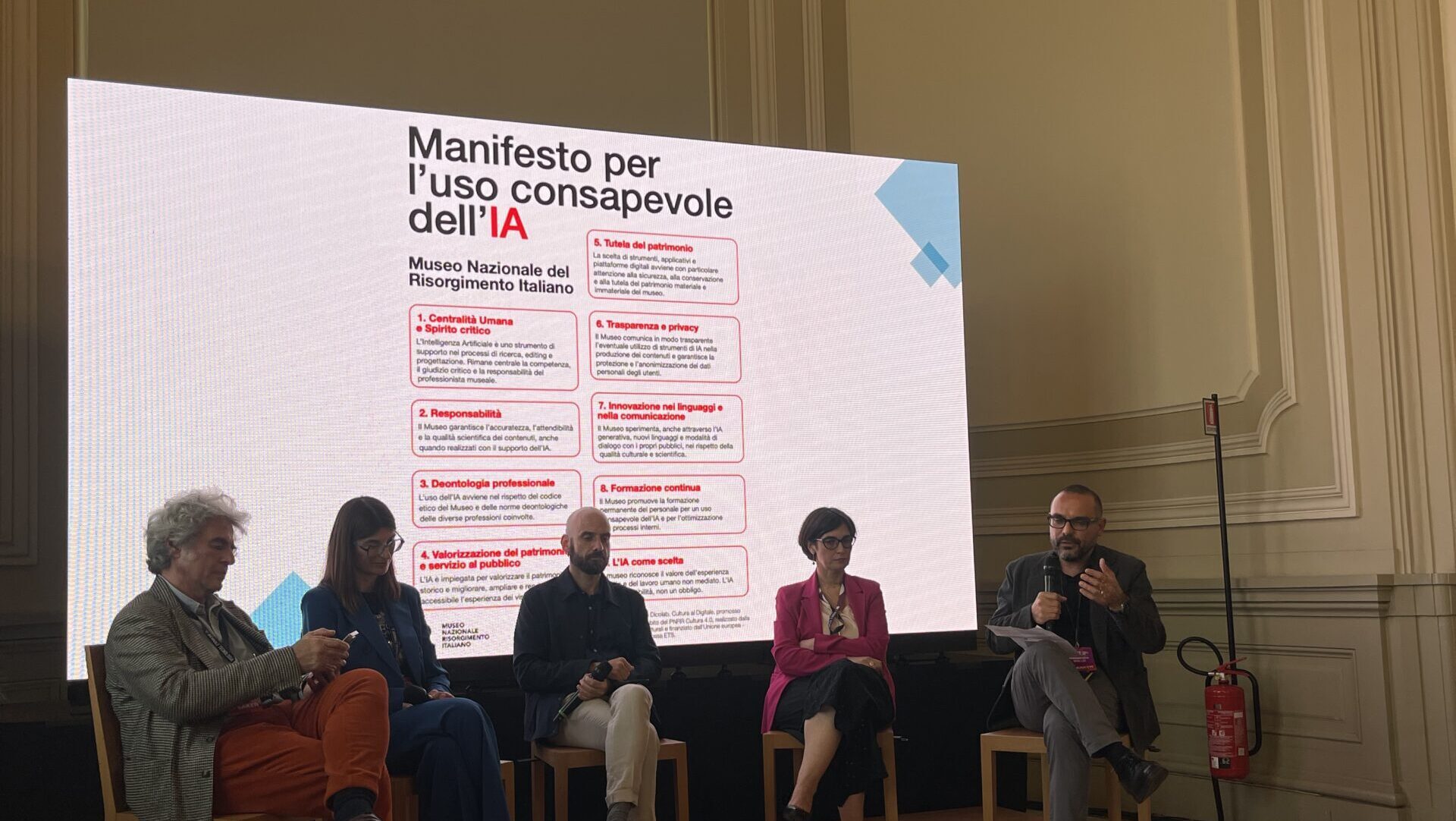
AI in Museums: The Manifesto of the National Museum of the Risorgimento
FORMAT
In-person program
DURATION
1 day
PARTICIPANTS
Directors, curatorial, educational, archival and digital staff (max. 12 people)
WHAT YOU GET
- A Manifesto for a conscious use of AI
- Recommendations for future AI-based projects
THE PROGRAM INCLUDES
- Analysis of Context and Existing Practices: Mapping currently used digital tools, available internal skills, and the institution’s expectations regarding AI.
- Generative AI Training for Staff: An overview of available technologies, national and international case studies, and opportunities and challenges for cultural heritage.
- Identifying Scenarios and Use Cases: Analyzing areas where AI could generate value for the institution: cultural mediation, accessibility, knowledge management, collection enhancement, and audience engagement.
- Co-writing Workshop: Engaging staff in defining principles, limits, responsibilities, and criteria for AI use aligned with the institution’s cultural mission.
- Document Formalization: Shared drafting of the final document and identifying future updating and governance methods.
AI in Museums: The Manifesto of the National Museum of the Risorgimento
workshop
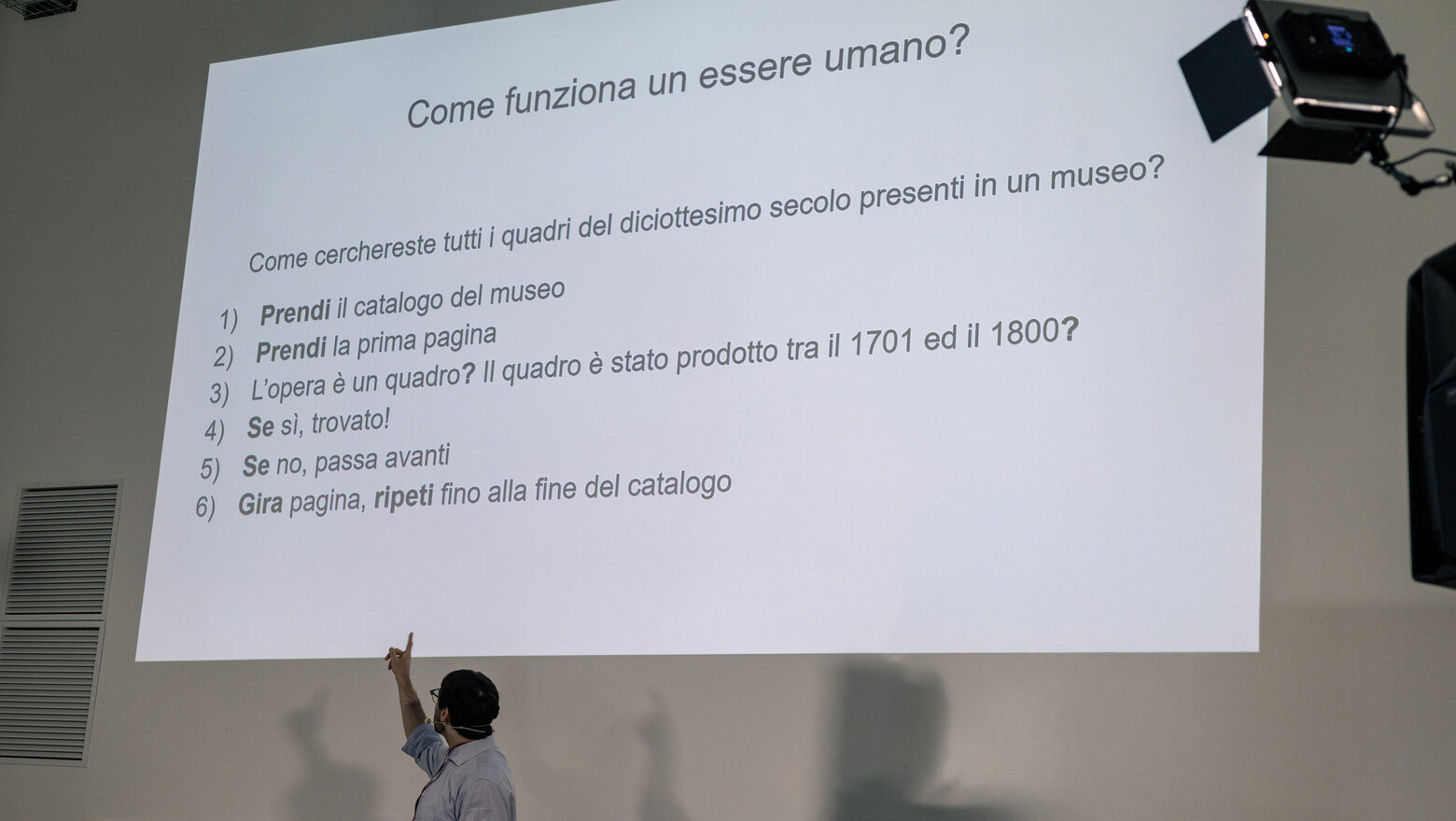
Navigating AI
To understand the opportunities, limitations, and practical applications of generative AI through a critical and conscious approach
FORMAT
In-person workshop
DURATION
Half-day / Full day
PARTICIPANTS
All institutional departments (max. 25 people)
WHAT YOU DEVELOP
- A map of possible use cases
- Criteria to guide future decision-making
THE WORKSHOP INCLUDES
- Fundamentals of AI literacy
- National and international case studies
- Risks and opportunities for cultural heritage
- Needs-mapping and audience analysis session for the organization
workshop
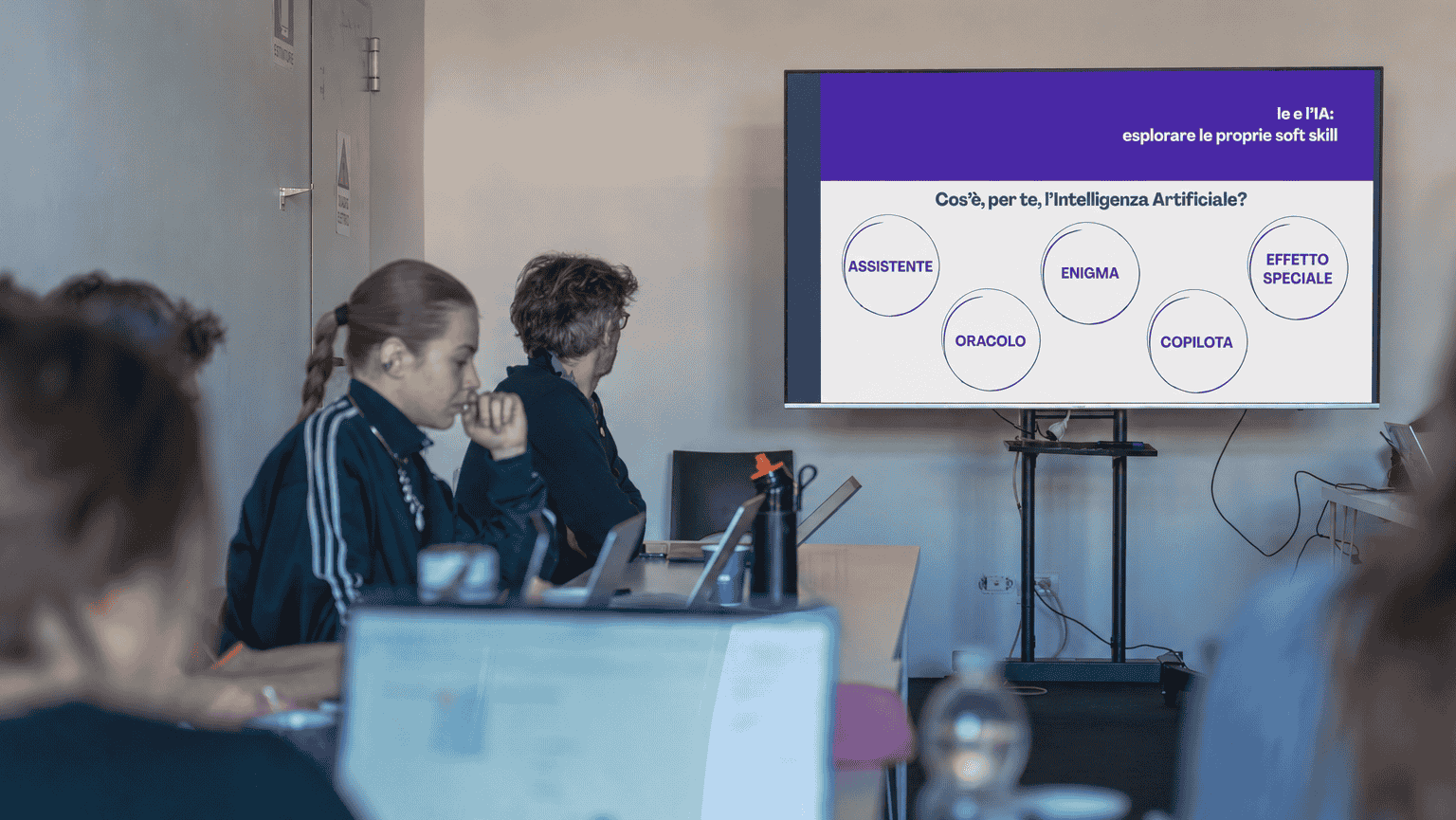
Soft Skills for AI
To strengthen soft skills for a conscious, ethical, and collaborative use of AI (flexibility, analytical thinking, critical thinking, creative thinking, and empathy)
FORMAT
In-person workshop
DURATA
Half-day / Full day
PARTICIPANTS
All the institutional departments (max. 15 people)
WHAT YOU DEVELOP
- Skills to collaborate with generative systems
- Greater awareness in AI usage
THE WORKSHOP INCLUDES
- Exploration of how the team collaborates with AI through five key skills: flexibility, analytical thinking, critical thinking, creative thinking, and empathy.
- Application of soft skills to real-world work scenarios using generative AI tools.
- Discussion on expectations, opportunities, and limitations of AI within the organization’s context.
Team training
We help professional communities develop skills for innovation, collaboration, and design through workshops, serious games, and participatory methodologies.
serious game
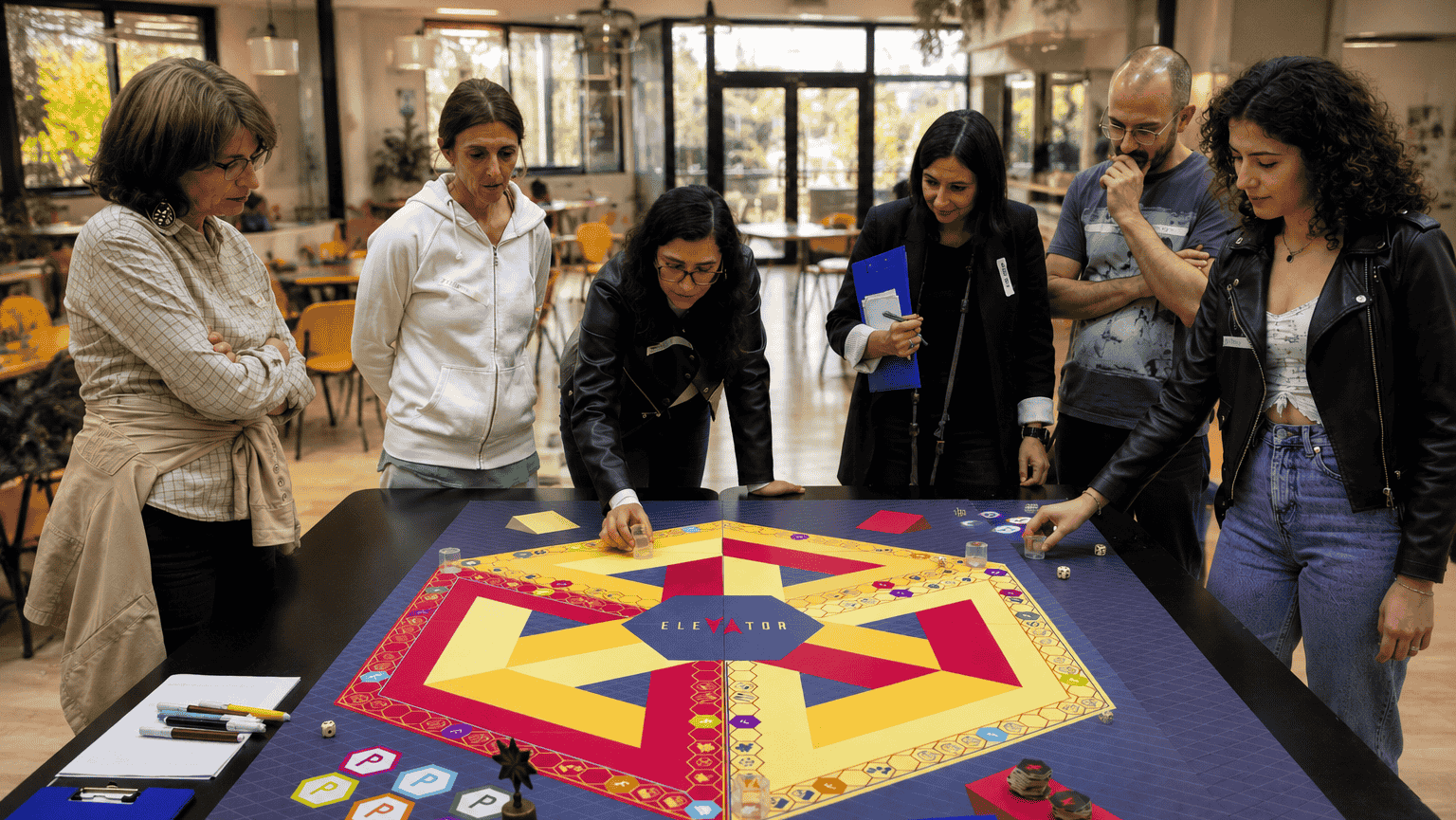
Elevator
A serious game that guides participants through the development of an innovative and sustainable idea using the key elements of a business model: needs, target audiences, resources, partners, and value proposition. Throughout the game, teams challenge each other with creative tasks and collaborative goals, turning project design into an engaging and memorable experience
The game session with students from Marche Polytechnic University and the University of Urbino
FORMAT
In-person workshop
DURATION
Half-day
PARTICIPANTS
From 6 to 24 people
IDEAL FOR
- Team building
- Product and service innovation
- Cross-departmental collaboration
- Training programs on entrepreneurship
- Corporate events e hackathon
THE GAME INCLUDES
✓ Session led by trainers and facilitators
✓ Customizable gameplay tailored to the organization’s goals
✓ Teamwork
✓ Final debrief and collective discussion
The game session with students from Marche Polytechnic University and the University of Urbino
workshop
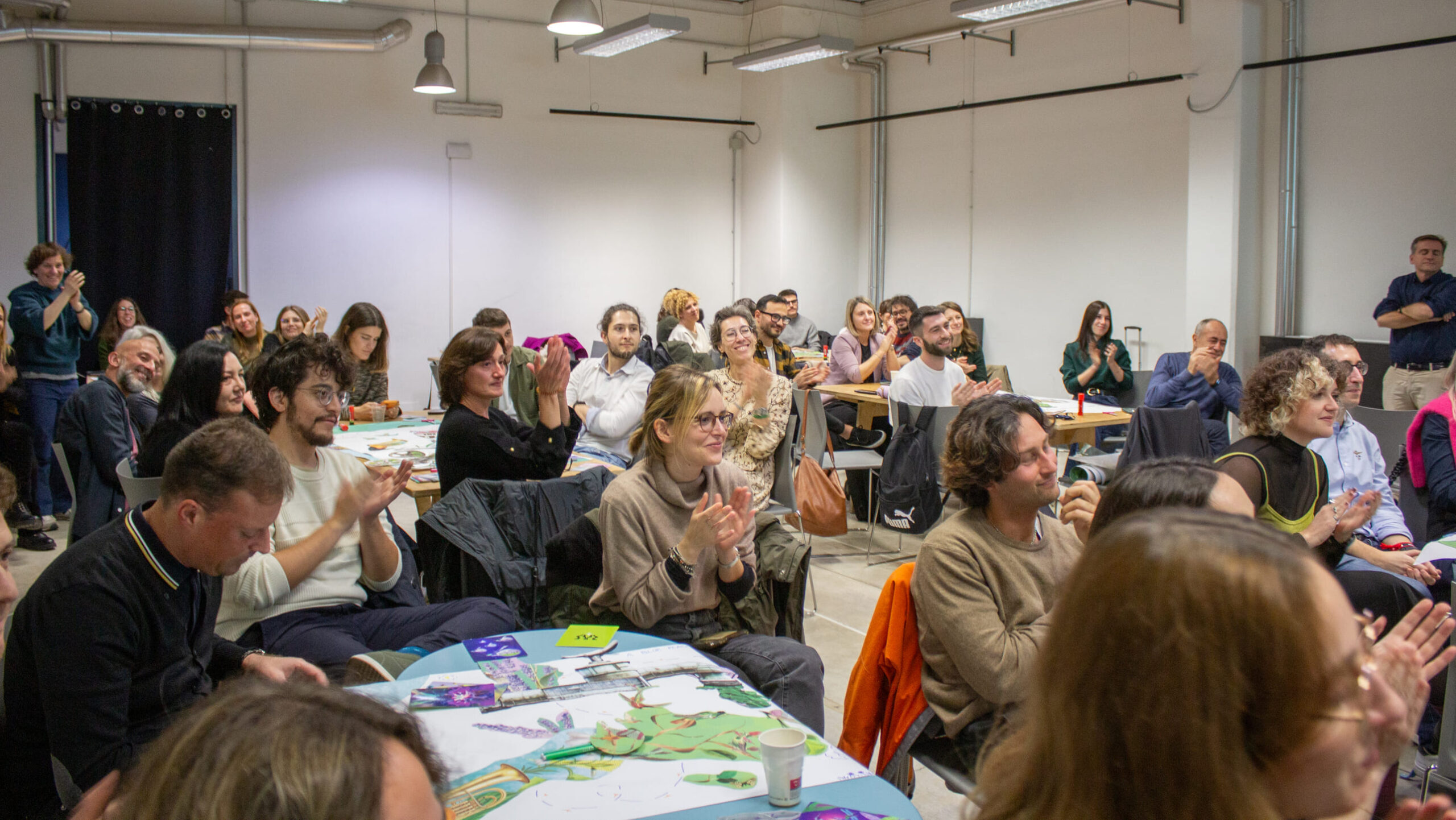
Collage for corporate values
Drawing inspiration from the visionary collages of Mangrovia magazine, we help working groups reflect on values, identity, and future scenarios. Through illustrated playing cards and a structured facilitation process that stimulates discussion, listening, and participation, abstract concepts are transformed into shared representations.
THE CHALLENGE
How can 80 years of CNA Ancona’s history be translated into a manifesto for the future?
THE PROCESS
A workshop using Mangrovia cards and collage to surface shared values, visions and strategic priorities
THE OUTCOME
A new Values Manifesto and a collective collage
FORMAT
In-presence workshop
DURATION
1 day
PARTICIPANTS
Up to 60 people
IDEAL FOR
- Organizational change
- Defining shared values
- Visioning processes
- Corporate events
- Participatory programs
- Building corporate culture
THE WORKSHOP INCLUDES
✓ Use of Mangrovia’s visionary cards
✓ Activities to explore the organization’s values and identity
✓ Collaborative collage creation
✓ Session led by trainers and facilitators
✓ Final collective debrief and restitution
THE CHALLENGE
How can 80 years of CNA Ancona’s history be translated into a manifesto for the future?
THE PROCESS
A workshop using Mangrovia cards and collage to surface shared values, visions and strategic priorities
THE OUTCOME
A new Values Manifesto and a collective collage
Among those who already experimented our trainings
Nontourism
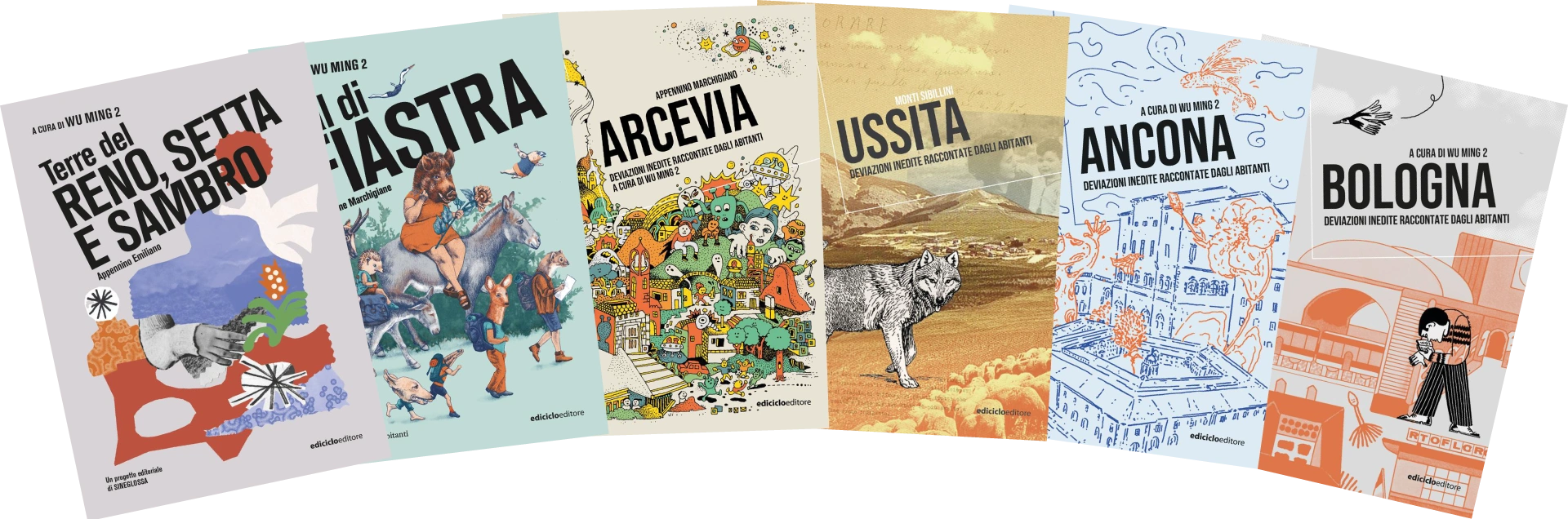
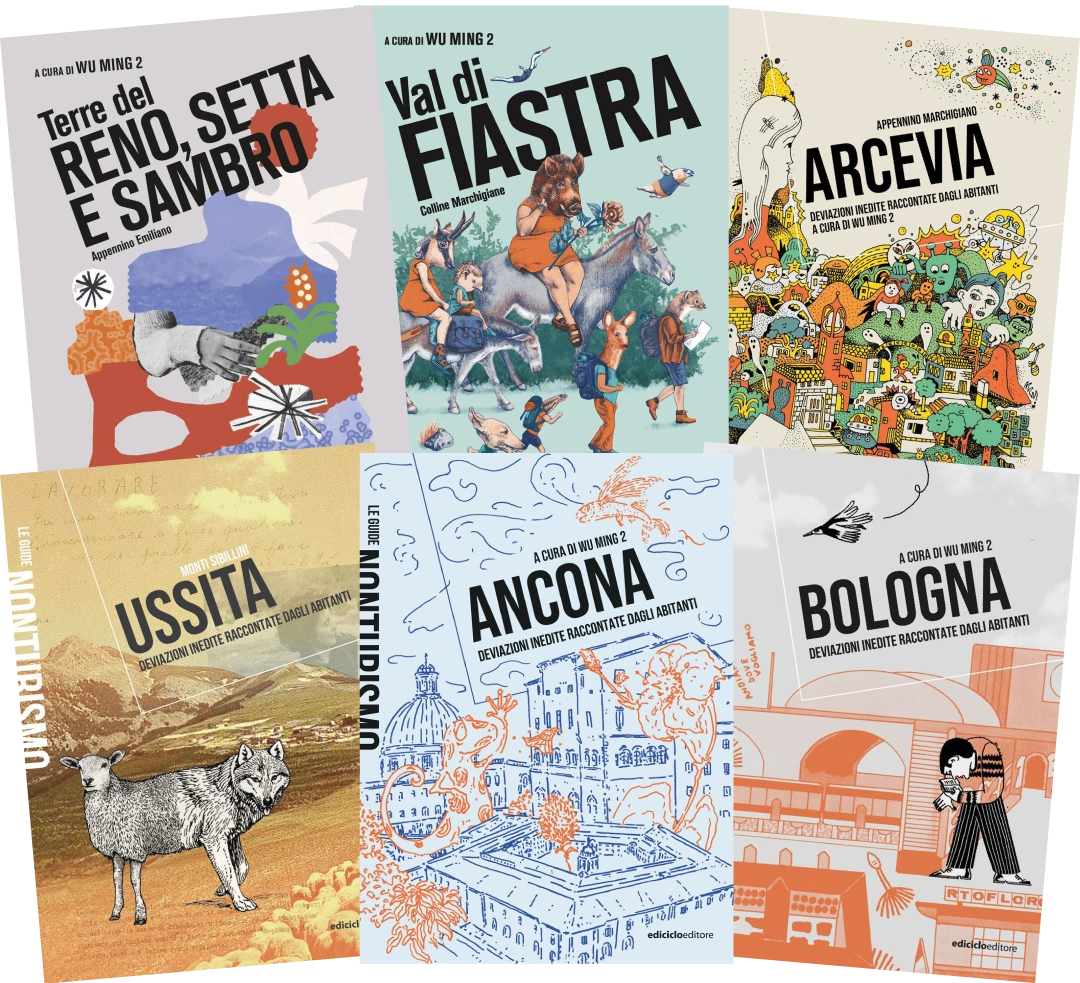
Each service in this area stems from Nontourism, the methodology developed by Sineglossa to engage inhabitants and artists in building new narratives of places. Since 2021, the Nontourism method has given rise to a book series that includes 7 volumes, created in collaboration with local authorities, associations, artists, and residents.
full program
Create a Nontourism guidebook
Nontourism guides are not written by a single author, but by a community editorial staff composed of residents, artists, and professionals from various disciplines. Through workshops, artistic residencies, and field research, a collective narrative of the local area takes shape, culminating in a guidebook for the Nontourism series published by Ediciclo
DURATION
18–24 months
WHAT YOU GET
- A guidebook from the Nontourism series with national distribution.
- New itineraries, maps, and artistic/multimedia content dedicated to the local area.
THE PROGRAM INCLUDES:
- Community mobilization
- Collaborative creation of the narrative framework
- 1 or more community editorial staffs
- 1 or more artistic residencies with photographers, illustrators, writers, and podcasters
- Editorial design, production, and publication of the guidebook
- Final event featuring the book presentation and guided walks
Explore our guides published so far
Want to experience the method on a smaller scale?
Over the years, we have transformed the tools developed during the creation of our guidebooks into shorter workshops and training programs. These are designed for schools, associations, local authorities, and communities who wish to experience the method without launching the full publishing process.
workshop
Introduction to Nontourism
To discover the Nontourism method, spark reflection on local areas, and experience participatory tools.
FORMAT
In-presence workshop
DURATION
Half-day
PARTICIPANTS
Max 50 people
WHAT YOU GET
A prototype of a Nontourism itinerary
THE WORKSHOP INCLUDES
- Discussion on the opportunities and threats of tourism within a local area.
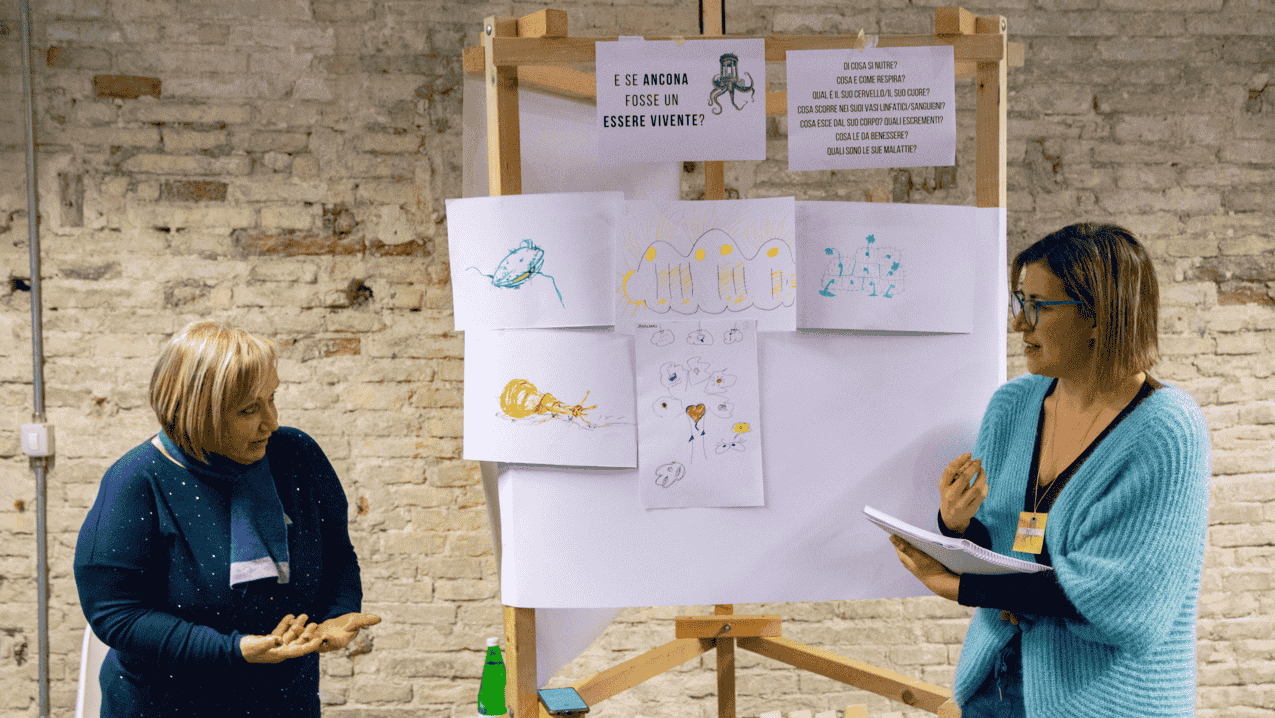
- Use of metaphors to observe and describe places from unprecedented perspectives.
- An overview of the stages leading to the creation of a community guidebook, from building partnerships to engaging inhabitants.
- A workshop on the creation of a minimal itinerary starting from metaphorical drawings.
workshop
Nonturismo Map
To actively engage a community, build new local narratives, and create a collective Nontourism map.
FORMAT
In-person workshop
DURATION
1 day
PARTICIPANTS
Max 30 people
WHAT YOU GET
- A collective Nontourism map
- A collection of texts and materials produced by participants
THE WORKSHOP INCLUDES
- An exercise on the meaning of tourism and “Nontourism”
- Building of a shared language to observe the territory through its residents, landscapes, stories, materials, and tangible/intangible heritage
- Field exploration to gather stories, materials, and perspectives
- Collective writing of itineraries and local narratives
- Public restitution and composition of the final map
TRAINING PROGRAM
Nontourism Training
For teachers, educators, cultural professionals, and facilitators who want to experience the Nontourism method firsthand in order to replicate it independently with classes, citizen groups, associations, or local communities.
FORMAT
In-person training
DURATION
3 half-days
PARTICIPANTS
Max 30 people
WHAT YOU GET
A Nontourism methodological kit to be use in your work context
THE PROGRAM INCLUDES
- Walkscape: An urban walk to “train” the group in an emotional approach to places.
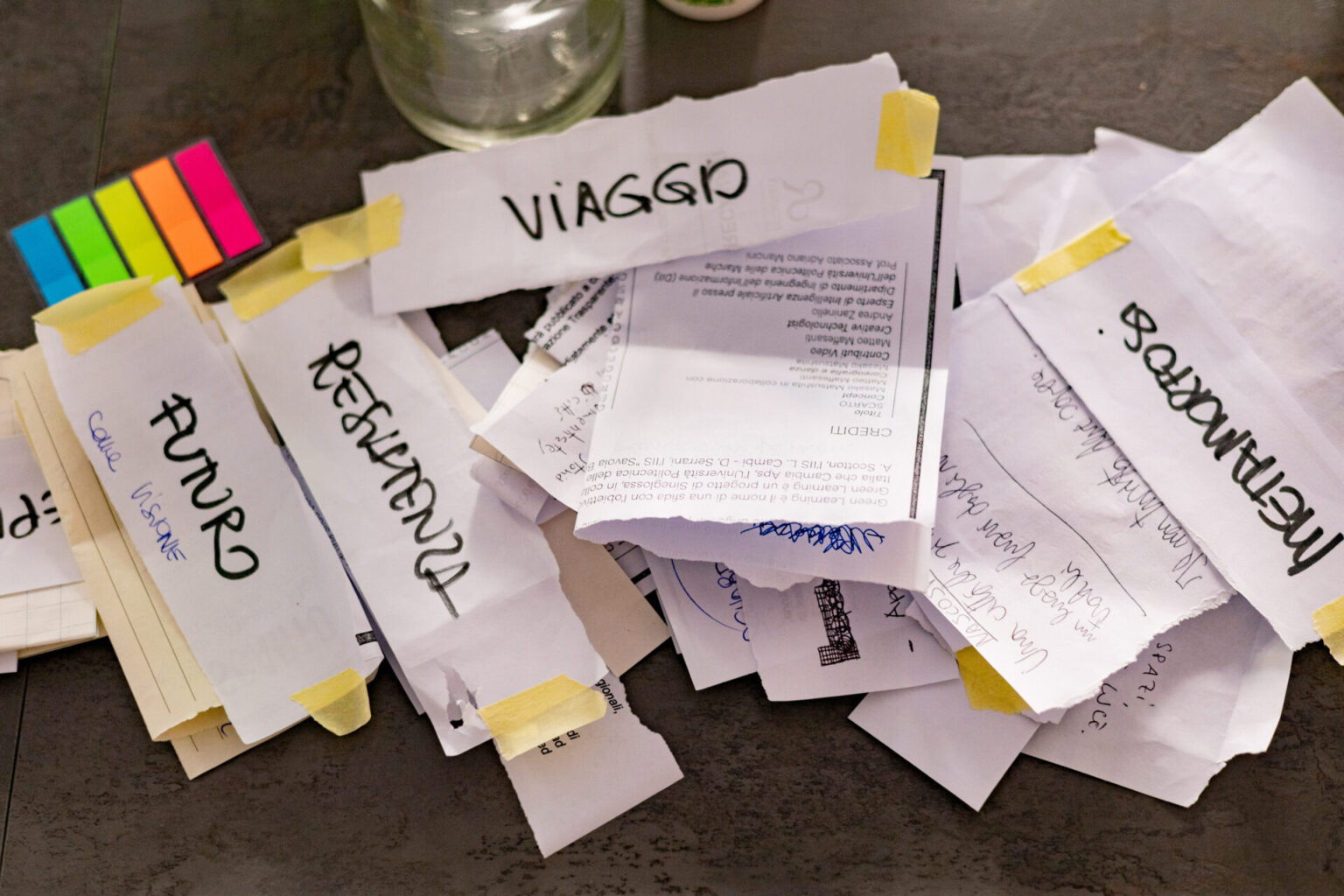
- Emotional Maps: Through the use of the Carte Luoghi (“Places Cards” – an artistic card deck developed by Sineglossa), to explore the emotional meaning of inhabited spaces and build new ways of reading the local area.
- Creation of the Nontourism Itinerary: Collaborative design of an itinerary that connects places, emotions, and stories, experimenting with tools that can later be replicated with classes, groups, and communities.
- Debrief and Method Adaptation: Sharing the created itineraries and reflection on how to adapt the Nontourism method to different educational, cultural, and local contexts.