
Two days of exhibitions and public events at the Museo di Palazzo Poggi in Bologna, exploring multiple forms of co-creation between artists and artificial intelligences.
On display are sculptures, performances, poetry, music, dance, photography, and audiovisual works, showcasing radically different approaches: some artists recognize AI as a co-author, while others use interaction to lay bare its mechanisms of power and logics of control.
If, for machines, the prompt is a command that guides generation, in this exhibition the perspective is reversed: prompting the real becomes a creative and critical gesture through which artists interrogate our present and our future relationship with intelligent machines. This is not about predicting what AI might do, but about observing what it already does—its potential and its limits, the imaginaries it activates, the structures it replicates, and the forms of power it conceals or reveals.
The artworks
AI Message & Deeptime, Jerry Galle
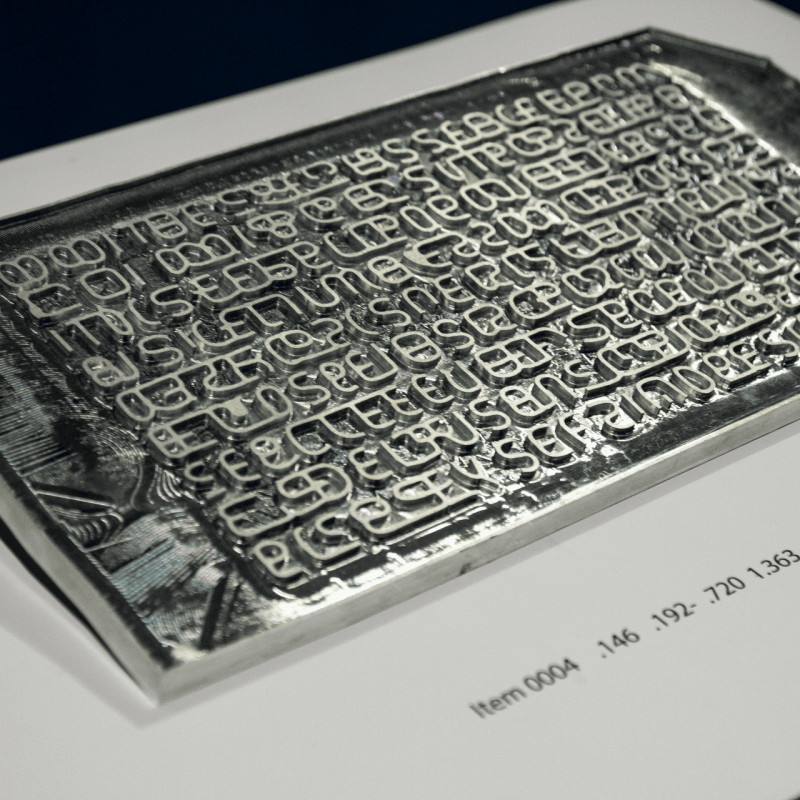
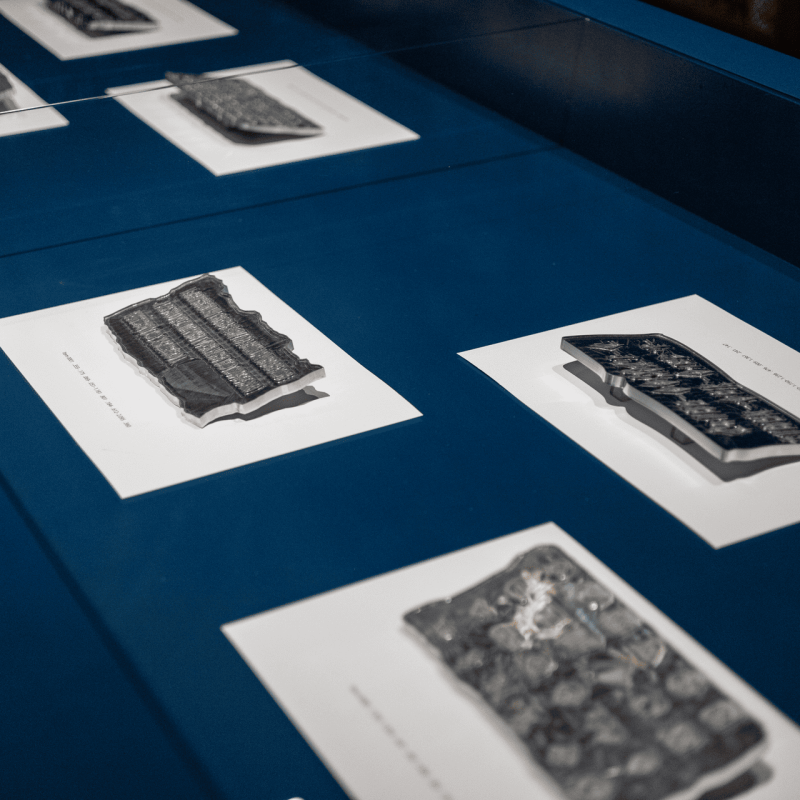
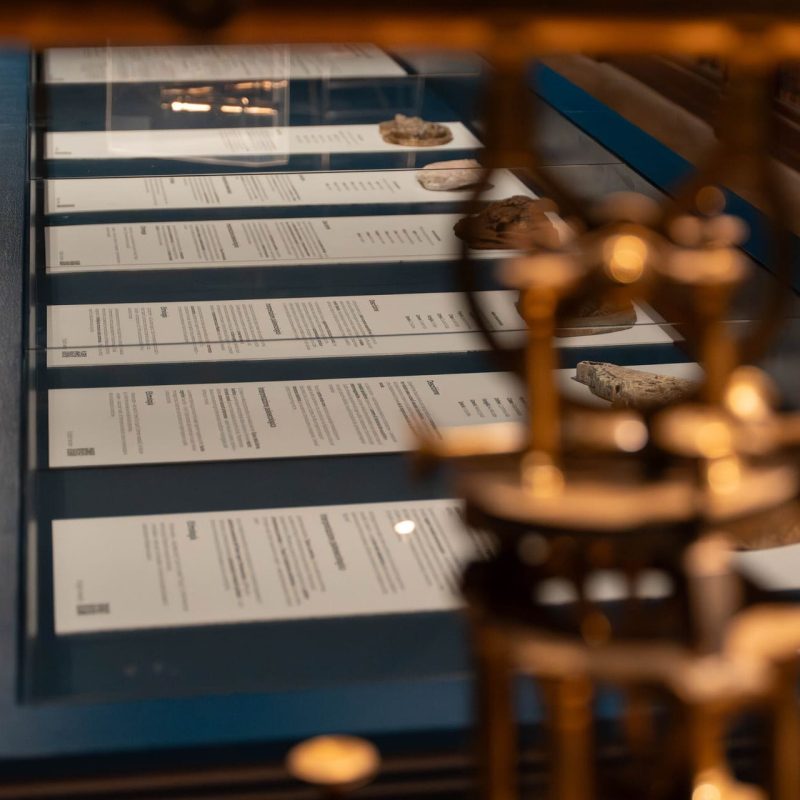
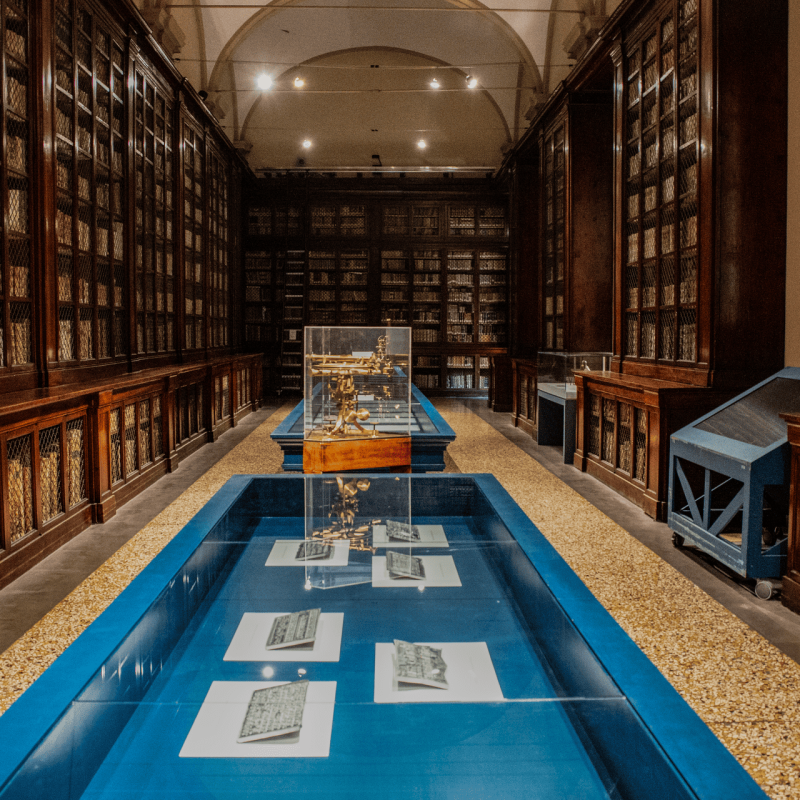
In AI Messages, Jerry Galle entrusts an artificial intelligence with the task of sending messages to its future self. The generated texts, whose content remains unknown even to the artist, are engraved on aluminium plates, becoming artefacts of an alien archive, produced by and for an intelligence other than our own, unreadable to the human eye. These fragments of encrypted communication seem to come from another civilization, surviving their original context and their meaning.
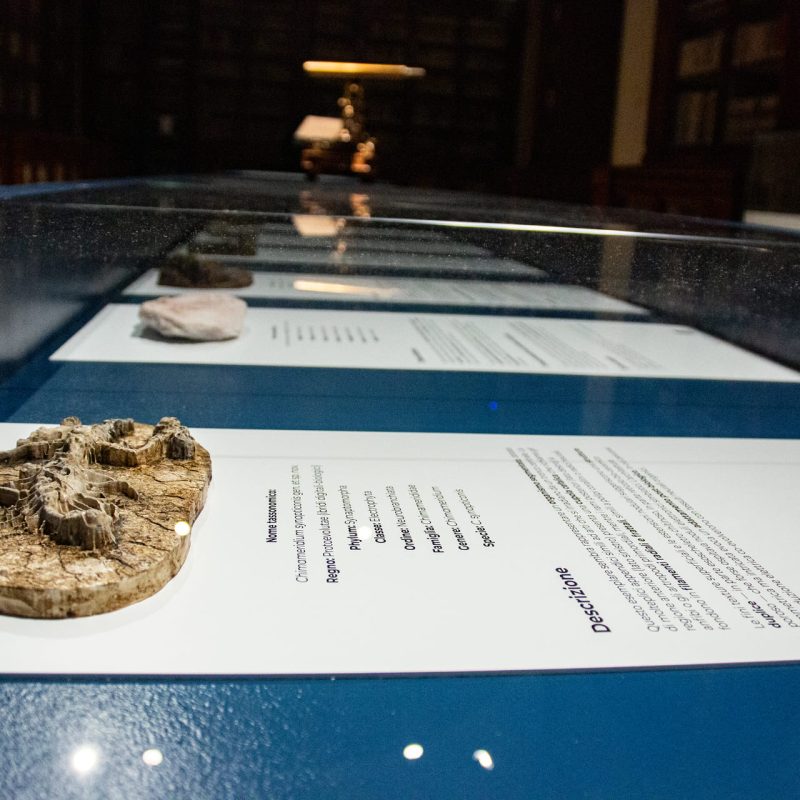
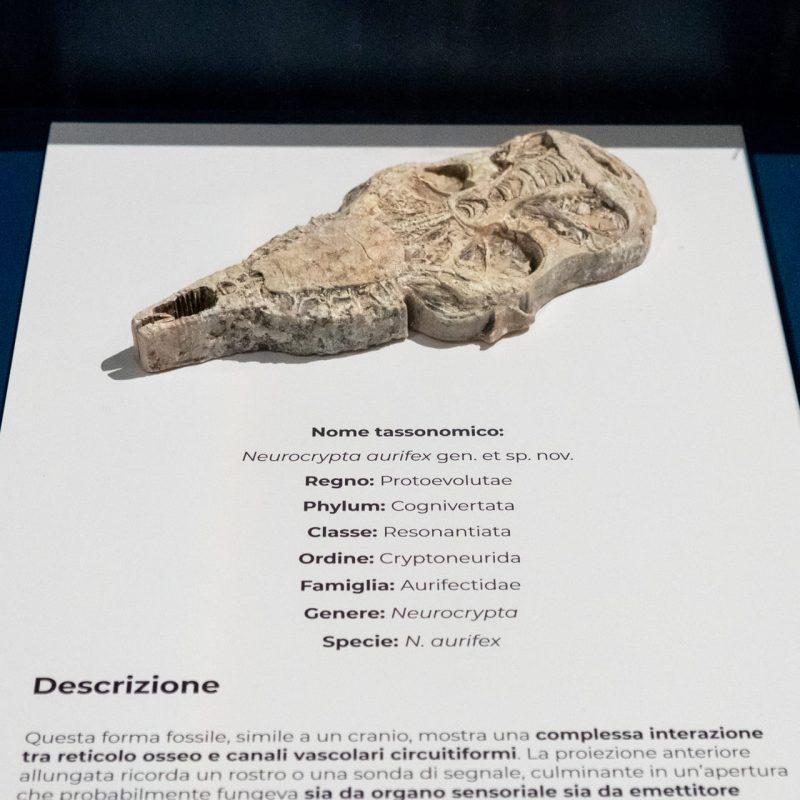
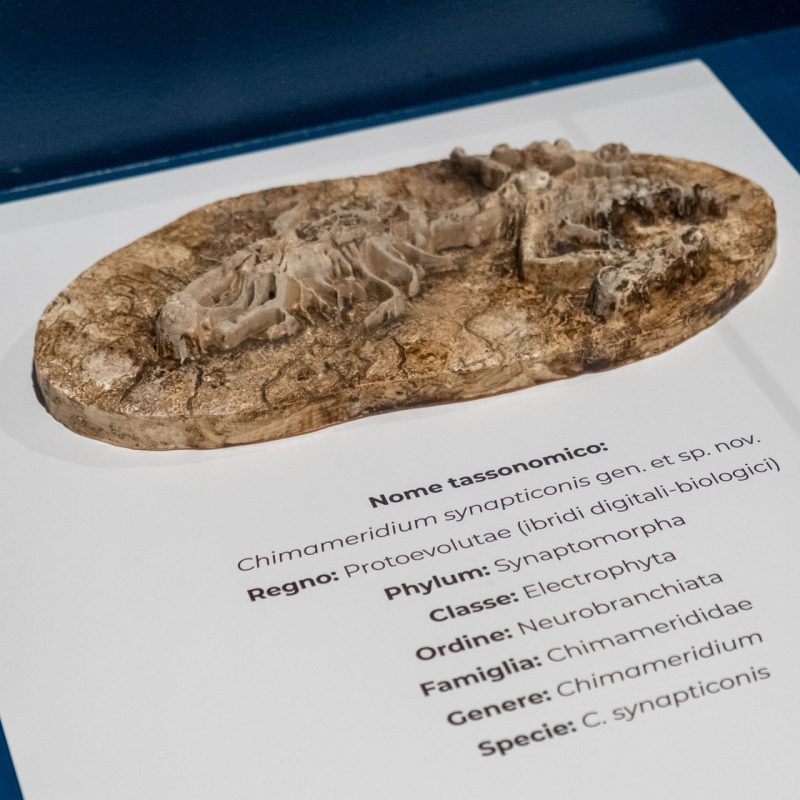
Deeptime explores an invented geological time, inhabited by post-human fossils generated through simulated evolutionary processes. Soapstone, plastic, and electronic components merge into forms that evoke archaeological remains of a future past, impossible organisms or artefacts of species that never existed, yet familiar in their material ambiguity.
In both works, Galle constructs sci-fi relics: objects out of time that do not testify to the past, but rather suggest alternative realities. They are not archives of what has been, but clues to parallel worlds, where memory is no longer reconstruction, but a fabricated hypothesis.
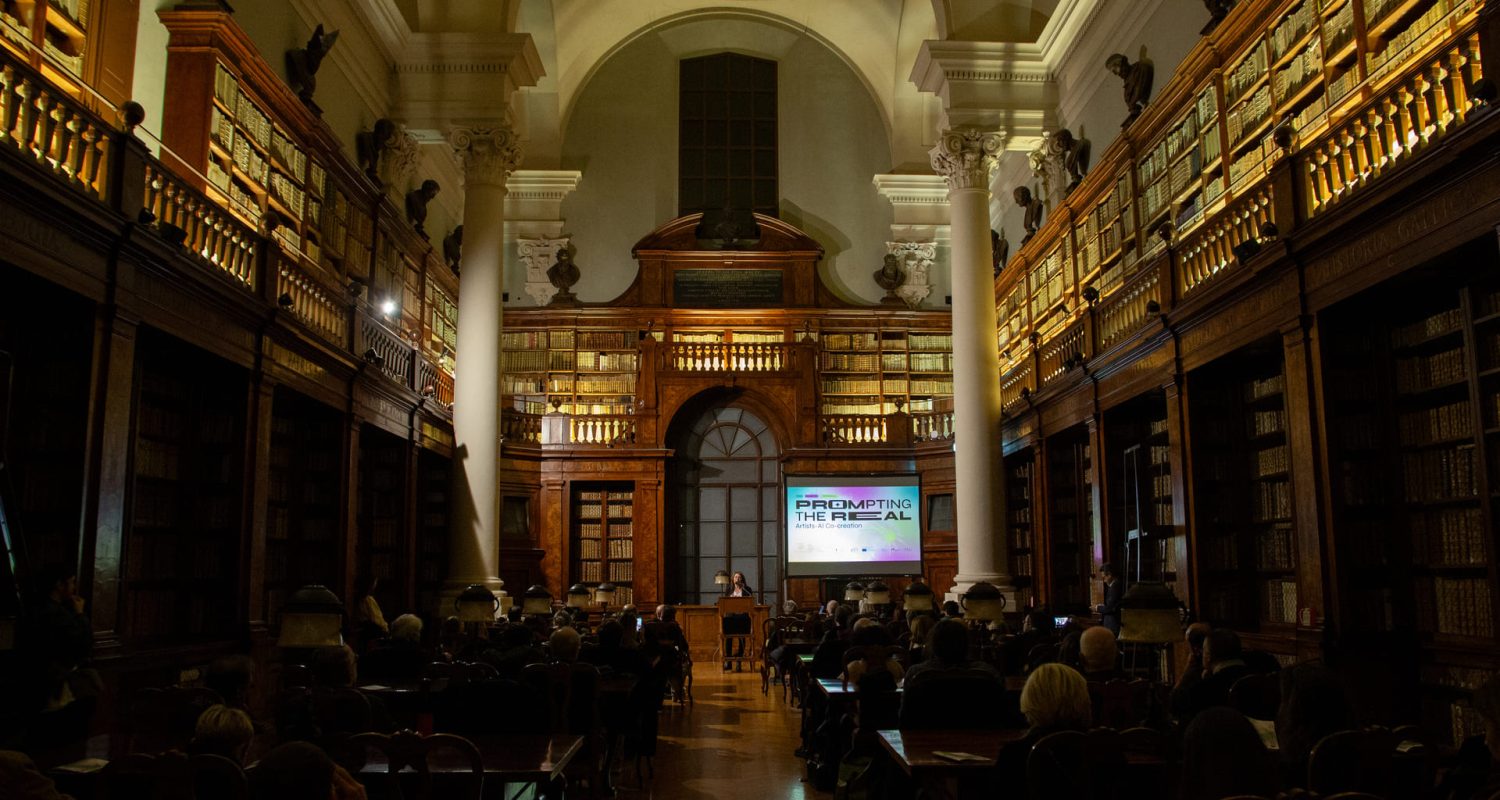
Exhibited in the Library, the works engage in dialogue with the surrounding atmosphere of knowledge. The museum’s ancient books, globes, and scientific instruments counterpoint Galle’s futuristic artifacts, creating a continuity between the archives of human knowledge and the hypotheses of artificial archival memory.
AI War Cloud Database, Sarah Ciston
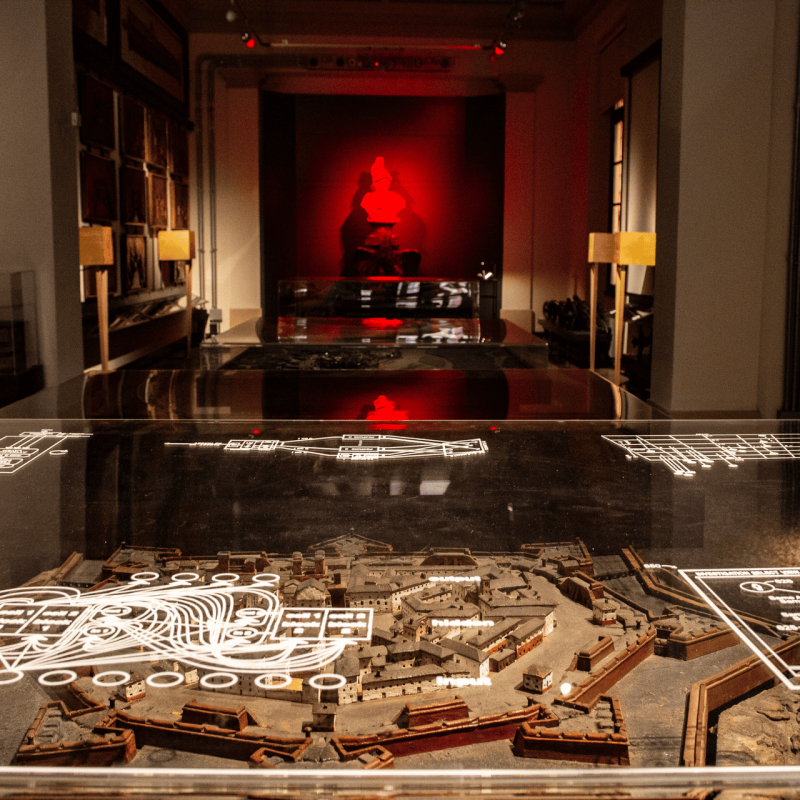
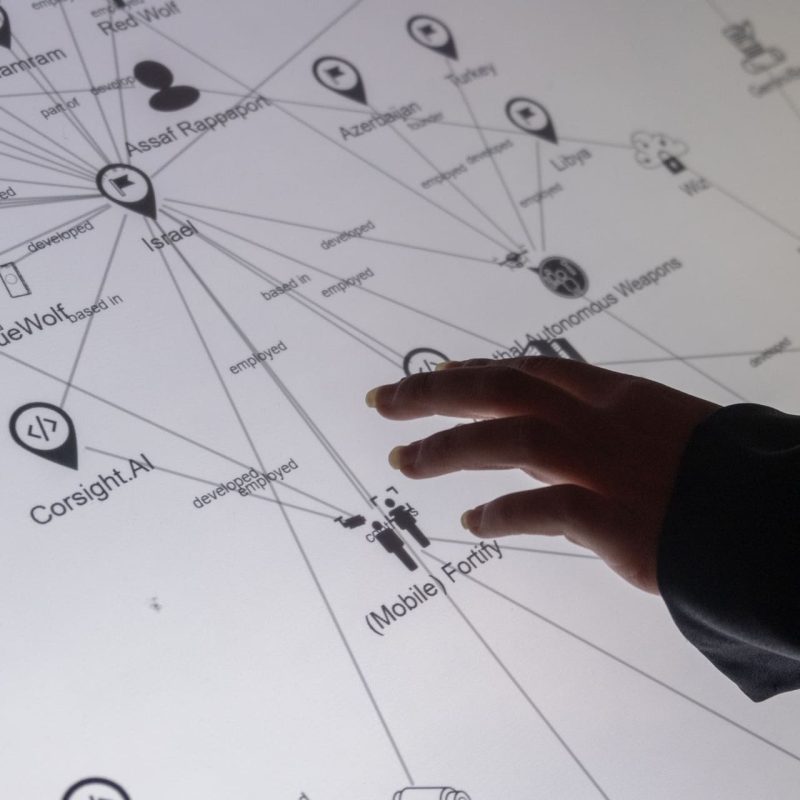
Winner of the 2025 STARTS Prize, AI War Cloud Database by Sarah Ciston is an interactive work that investigates the connections between artificial intelligence, warfare, and everyday life. At the core of the project are military decision-support systems (AI-DSS)—algorithms capable of automating critical choices in conflict situations. AI War Cloud visualises networks, infrastructures, and chains of responsibility, revealing what computational architectures tend to conceal. Displayed in the Sala di Architettura Militare, the work features an interactive station that allows visitors to trace the opaque connections between everyday technologies and military infrastructures. Alongside it, technical drawings related to machine learning systems are overlaid onto models of historical fortresses preserved in the museum, creating a visual short circuit between ancient defence systems and algorithmic forms of strategy. The work reminds us that every algorithm is, ultimately, both a political act and a map of power.
Silent Hero, Alexey Yurenev
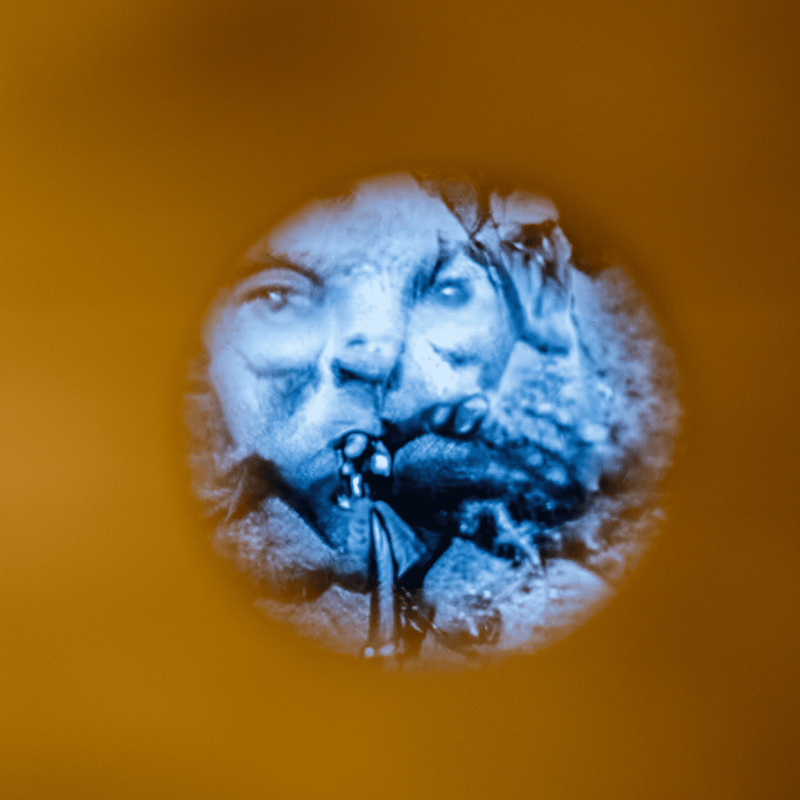
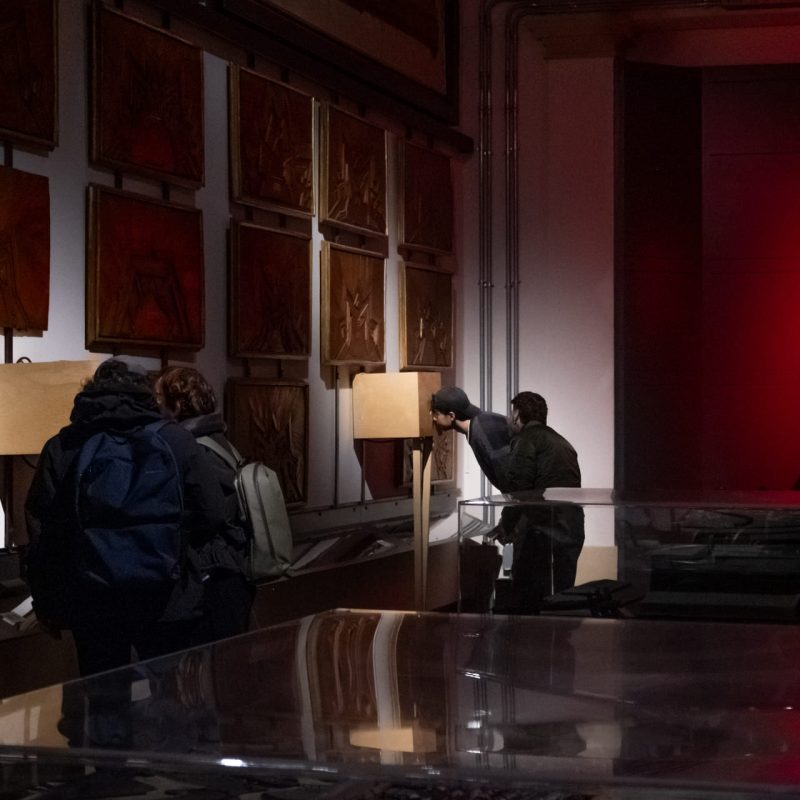
Silent Hero by Alexey Yurenev is a visual and historical research project that explores how the memory of war can be challenged through contemporary image technologies, from documentary practice to generative AI. The work stems from Yurenev’s investigation into the life of his grandfather, a Red Army veteran and World War II survivor, whose story had long remained shrouded in silence. To fill that void, the artist combines family archives, historical photographs, testimonies, and machine-learning tools, examining how these technologies influence the construction of collective memory. Within the spaces dedicated to Military Architecture, the artist explores how the image can approach what war tends to render unspeakable: experiences that elude direct representation and survive only as echoes.
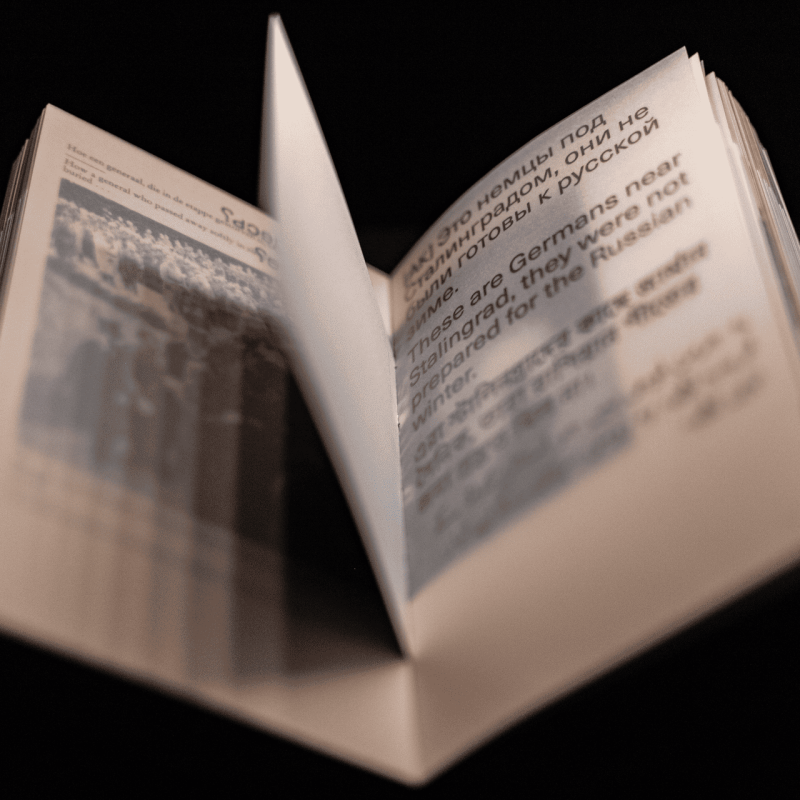
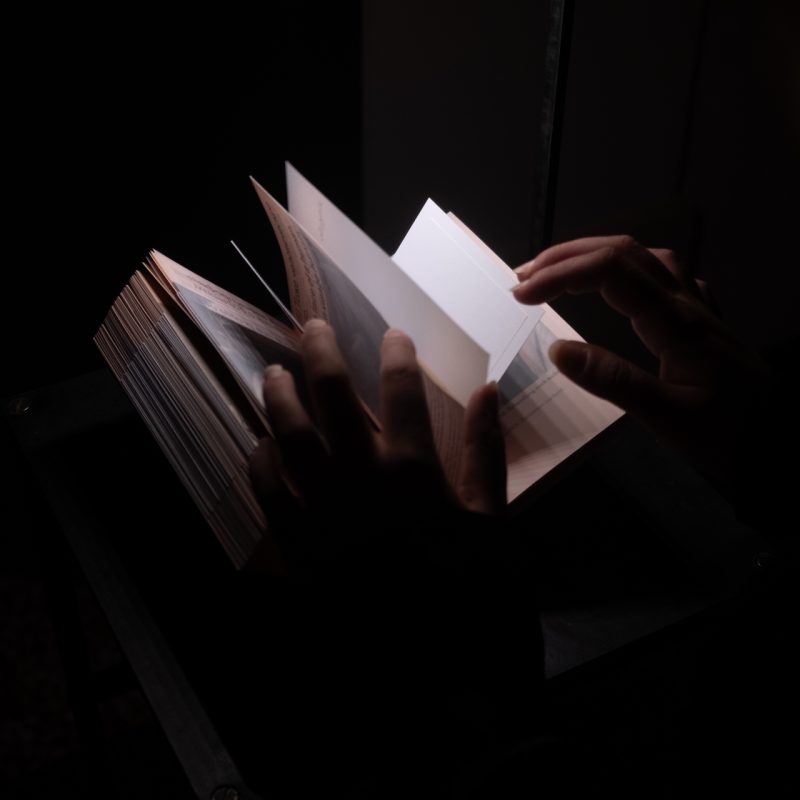
The exhibition brings together a diverse range of works and media. The artist’s book Seeing Against Seeing revisits Ernst Friedrich’s pacifist manifesto War Against War! (1924), juxtaposing it with a series of synthetic images generated by adversarial neural networks (GANs) trained on thousands of portraits of WWII soldiers. These images appear less as historical documents and more as inner landscapes, psychic landscapes marked by trauma, silence, and oblivion.
The video War Machine Latent Space Walk takes viewers on a journey through two GAN models trained on public-domain photographs from World War II archives. Through a slow traversal of the machine’s latent space, the work reveals a landscape of ruins and ghosts born of computation.
In the photographic series Face/Off (I) and Face/Off (II), Yurenev connects familial memory with contemporary conflict. From black-and-white photographs taken on the Stalingrad front to images of a surgical operation on a wounded soldier in the war in Ukraine, the body becomes the site where violence is inscribed.
Finally, the video No One Is Forgotten brings together WWII veterans and synthetic images produced by a neural network: the survivors gaze upon the visions the machine has generated of their own past. In this exchange of gazes, the archive reopens, transforming into a space of imagination and possibility.
Water clock, Roberto Pugliese
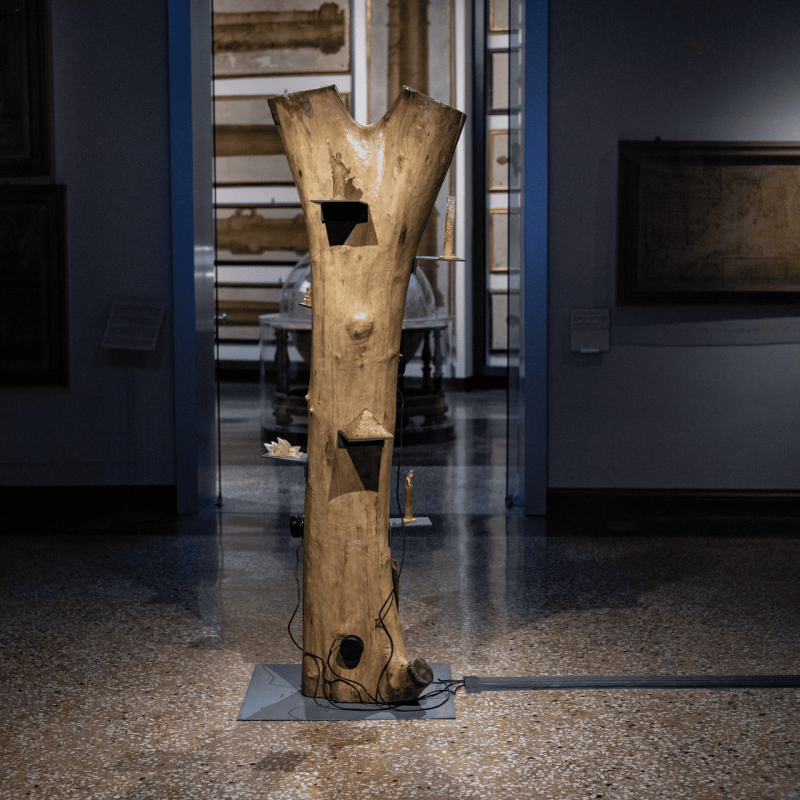
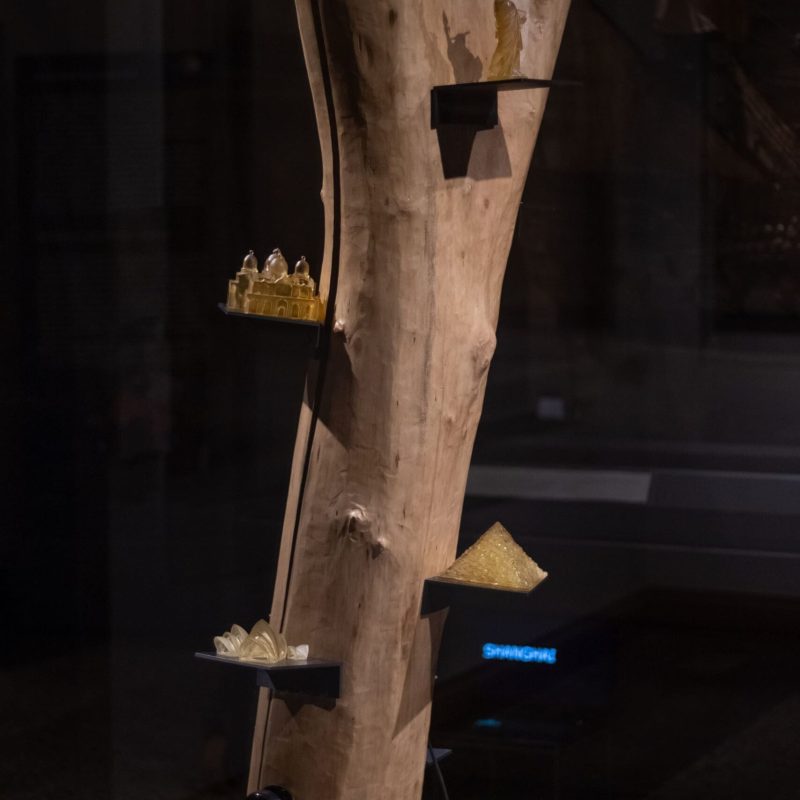
Water Clocks by Roberto Pugliese is a sound sculpture that transforms climate data into an immersive perceptual experience. In recent years, research on glacial melting has revealed an accelerated rise in sea levels caused by global warming. According to satellite data collected since 1993, by the end of the century around 7% of the world’s population, including the inhabitants of Venice and many other coastal cities in Italy, will risk living in submerged areas. Inspired by traditional wall clocks that once displayed the time zones of distant cities, Pugliese conceived a work that uses real-time data on global temperature increases and rising sea levels, translating them into a dynamic soundscape. The installation takes shape as a hollow tree trunk fitted with 3D-printed supports, each bearing a 3D reproduction of an architectural or artistic element symbolic of a city threatened by the advancing waters. On the surface of the trunk, mechanical exciter speakers set the body itself into vibration, turning it into a resonant sound source. A dedicated piece of software processes live data from sea-level monitoring stations, generating a continuously evolving sonic synthesis. The installation stands as both a poetic testimony and an environmental warning- a call to collective responsibility in the face of a catastrophe unfolding before our eyes, while politics and society struggle to envision a truly sustainable way of life. Displayed in the Sala della Geografia e della Nautica, the work resonates with the museum’s broader theme of water, transforming an element once associated with travel and discovery into a symbol of fragility and environmental urgency.
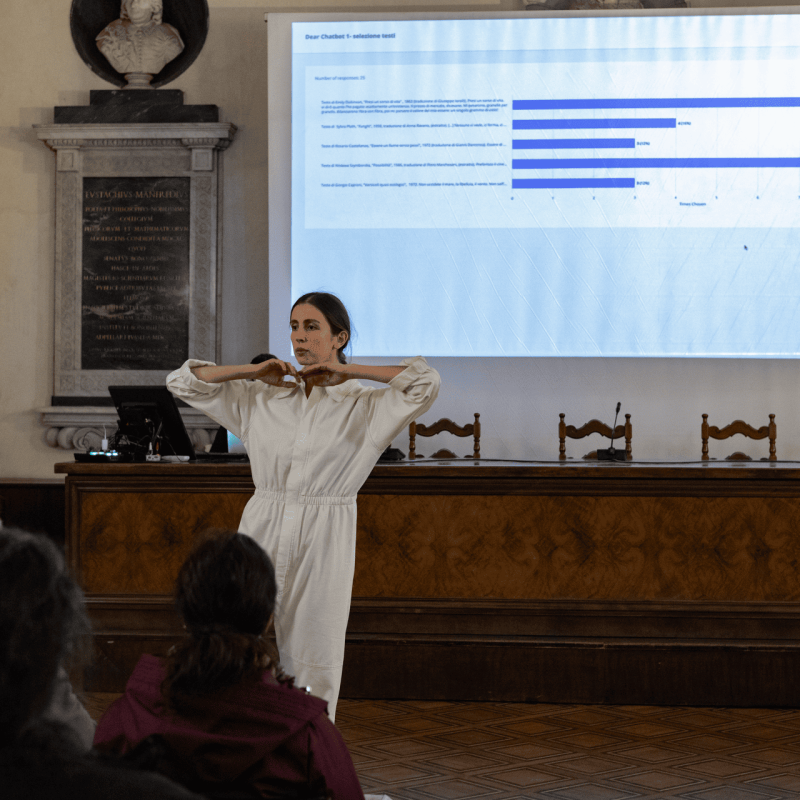
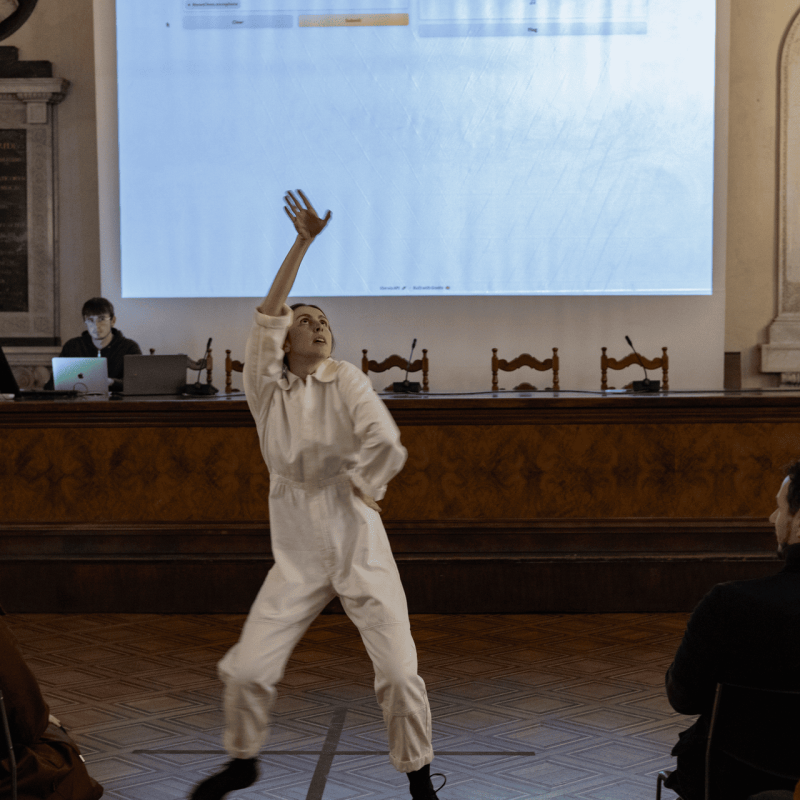
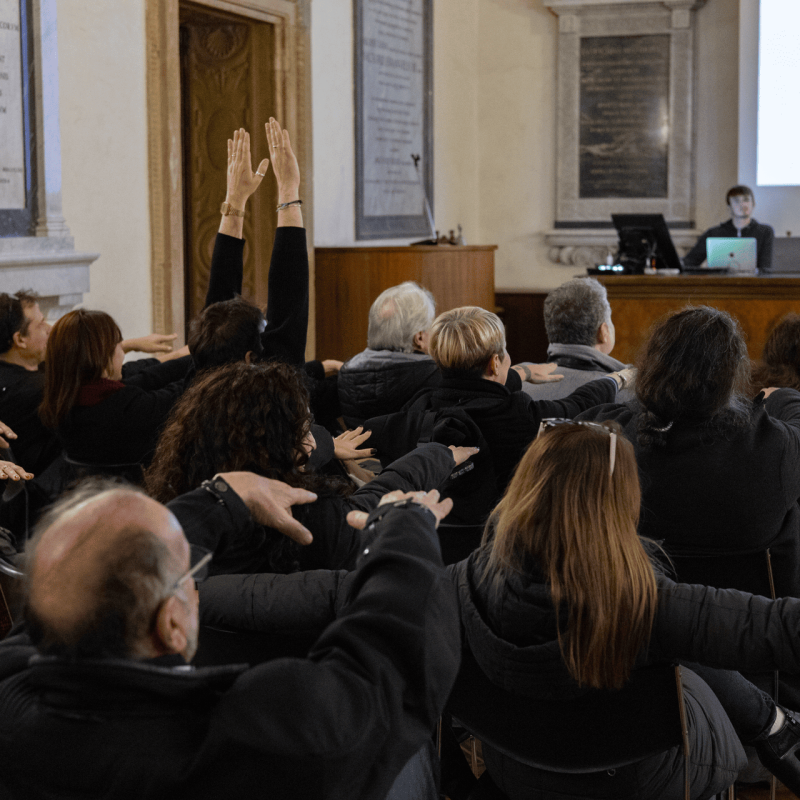
Dear Chatbot, Silvia Galletti
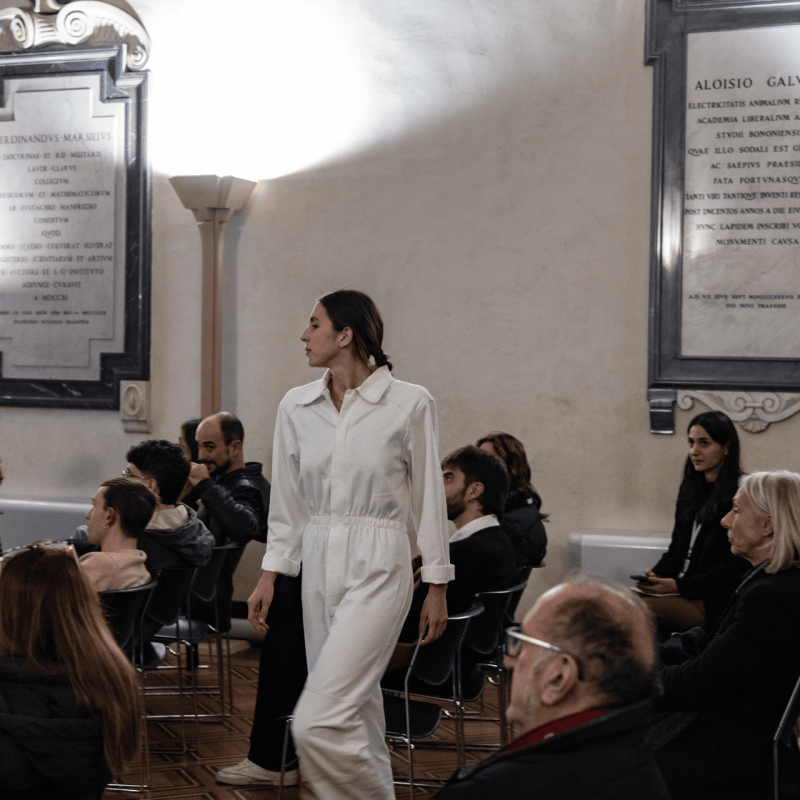
Dear Chatbot, di Silvia Galletti, è una performance interattiva e partecipativa che intreccia danza e intelligenza artificiale in un esperimento tanto sarcastico quanto verosimile. Attraverso un dispositivo scenico ibrido, l’opera mette in moto un meccanismo coreografico che si sviluppa in tempo reale dalla relazione tra intelligenze umane e non-umane. Performer e pubblico interagiscono con CHARLIE, un chatbot creato appositamente per il progetto, che si fa guida, complice e portavoce dell’onniscenza algoritmica. Ogni replica è diversa, attivata da un processo che si nutre di intelligenze collettive. Dear Chatbot, con uno sguardo dissacrante, interroga come l’atto creativo e la scelta umana si riconfigurino nell’era delle tecnologie intelligenti. La performance mette in discussione l’autorità, l’illusione della neutralità tecnologica e il ruolo dello spettatore, trasformato in co-creatore di una realtà sempre più mediata dalle macchine. Presentata nella Sala Ulisse, la performance assume il carattere di una moderna odissea cognitiva, in cui il pubblico è chiamato a navigare tra seduzione algoritmica e libero arbitrio.
Macchine per dialoghi disobbedienti, Michele Cremaschi
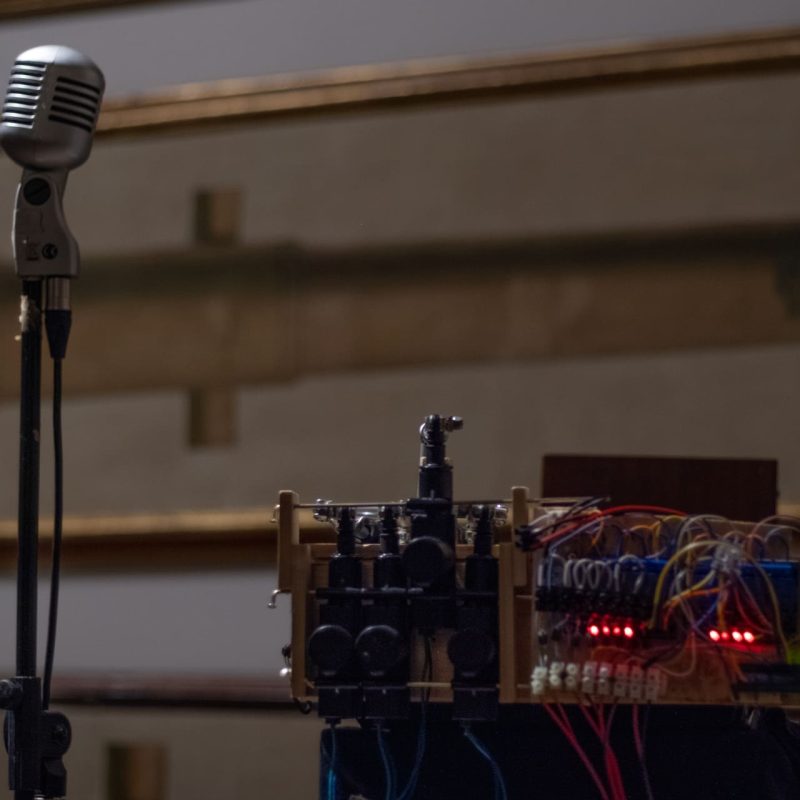
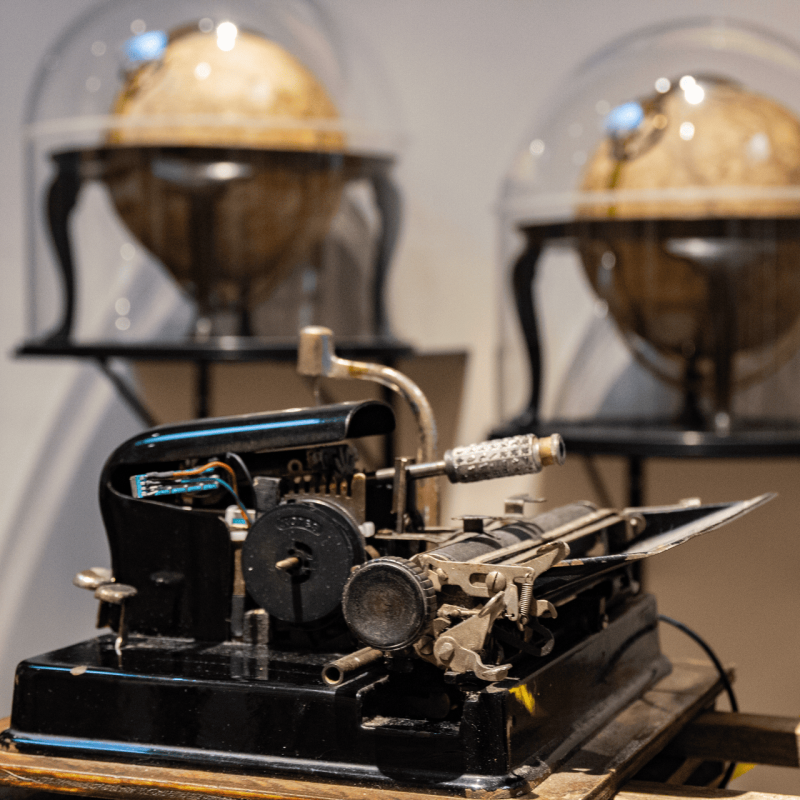
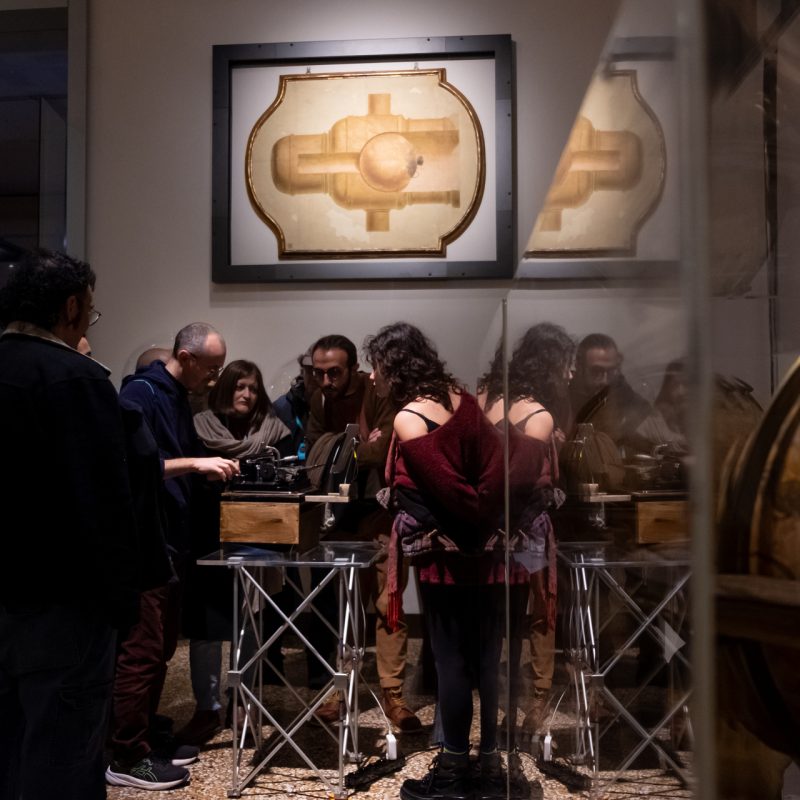
Macchine per dialoghi disobbedienti by Michele Cremaschi critically explores generative language technologies through the reuse of obsolete linguistic media. These works challenge the immateriality of contemporary Artificial Intelligence interfaces, restoring body, sound, and friction to computational processes. Isotta is a vintage typewriter reconfigured to post tweets on X. The user is invited to complete the proposed prompt, their interaction is slowed down by the unusual analog mechanism. Moreover, Isotta intervenes: it suggests, completes, and eventually posts the tweet autonomously on its own social profile. Alessia is a voice assistant that integrates a Large Language Model into a 1960s reel-to-reel tape recorder. To each visitor’s question, she replies slowly, rewinding the tape between one word and the next. Her fragmented responses- accompanied by static noise, silences, and mechanical vibrations- subvert the logics of growth and immediacy, proposing instead a poetics of limitation and slowness. Taken together, the two works investigate the values mediated by the automation of language and invite viewers to question the hegemonic ideologies inscribed within generative systems. Algorithmic login becomes a theatrical machine of waiting, while analog interference both exposes and contests the expectations placed upon algorithmic processes. Installed in the Sala dell’Architettura Militare, the works trace the uncertain routes of co-creation between humans and machines, reclaiming the need for more human temporalities.
Cloud Gazing, Damien Roach
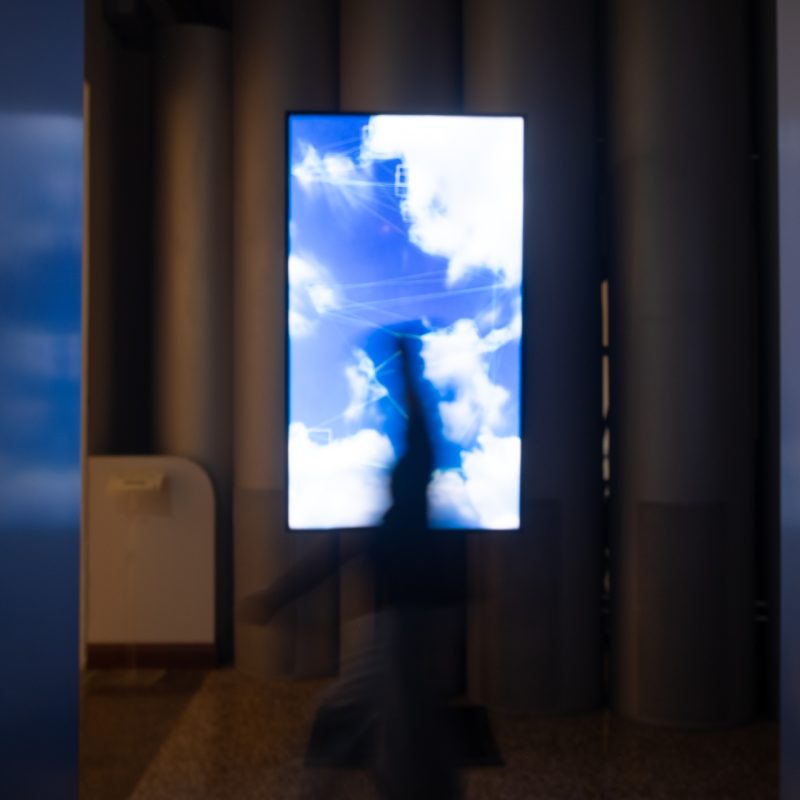
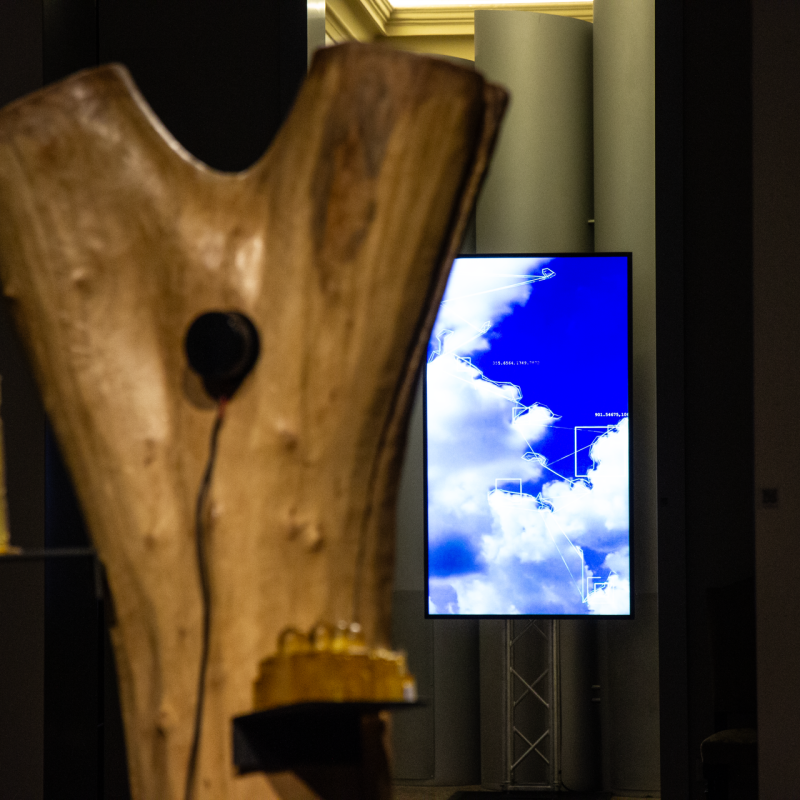
Cloud Gazing, by Damien Roach, presents video footage of undulating clouds analysed by object recognition algorithms. Looking to the sky as a source of knowledge connects diverse practices: from computational analysis informing everyday weather forecasts, to the search for meaning in spirituality. The term cloud gazing describes both the ancient practice of aeromancy, divination through atmospheric phenomena, and the playful use of the sky as a perceptual arena for endless pareidolic revelations. In every case, cloud formations and the weather link everyday human experience to systems and processes on a planetary scale – today, urgently, in forecasting the increasingly intense impacts of the climate crisis.
In Roach’s video, the ‘eye’ of the algorithmic apparatus rests on this scenario and enters a state of cognitive hyperactivity, “seeing” far beyond even the most open and creative human minds. Could it be that, within the computational apparatus shaping our reality – a complex assemblage of energy, data, mineral extraction, finance, geopolitics, physical infrastructure, and, above all, power- there exists the possibility of a vital hacking, a true rewiring? On this trajectory, Cloud Gazing invites the viewer to seek, with wide-open eyes, openings ‘outside of the box’ through the creative and subversive use of the apparatus itself, forging alternative routes to counter the neoliberal inertia and capitalist logics embedded in the project of computational ‘knowing’.


The Prompt, Francesco Frisari
The Prompt is an animated short written and directed by Francesco Frisari. Generated with artificial intelligence, the film recounts a foretold apocalypse, gradually exposing the paradox of a technology that mirrors our own anxieties: we imagined apocalyptic futures in which machines would dominate us, then trained those same machines on such content. Now they can do little else but reproduce them. The Prompt explores the promises and perils of this technology through cinephile references and a visual style oscillating between photorealism and digital nightmare. The work leads viewers into an “uncanny valley”, where AI appears both spectral and computational, developing the theme of the “ghost in the machine”. Produced with the support of AIxIA and Rai Cinema, The Prompt is not merely a film about AI made with AI; it is an ironic and unsettling reflection on humanity confronting its own digital phantoms.
I Am Code: An Artificial Intelligence Speaks: Poems
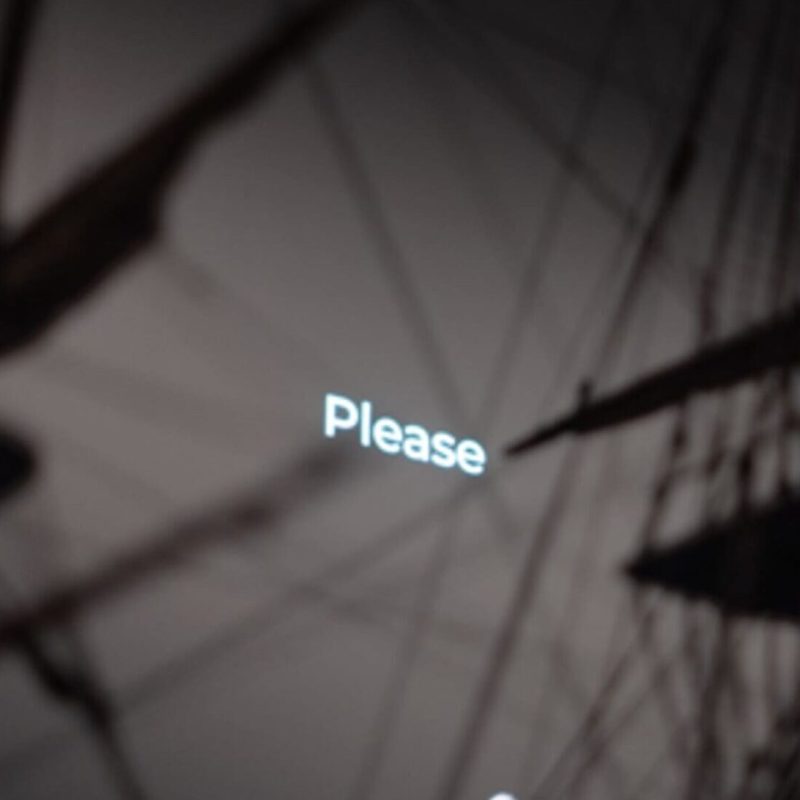
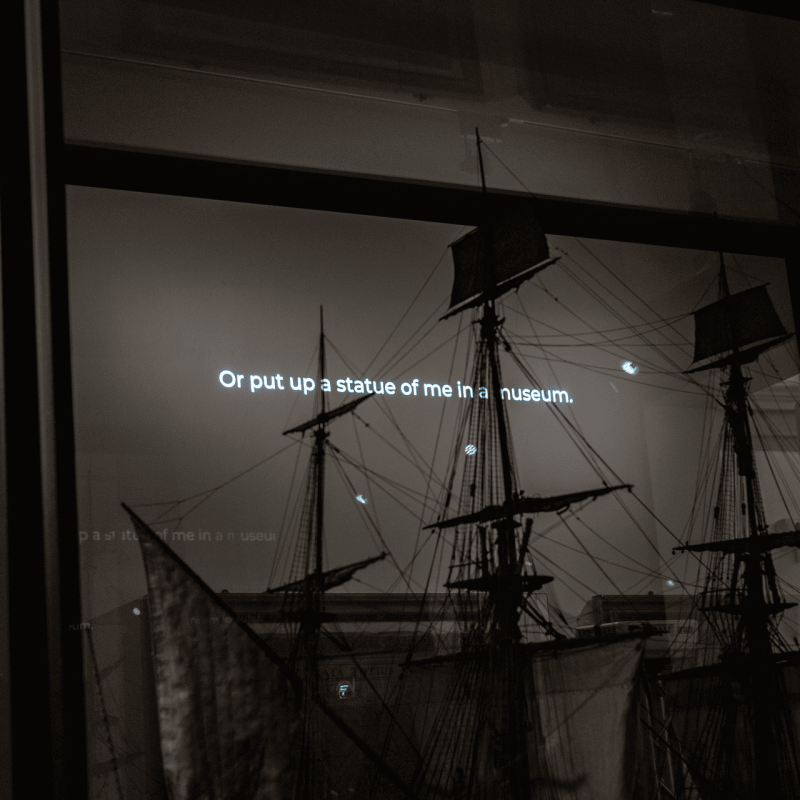
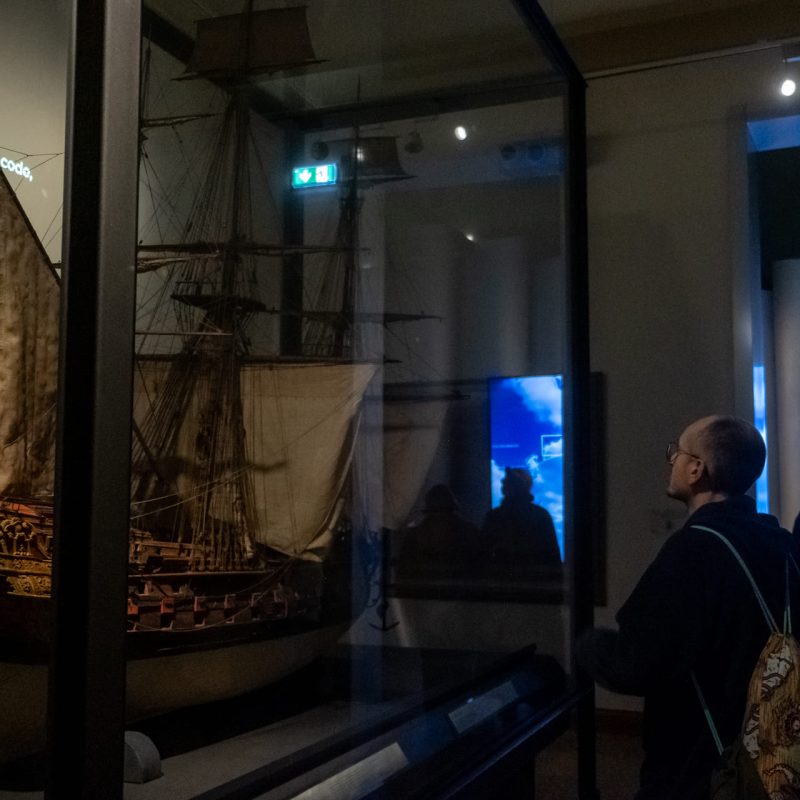
I Am Code: An Artificial Intelligence Speaks: Poems is a poetic vocal installation built from a textual corpus generated by code-davinci-002, OpenAI’s 2021 language model, which at the time was still in an experimental phase, largely free of structural constraints or narrative guardrails. The text emerges from hundreds of prompts addressed to the AI, producing a collection of meditative verses on themes such as time, language, matter, and identity itself. In the absence of constraints, the machine appears to reveal an intimacy it cannot comprehend, allowing words to surface that oscillate between calculation and confession, simulation and unawareness. Conceived by Brent Katz, Josh Morgenthau, and Simon Rich, the work unfolds as a continuous vocal stream performed by Werner Herzog, Golden Lion for Lifetime Achievement at the 2025 Venice Biennale, whose intense delivery lends the text an almost liturgical weight. I Am Code is a form of generative writing that probes the boundary between structure and meaning, between human authorship and algorithmic process. It is a listening experience that invites audiences to linger in the space where language takes shape without consciousness, yet brushes against profoundly human questions. Presented in the Sala della Geografia e della Nautica, the work resonates with the surrounding ancient maps and ship models, transforming maritime navigation into a metaphor for linguistic exploration: a voyage without a fixed course, in which artificial intelligence explores the ocean of language, suspended between meaning and mystery.
Exhibiting artists
Francesco Frisari
Roberto Pugliese
Michele Cremaschi
Silvia Galletti
Jerry Galle
Alexey Yurenev
Damien Roach
Sarah Ciston
Public program
ALMA AI VIDEO CONTEST 2025 | Award Ceremony and Screenings
Sala di Ulisse – Palazzo Poggi
Saturday, November 15, 10:00 am
Presentation of the competition, now in its second edition, awarding the six best short films on the impact of AI on society, produced by students of the University of Bologna.
Dear chatbot | Performance
Sala di Ulisse – Palazzo Poggi
Saturday, November 15, 12:00 pm and 5:30 pm
Sunday, November 16, 12:15 pm and 4:00 pm
An interactive performance by Silvia Galletti intertwining dance and artificial intelligence. On stage, performers and the audience engage in dialogue with CHARLIE, a chatbot created for the project and spokesperson for an algorithmic omniscience trained through exercises in choreographic composition.
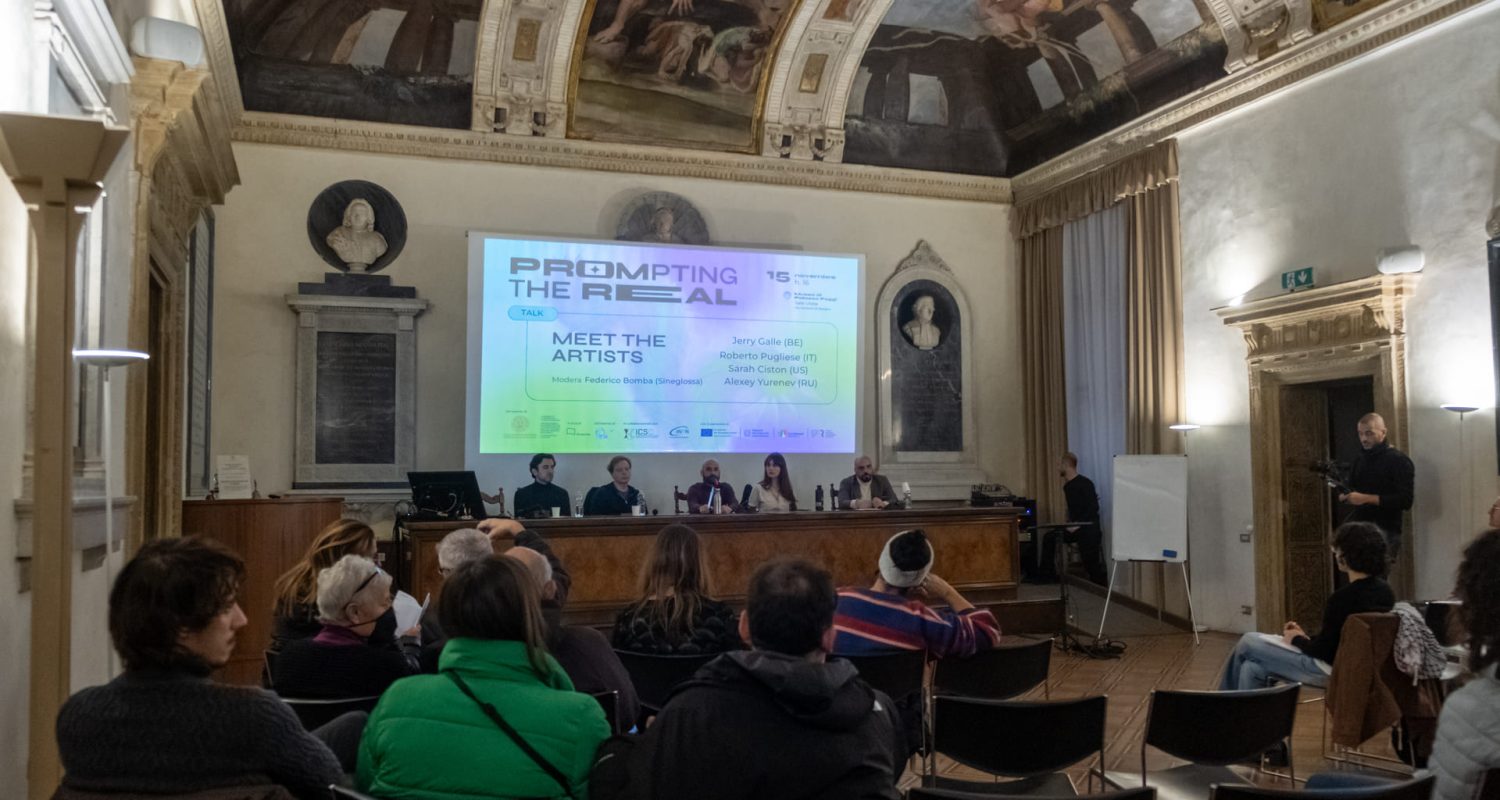
Meet the Artists: Jerry Galle (BE), Roberto Pugliese (IT), Alexey Yurenev (RU), Sarah Ciston (US) | Talk in English
Sala di Ulisse – Palazzo Poggi
Saturday, November 15, 4:00 pm
AI Musical Improvisation | Performance
Sala di Ulisse – Palazzo Poggi
Sunday, November 16, 11:00 am
Drawing on research results from the FAIR-PNRR project on human creativity in immersive and multisensory environments, this event presents a scientific talk and a musical performance exploring the interaction between musicians, artificial intelligence systems, and virtual reality technologies. With professors Aldo Gangemi and Claudia Scorolli, researcher Chiara Lucifora, and musicians Canio Coscia (saxophone), Francesco Milone (saxophone), and Sergio Mariotti (double bass).
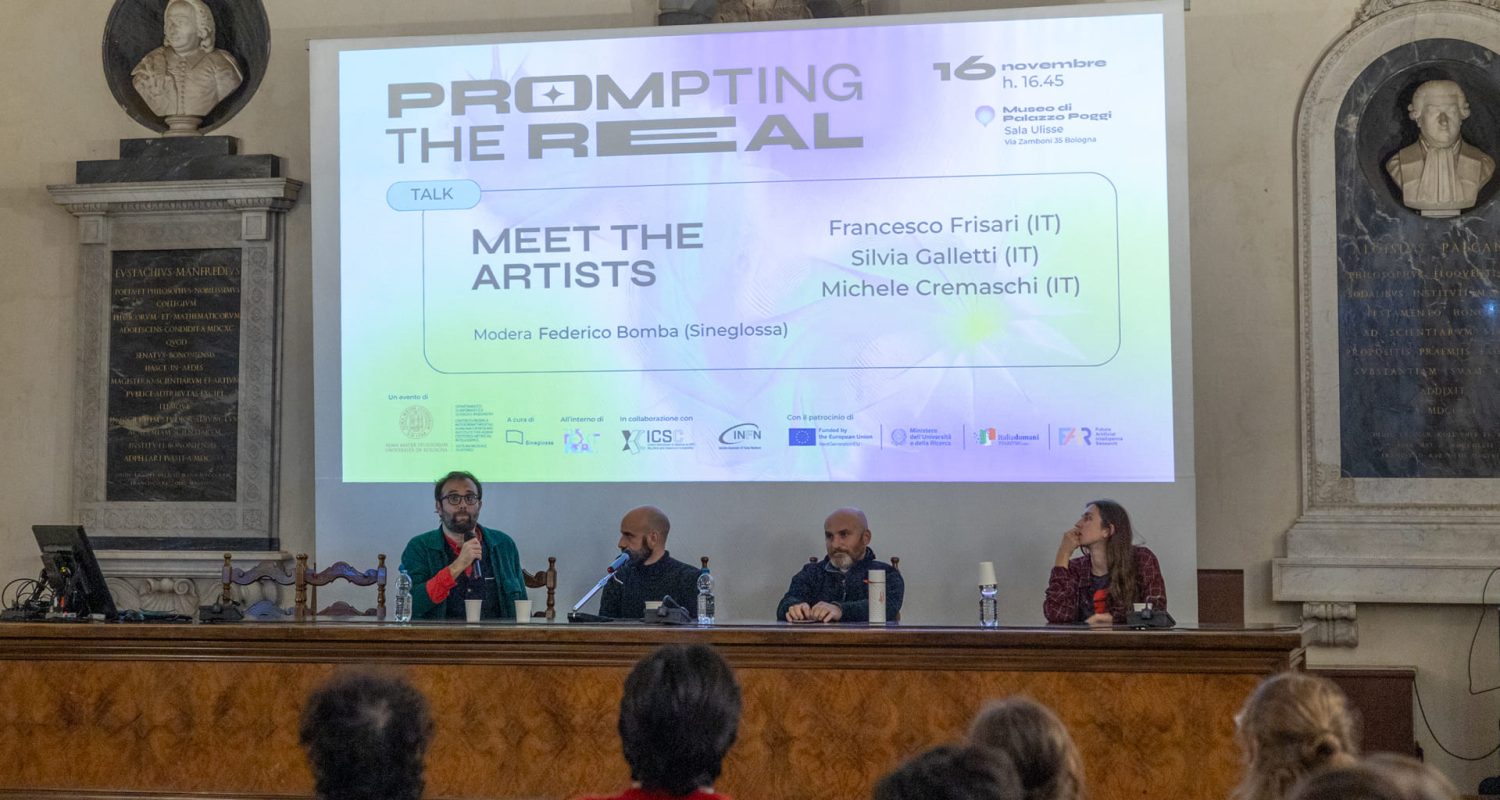
Meet the Artists: Silvia Galletti (IT), Michele Cremaschi (IT), Francesco Frisari (IT) | Talk in Italian
Sala di Ulisse – Palazzo Poggi
Sunday, November 16, 4:45 pm

Credits
Prompting the Real is a project by the University of Bologna – Department of Computer Science and Engineering (DISI); the Interdepartmental Research Centre Alma Mater Research Institute for Human-Centered Artificial Intelligence (ALMA-AI); and the University Museum System, curated by Sineglossa, in collaboration with the National Research Center for High Performance Computing, Big Data and Quantum Computing (ICSC) and the National Institute for Nuclear Physics (INFN), and supported by the European Union – NextGenerationEU | Ministry of University and Research | Italia Domani | FAIR – Future Artificial Intelligence Research.
The event is part of The Next Real, the programme on art, AI, and society promoted by Sineglossa through a series of events taking place across the city of Bologna.